
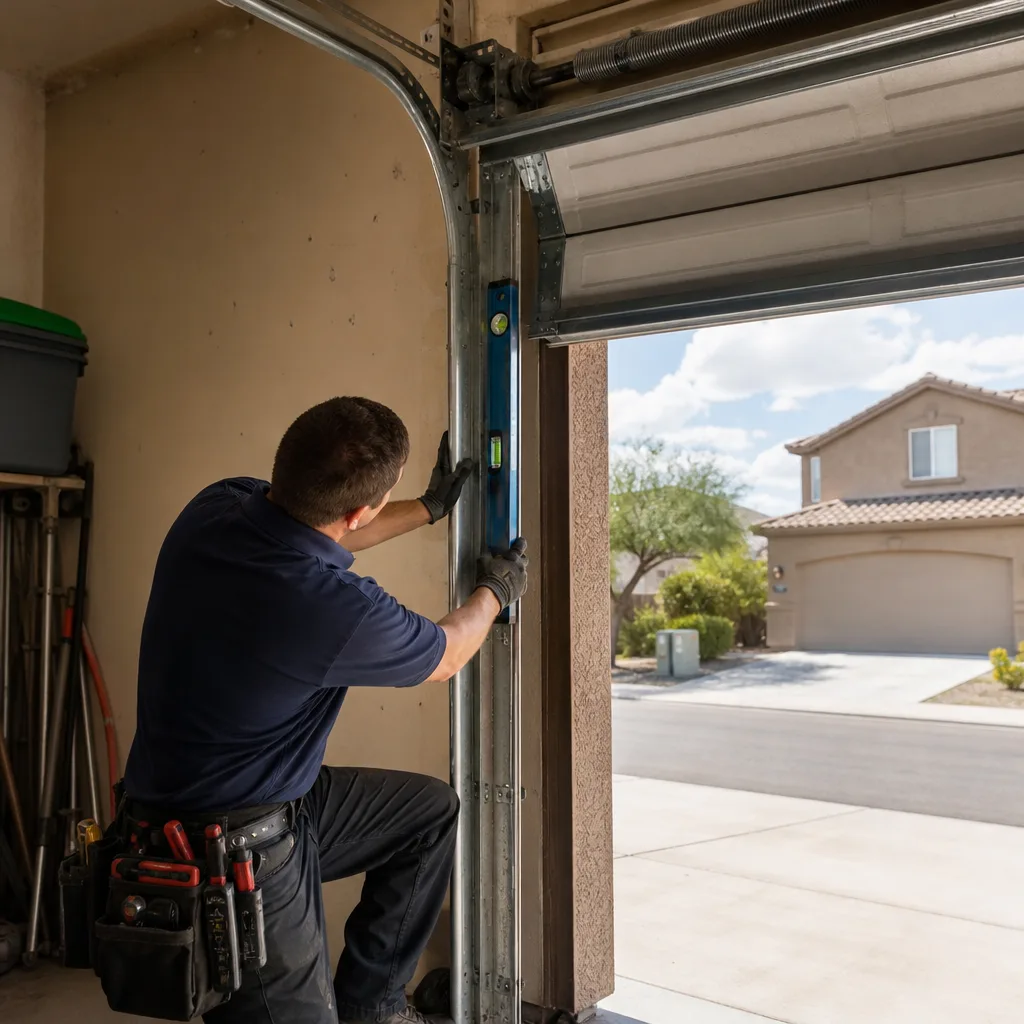
Last updated November 14, 2026
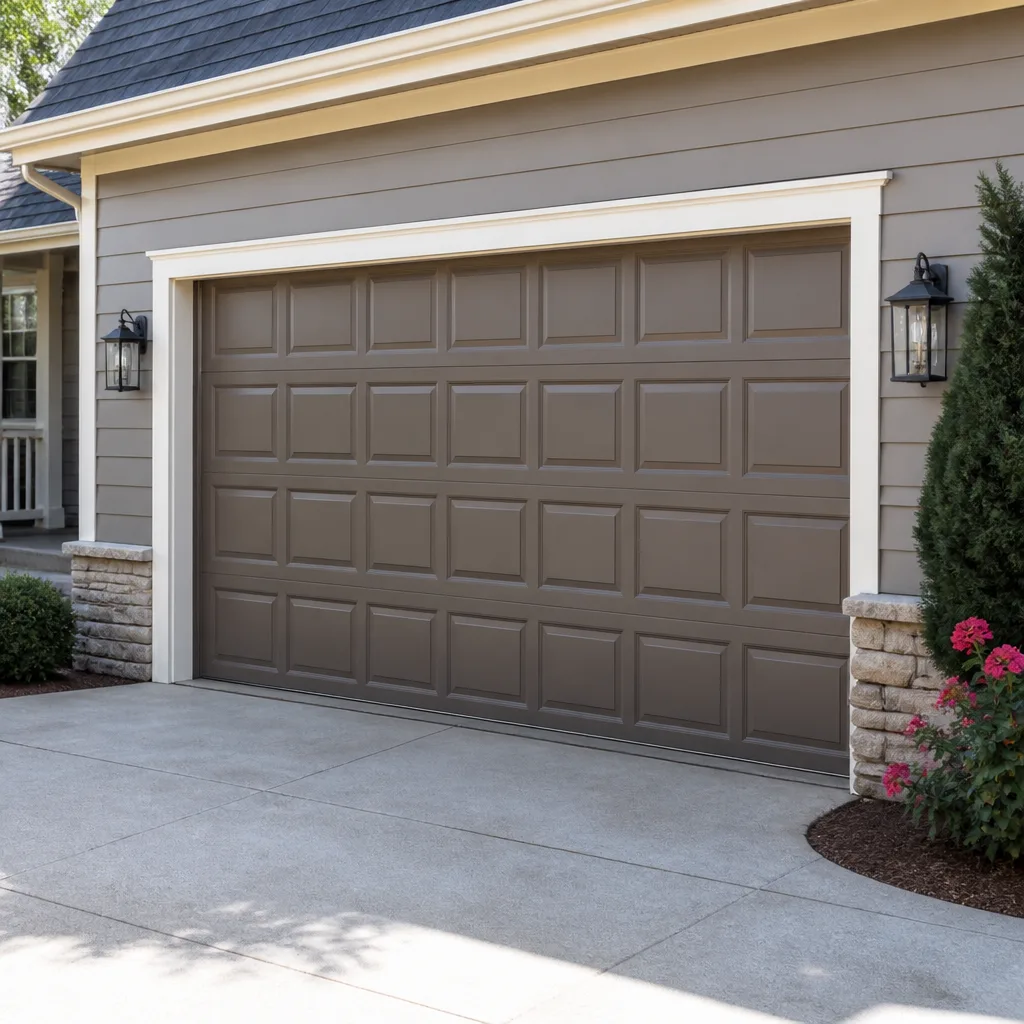 Raised-panel steel
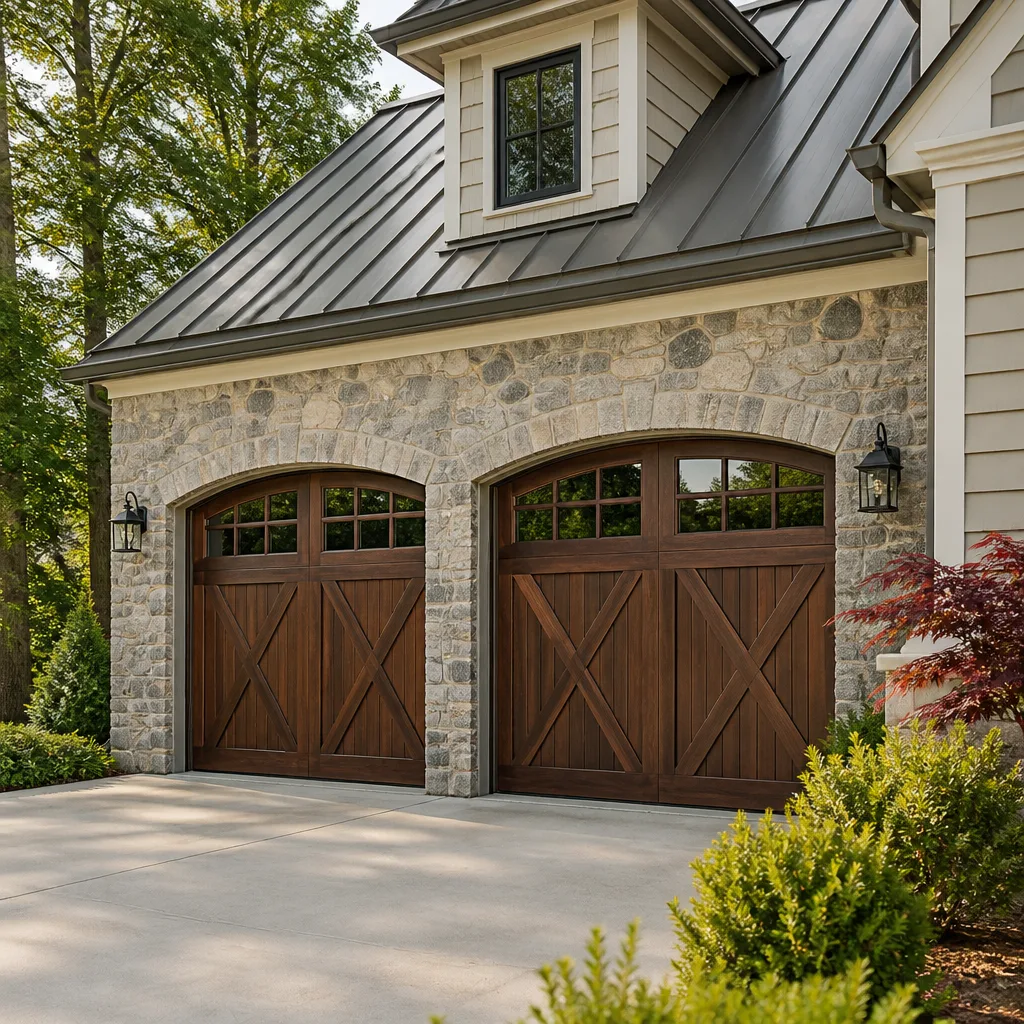 Carriage house
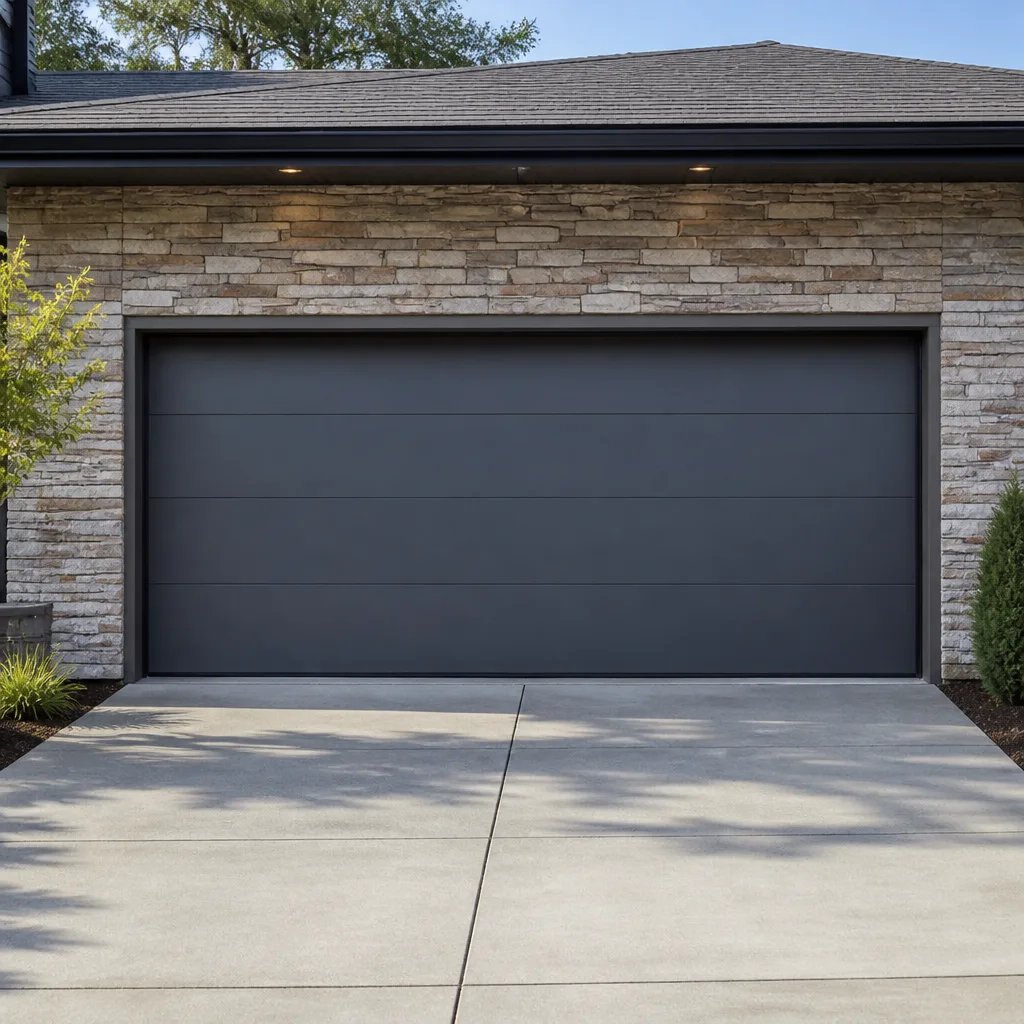 Modern flush
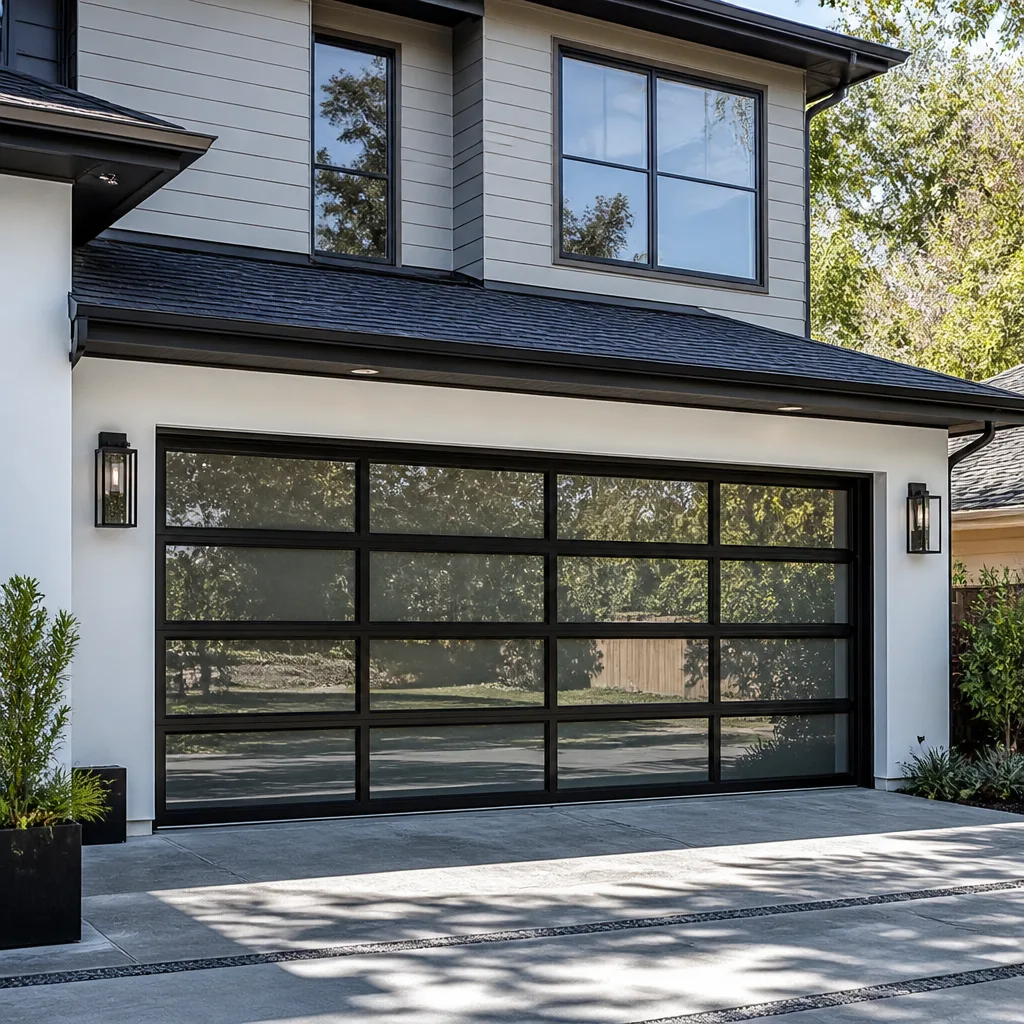 Full-view glass
 LiftMaster openers
 Chamberlain openers
Full 25-point door and opener safety check with every visit - springs, cables, rollers, tracks, and your LiftMaster or Chamberlain opener included
You get a price before we start. It does not change when the pro arrives.
Get your free estimateGarage Door Repair Maintenance Checklist for Buckeye Homeowners
Most garage door maintenance checklists you’ll find online were written for a climate that doesn’t exist here. They talk about winterizing, about salt on the roads, about keeping ice out of the tracks. In Buckeye, the enemy isn’t cold. It’s a July afternoon that turns the inside of your garage into an oven, a dust storm that drives grit into every moving part, and sun that never takes a day off. A spring that hums along fine in a mild climate can be stressed to failure here in a few summers. This guide walks you through a checklist built for Buckeye specifically: what to inspect before the heat arrives, what to do after a haboob, how to catch weatherstripping rot before your cooling bill climbs, and how to handle the “ghost outages” that hit openers on 110°F days. You’ll also get a quarterly lubrication schedule that reflects desert conditions instead of the standard annual advice.
Quick Answer
A desert-climate garage door maintenance checklist for Buckeye should prioritize four things: checking spring tension before summer heat expansion stresses the system, lubricating rollers and hinges quarterly rather than annually, inspecting weatherstripping for UV degradation every spring, and testing the opener’s thermal cutoff when temperatures spike. Standard annual maintenance advice was written for moderate climates and misses the failure points that UV exposure and dust storms create in the desert Southwest.
Styles & brands we work with
- Raised-panel steel
- Carriage house
- Modern flush
- Full-view glass
- LiftMaster openers
- Chamberlain openers
Table of Contents
- Pre-Summer Checklist: Catch Spring Stress Before the Heat Does
- Post-Haboob Inspection: The Steps Most Homeowners Skip
- UV and Heat-Specific Weatherstripping Inspection
- Opener Thermal Cutoff: Why Your Door Acts Dead on Hot Days
- Quarterly Lubrication Schedule for Desert Conditions
- Roller and Track Wear in a High-UV Environment
- Safety Reverse Test and Balance Check
- Common Mistakes to Avoid
- When to Call a Professional
Pre-Summer Checklist: Catch Spring Stress Before the Heat Does
The best time to look at your garage door in Buckeye is late spring, before the first string of triple-digit days. Heat causes metal to expand, and a torsion spring that’s already near the end of its rated cycle count doesn’t need much of a push. Catching a tired spring in April or May is a maintenance call. Catching it after it snaps on an August afternoon is a repair. The difference is a visual inspection you can do without touching the springs themselves.
Here’s what to run through before summer:
- Listen to the door. Stand in the garage while the door opens and closes. A rhythmic creak, a grinding scrape, or a pop means something is binding. Morning is the best time to listen, before the day’s heat has expanded everything.
- Watch the springs from a distance. You’re looking, not touching. A torsion spring should be wound evenly along the bar. Visible gaps, a wavy profile, or rust streaks on the coils are signs it’s fatiguing. Never touch, wind, or adjust a torsion or extension spring yourself. These are under extreme tension and can cause serious injury. This is work for a trained technician.
- Check the door’s balance. Close the door, disconnect the opener using the release cord, and lift the door halfway by hand. It should stay where you put it. If it drops or rises on its own, the spring tension is off and needs professional adjustment.
- Inspect the pulleys and cables. Look for fraying, kinks, or slack in the cables. Cables are also under high tension and shouldn’t be handled by anyone without the right tools and training.
- Clean out the tracks. A dry paintbrush works well for clearing dust and grit from the channel. Avoid heavy solvents, which can strip the factory finish.
If something feels wrong, stop and call. When your pre-summer inspection turns up a problem, we can get a technician out for garage door repair quickly. We answer 24/7, with fast dispatch from 7am to 7pm.
Post-Haboob Inspection: The Steps Most Homeowners Skip
In our experience, a dust storm is when most of the slow damage a Buckeye garage door accumulates actually happens. A haboob drives fine sand and grit into every open channel, every roller housing, every hinge knuckle. The storm passes, the homeowner wipes off the car, and the garage door goes untouched. Over a few seasons, that grit becomes grinding paste that eats rollers and scuffs tracks.
A post-storm inspection takes about five minutes and saves real money. Do these steps the same day or the next morning.
- Dry-wipe the tracks. Use a clean rag or brush and run it through the upper and lower tracks, top and bottom. Don’t spray lubricant into a dusty track; you’ll turn the grit into a paste.
- Check for obstructions in the travel path. Grit can wedge into the curved portion of the vertical track. Look at the top and bottom where the door rolls in and out.
- Feel for rough rollers. With the door up, run a gloved hand over each roller and see if it spins smoothly or grinds. A gritty roller is the number one cause of premature track wear.
- Test the safety sensors. Dust collects on the photo-eye lens and causes intermittent close failures. Wipe both sensors clean with a dry cloth.
- Clear out your weather seal. A dust-seal across the bottom of the door can catch sand. Brush it out so it can seal against the slab again.
If your door is bouncing on one side or the rollers feel frozen after a storm, the safe move is to have somebody look at it. We handle repair for every major brand, from a Genie opener with a grit-fouled sensor to a Clopay panel door that’s off-track. One call covers it.
UV and Heat-Specific Weatherstripping Inspection
Weatherstripping fails in Buckeye faster than in any other climate we work in, and most homeowners don’t notice until their cooling bill takes the hit. UV exposure breaks down the rubber and vinyl compounds in weather seals, and heat cycling hardens them into a brittle shell that cracks instead of squishing. Once the bottom seal stops making contact, you’re pumping air conditioning into a garage that’s exchanging it with 110°F outside air. That shows up on the energy bill before it shows up in the person trying to close the door.
Here’s how to spot UV breakdown before it becomes a cooling problem:
- Check for fine surface cracks. Run a thumbnail across the bottom seal. If it crumbles instead of denting, the UV has taken the flexibility out of it.
- Look for discoloration. A seal that’s turned from black to gray, or has a chalky-white bloom, is breaking down at the surface.
- Test the seal contact. Close the door and slide a piece of paper between the seal and the floor. If it slides out without resistance, the seal has shrunk or lost shape.
- Inspect the sides and top too. A lot of people think of the bottom seal as the only one. Side weatherstripping and the header seal do just as much work and fail just as fast.
- Watch for insect entry. Any new gaps you’re finding are gaps a scorpion or a centipede can also find.
A bottom seal that looks cracked but still makes contact can usually wait a season. But a seal that’s gone rigid and lost contact, especially after a summer or two in the Buckeye sun, is a swap that pays for itself in cooling costs. When the storm is over and you need it handled, this is a repair, not a replacement, and we can usually knock it out in one visit. Our technicians have up to 15 years of experience with this exact problem.
Opener Thermal Cutoff: Why Your Door Acts Dead on Hot Days
If you’ve ever walked out at 4pm on a 110°F day and found the garage door opener completely unresponsive, then found it working fine the next morning, you’ve met the thermal cutoff. Most openers have a built-in safety that shuts off the motor when internal temperatures spike. In a Buckeye garage that isn’t climate-controlled, afternoon temperatures can easily exceed the cutoff threshold. It’s not a dead opener. It’s a protecting-opener.
Here’s what to check when your door plays dead on hot afternoons:
- Feel the housing. If the motor housing is hot to the touch, the cutoff is almost certainly the reason. Let it cool and try again.
- Check the breaker. Sometimes a hot circuit trips the breaker. Reset it once and see if it holds.
- Look at the wall controls and remote. If the wall button works but the remote doesn’t, it’s a battery or remote issue, not thermal. If neither works, thermal cutoff is more likely.
- Inspect ventilation around the unit. If you’ve stored boxes, paint cans, or anything else on the shelf right above the opener, you’ve cut off the air it needs to cool itself.
- Check the light. Some openers blink an error code at the light fixture. Look up the code on the brand’s support page or call us and describe it.
If ghost outages keep happening even after the motor housing is cool, this is closer to a failing capacitor or control board than a safety feature doing its job. We work on LiftMaster, Chamberlain, Genie, Craftsman, and Raynor units regularly, so the diagnosis is quick. If the unit is failing, we’re brand-neutral about recommending a fix or a replacement. We recommend the brand already in your garage, not one we’re trying to sell you.
Quarterly Lubrication Schedule for Desert Conditions
The standard advice to lubricate your garage door once a year was written for a climate that doesn’t have a haboob season. In Buckeye, quarterly is closer to what your door actually needs, and the schedule shifts a little around the storm months. Lubrication here isn’t about squeak prevention. It’s about keeping the moving parts coated so grit and heat don’t turn into wear.
Here’s the schedule we recommend for Buckeye garages:
- Spring (March-April): Full lubrication before the first real heat arrives. Rollers, hinges, bearing plates, and the opener’s rail and chain or belt. This is the one that matters most.
- Early summer (May-June): A light touch-up on the hinges and rollers only. Skip the rails here; if grit season hits, you don’t want a heavy coat to grab sand.
- Late summer (August-September): Full clean and re-lube after the bulk of the storm season. Wipe the tracks first, then reapply.
- Fall (October-November): The fourth full lubrication, with attention to the hinges that see the most cycles (the ones closest to the front of the door get worked hardest).
Use a silicone-based or lithium-based garage door lubricant, not WD-40 or a general-purpose oil. White lithium grease works well on the opener’s rail; silicone spray is the right call on rollers and hinges because it doesn’t hold dust the way grease does. Avoid putting lubricant on the tracks themselves. They’re designed to be dry.
Never lubricate the springs. They’re under tension and shouldn’t be touched. If a spring is squeaking, that’s not a lubrication problem; that’s a sign the spring is tired and needs professional attention.
Roller and Track Wear in a High-UV Environment
Nylon rollers are the standard on most modern garage doors because they’re quiet and don’t rust. In most of the country, they wear out on the manufacturer’s rated cycle count. In Buckeye, UV exposure degrades the nylon faster than the cycle rating suggests. Manufacturers rate their rollers in a lab environment; a garage door that faces west into the afternoon sun gets a much harder life than the lab assumes. That’s part of why we recommend visual roller inspections twice a year here instead of once.
What to look for:
- Flat spots. A roller that’s developed a flat face is no longer rolling, it’s sliding. Sliding rollers wear tracks fast.
- Cracks and crazing. Fine cracks in the nylon surface are a sign of UV embrittlement. Once they start cracking, they’re close to failing.
- Grinding noises. If the door sounds like it’s groaning through a section, that section’s roller is likely frozen.
- Tracks that are getting wider. Rollers that wear thin will eventually let the door rattle in the track. A wobbly door in a wide track is a sign the rollers need replacing, not the track.
The good news: rollers are one of the cheaper parts on the door, and replacing them before they damage the tracks is a straightforward repair. The bad news: if the tracks themselves get bent or deformed, it’s a bigger job. On a Wayne Dalton or Amarr door, track alignment matters more than people realize, and a slightly bent track will eventually cause the door to bind.
Safety Reverse Test and Balance Check
Every garage door opener made in the last thirty years has a safety reverse feature: it should stop and reverse when it meets an obstruction. It’s the feature that keeps a door from closing on a child or a pet, and it’s also the feature that quietly fails and gives no visible sign. Test it monthly. It takes less than a minute.
Two things to test:
- Photo-eye test. With the door open, wave a broomstick or a piece of cardboard through the beam. The door should stop and reverse. If it doesn’t, check that both sensors are clean and the indicator lights are on. If the beam is blocked or misaligned, the door won’t close either. Some openers won’t close at all when the eyes are blocked, which is a safety feature, not a failure.
- Mechanical reverse test. Lay a 2×4 flat on the ground in the door’s path. Close the door. When it hits the board, it should reverse without much pressure. If it slams or pushes through, the opener needs adjustment by a technician.
Then do the balance test again: door disconnected from the opener, halfway up, should stay put. A door that fails the balance test needs spring tension adjustment. This is not a homeowner adjustment. Torsion springs are under hundreds of pounds of tension and can cause serious injury if handled without the right training and tools.
Common Mistakes to Avoid
- Lubricating the tracks. The tracks are supposed to be dry. Lubricant grabs the fine dust we get in Buckeye, and that turns into a grinding paste. Keep the tracks clean and dry.
- Using WD-40 on hinges and rollers. It’s a light solvent, not a proper lubricant. It’ll quiet a squeak for a week and then evaporate, leaving the parts drier than before. Use silicone or lithium grease.
- Ignoring a bottom seal that looks “mostly fine.” Even a small gap along the bottom of the door is drawing cool air out of the house at a rate you’ll notice on the bill. Replace once it stops making contact, not after.
- Skipping post-haboob cleanouts. A dust storm deposits more grit into the tracks and rollers than a full year of normal use. Clean it out before you lubricate; never the other way around.
- Adjusting torsion springs yourself. This is the one we see cause the most serious injuries. Even a homeowner who’s handy with tools should not touch a torsion spring. It’s stored energy, not a mechanical part, and it can release without warning.
- Diagnosing an opener as dead when it’s just hot. On a 110°F afternoon, a “dead” opener is often just thermally cut off. Let it cool overnight before deciding it needs replacing.
- Skipping the safety reverse test. It takes 60 seconds and it’s the one test that could prevent an injury. Test it monthly, not annually.
When to Call a Professional
Some maintenance is homeowner work: wiping down tracks, wiping down sensors, brushing out the bottom seal, testing the reverse function, and relubricating the moving parts on schedule. But several things should always go to a trained technician. Springs and cables are the big ones: they’re under extreme tension and can cause serious injury when handled without the right tools and training. Anything that involves adjusting spring tension, replacing cables, or rebalancing the door belongs to a professional. Same for track bending, roller replacement, and any diagnostic work on the opener’s internal electronics.
If the door is off-track, if the cables look frayed, if you’ve heard a loud snap from the garage, or if the opener is doing something you can’t quickly diagnose with the tests above, stop using the door and call somebody. Continuing to run a damaged door makes the repair more expensive. If you’re not sure whether something qualifies, we’re happy to talk it through by phone. We answer 24/7, and our technicians have up to 15 years of experience on doors and openers from every major manufacturer.
Brightline Garage Door Repair offers free estimates in Buckeye. Call (833) 519-6766 and we’ll take a look. Estimates are free and upfront, and we quote the price before any work starts.
See the difference
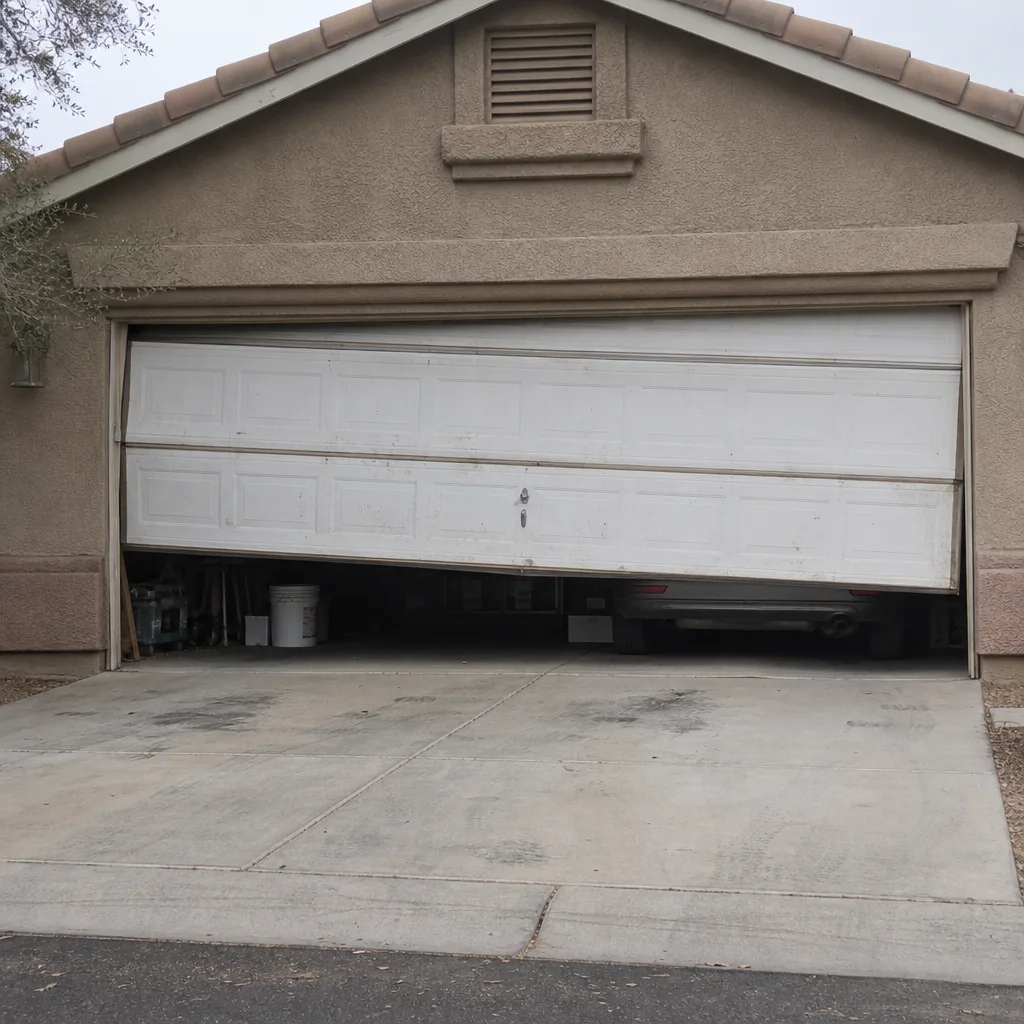 Before
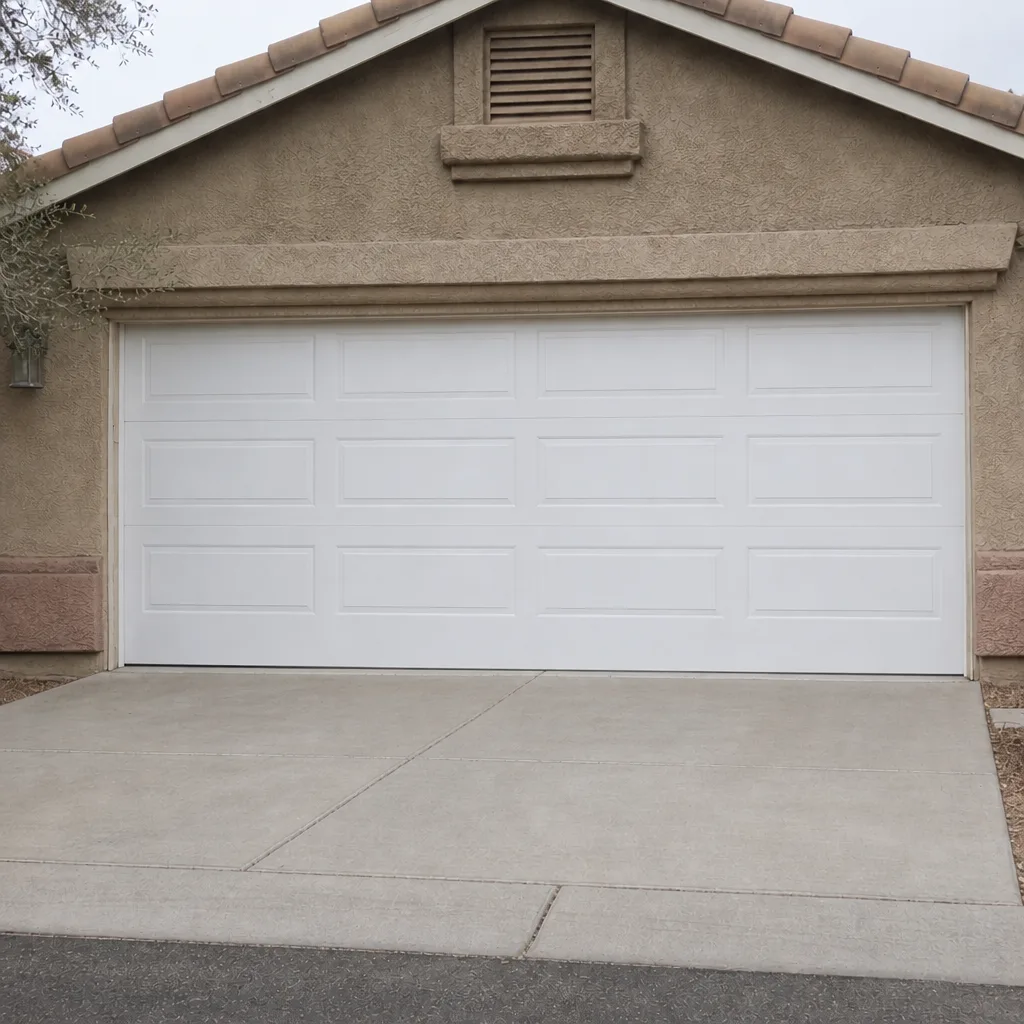 After
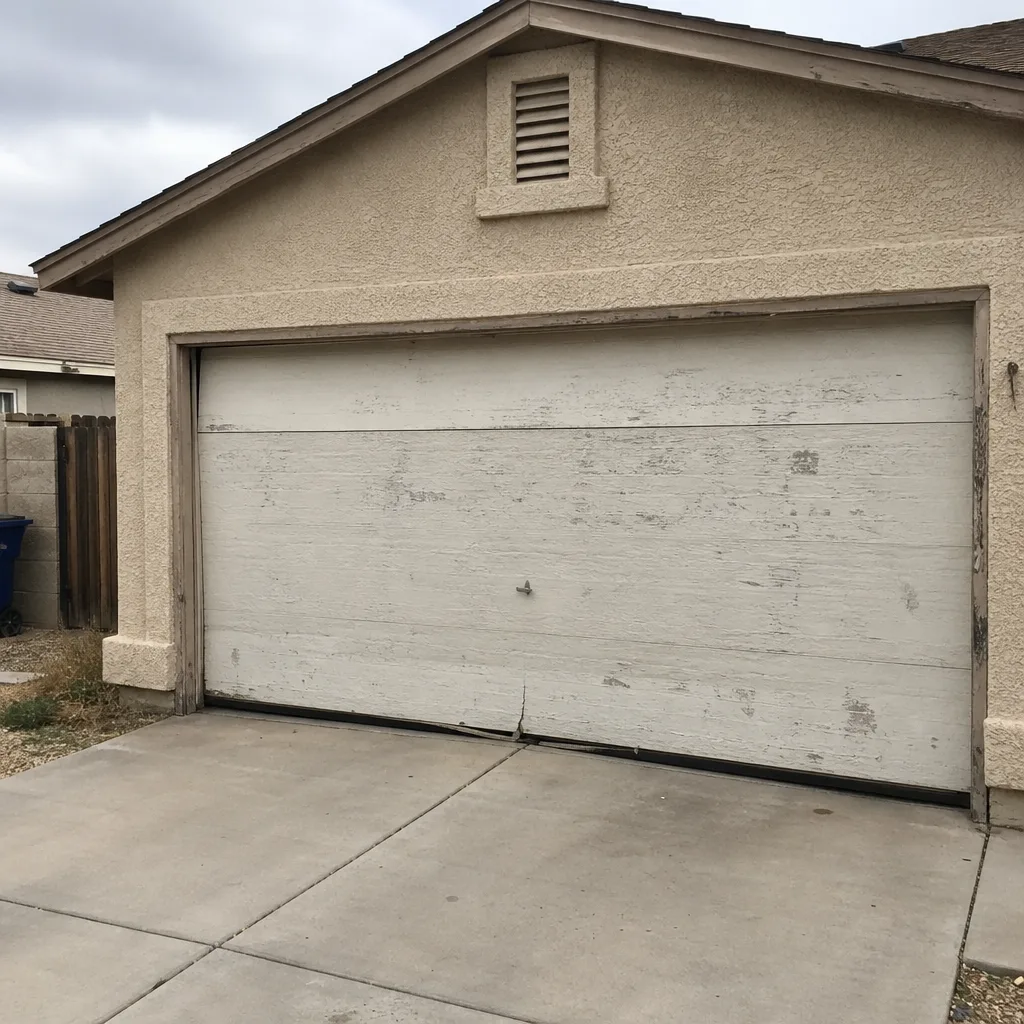 Before
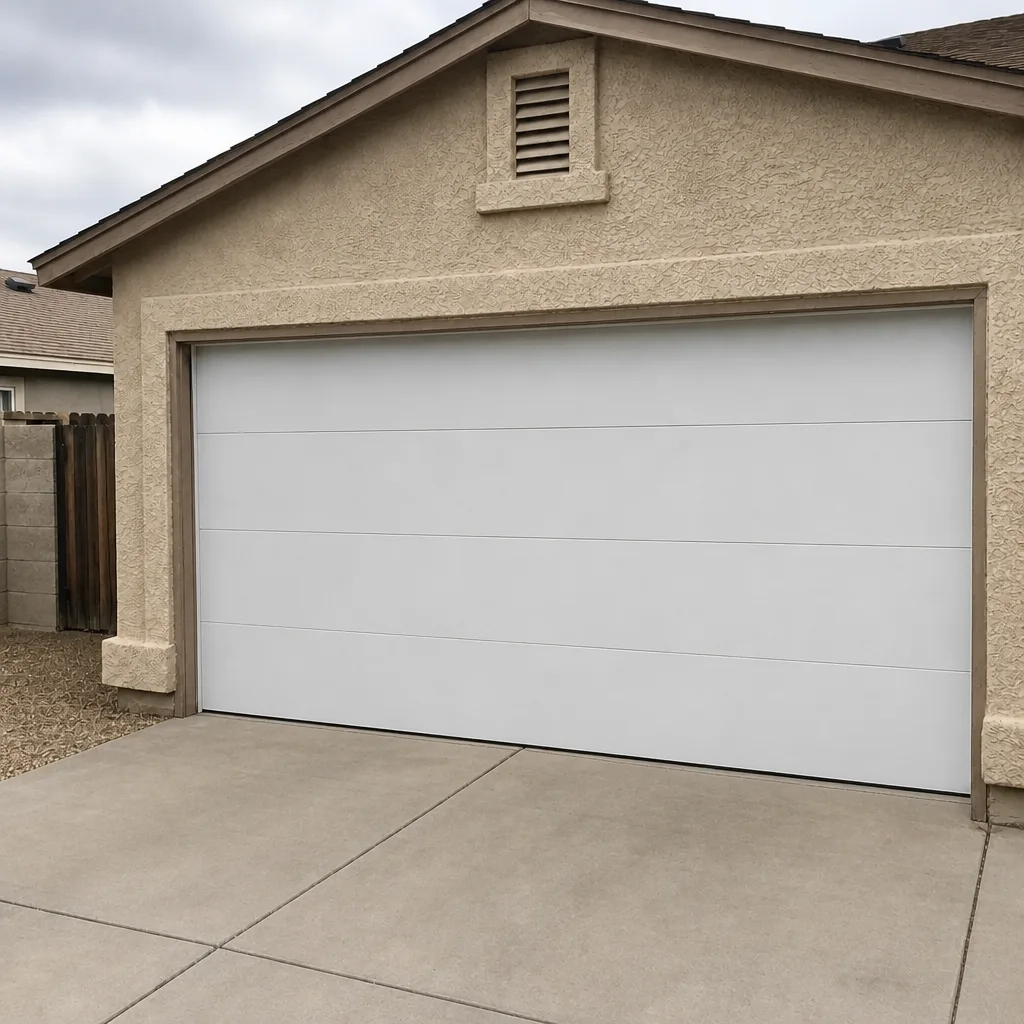 After
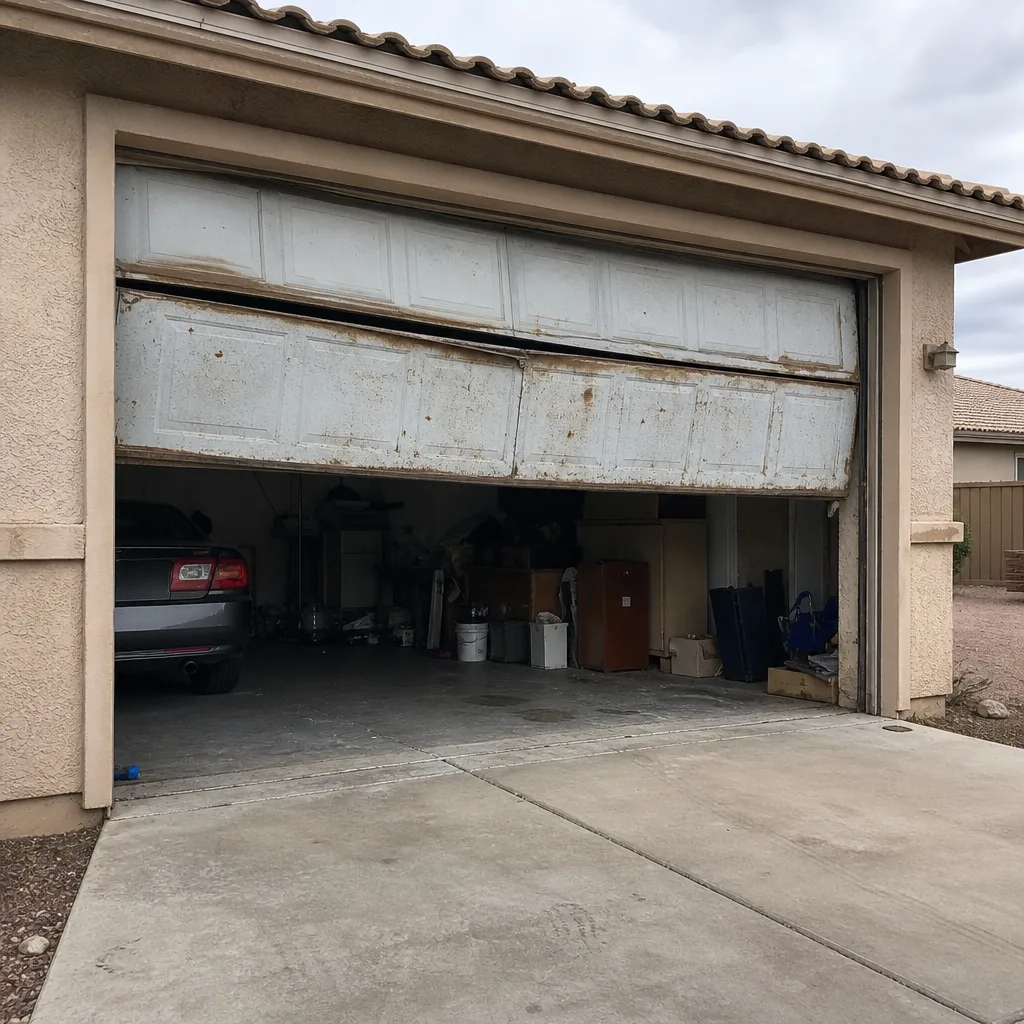 Before
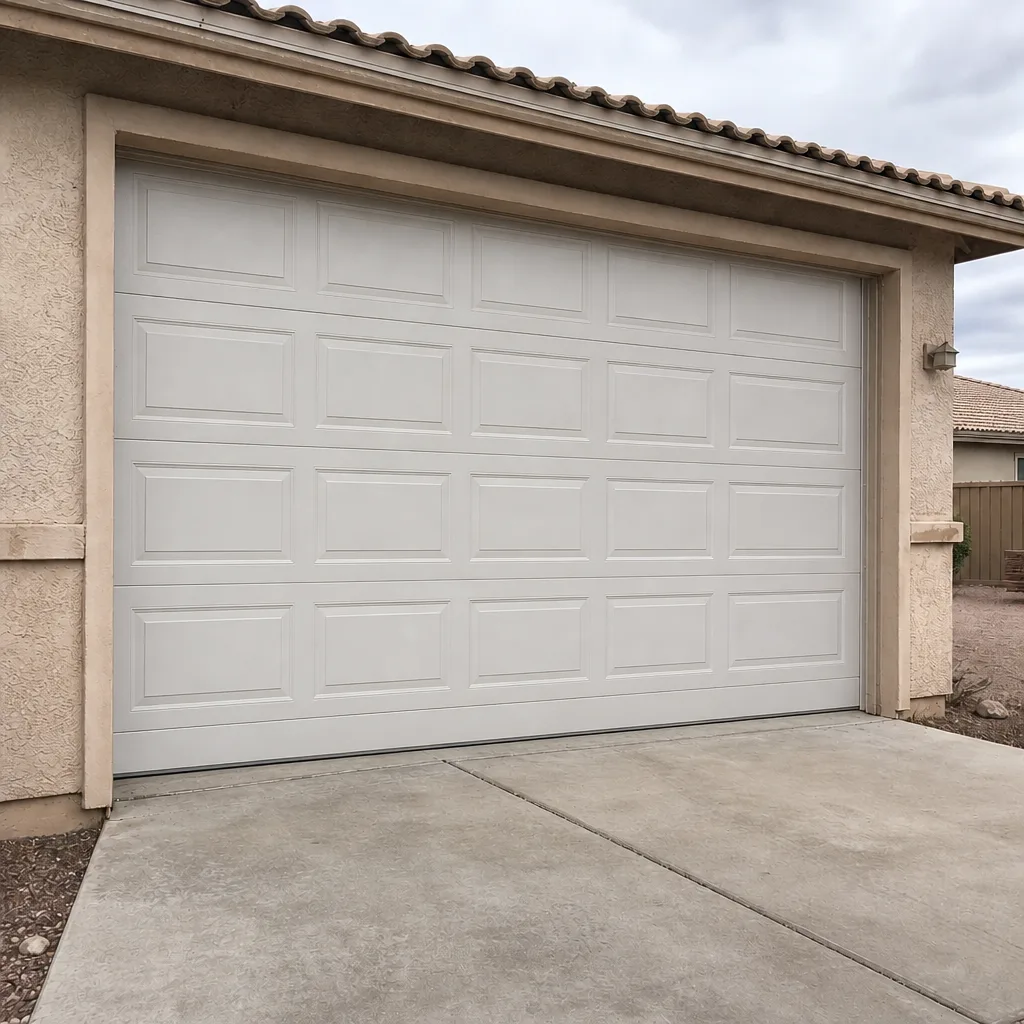 After
Frequently Asked Questions
Quarterly is the right schedule here, not annually. Buckeye’s dust-storm season and summer heat accelerate wear on hinges, rollers, and bearing plates, so a full lubrication four times a year is closer to what the door actually needs. Standard annual advice was written for milder climates.
Most openers have a thermal cutoff that shuts down the motor when internal temperatures get too high. On a 110°F day, a garage that isn’t climate-controlled can push the unit past that threshold, and the door plays dead until it cools. If it’s still failing when it’s cool, that’s a failing component, not a thermal cutoff. Call (833) 519-6766 for an exact quote if you want it looked at, estimates are free.
No. Torsion springs and extension springs are under extreme tension and can cause serious injury if handled without the right tools and training. Visual inspection is fine; adjustment and replacement are professional work. This is the single most common source of garage door injuries, and it’s never worth the risk.
Clean the tracks with a dry brush or rag before you do anything else, then wipe the photo-eye sensors, clear the bottom seal, and check the rollers for grit. Don’t lubricate a dusty track. Clean first, lube after. If the door is binding or bouncing after a storm, call a technician.
If it’s cracked but still makes contact with the floor, it can usually wait a season. If it’s brittle, crumbled, or you can slide a piece of paper under it, replace it. A failed bottom seal is drawing cool air out of the house, and in Buckeye that shows up on your cooling bill.
We work on eight major brands: LiftMaster, Chamberlain, Genie, Clopay, Amarr, Wayne Dalton, Craftsman, and Raynor. Whether it’s a Clopay panel door or a Genie opener, our technicians arrive familiar with the hardware already on your home. If your brand isn’t on that list, call and ask and we’ll tell you honestly.
The Bottom Line
Garage door maintenance in Buckeye is different from the homeowner’s checklist you’ll find on most sites. The priority is heat, UV exposure, and dust, not cold and ice. Pre-summer spring checks, post-haboob cleanouts, quarterly lubrication, and a weatherstripping inspection every spring are the four practices that matter most. The safety tests (reverse function and balance) should happen monthly. Anything involving springs, cables, or track bending goes to a technician, because the risk of injury is real and the cost of a botched repair is higher than the cost of doing it right.
If at any point you want a trained set of eyes on your door, we’re happy to help. Brightline Garage Door Repair is a specialist in doors and openers, not a generalist. Whether you’re in Buckeye or elsewhere in the West Valley, we work on the brand already in your garage. See our Brightline Garage Door Repair home page to learn more about what we do, or check out the garage door opener repair page if your opener is what’s giving you trouble. If you’re up the road in Buckeye proper, we’re happy to come take a look at whatever’s going on with the door.
Call (833) 519-6766 for a free estimate. We answer 24/7. Fast dispatch from 7am to 7pm, Sunday through Friday.
Written by the team at Brightline Garage Door Repair.