
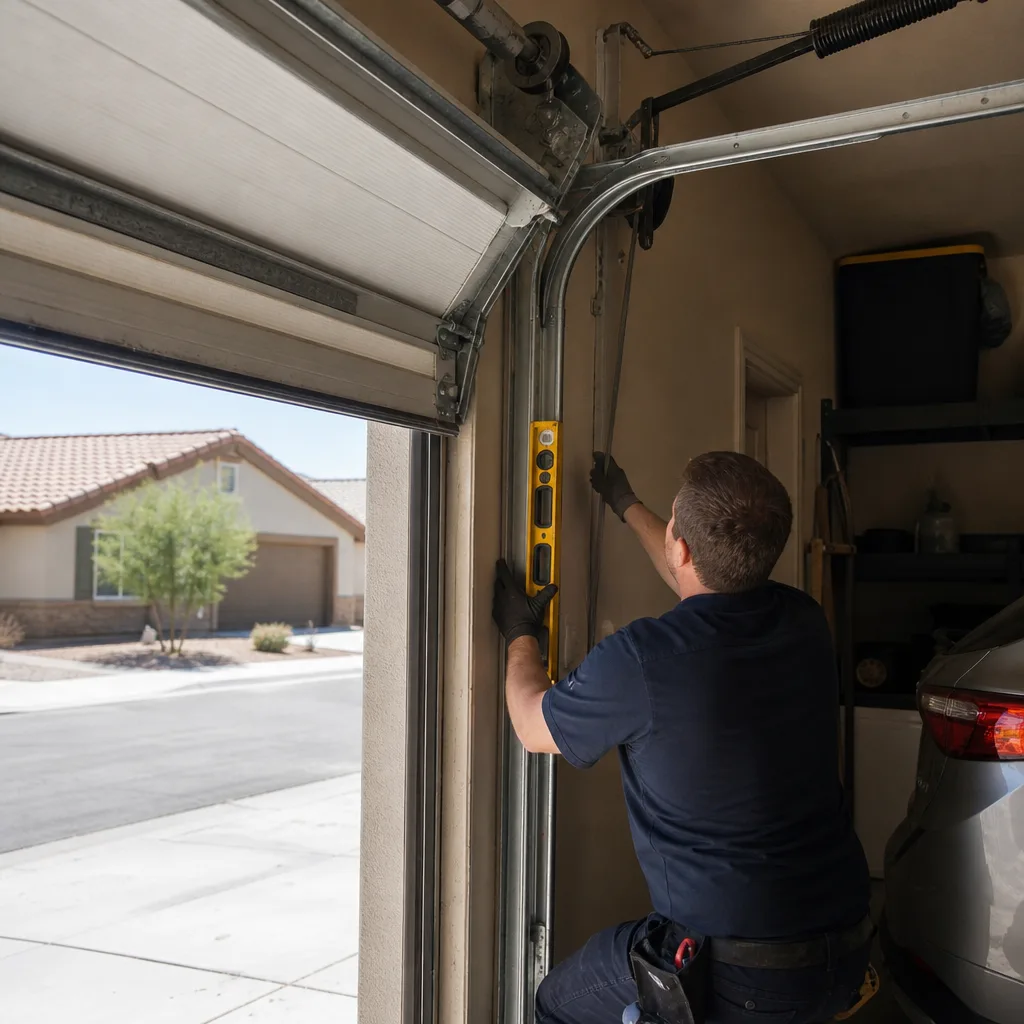
Last updated November 14, 2026
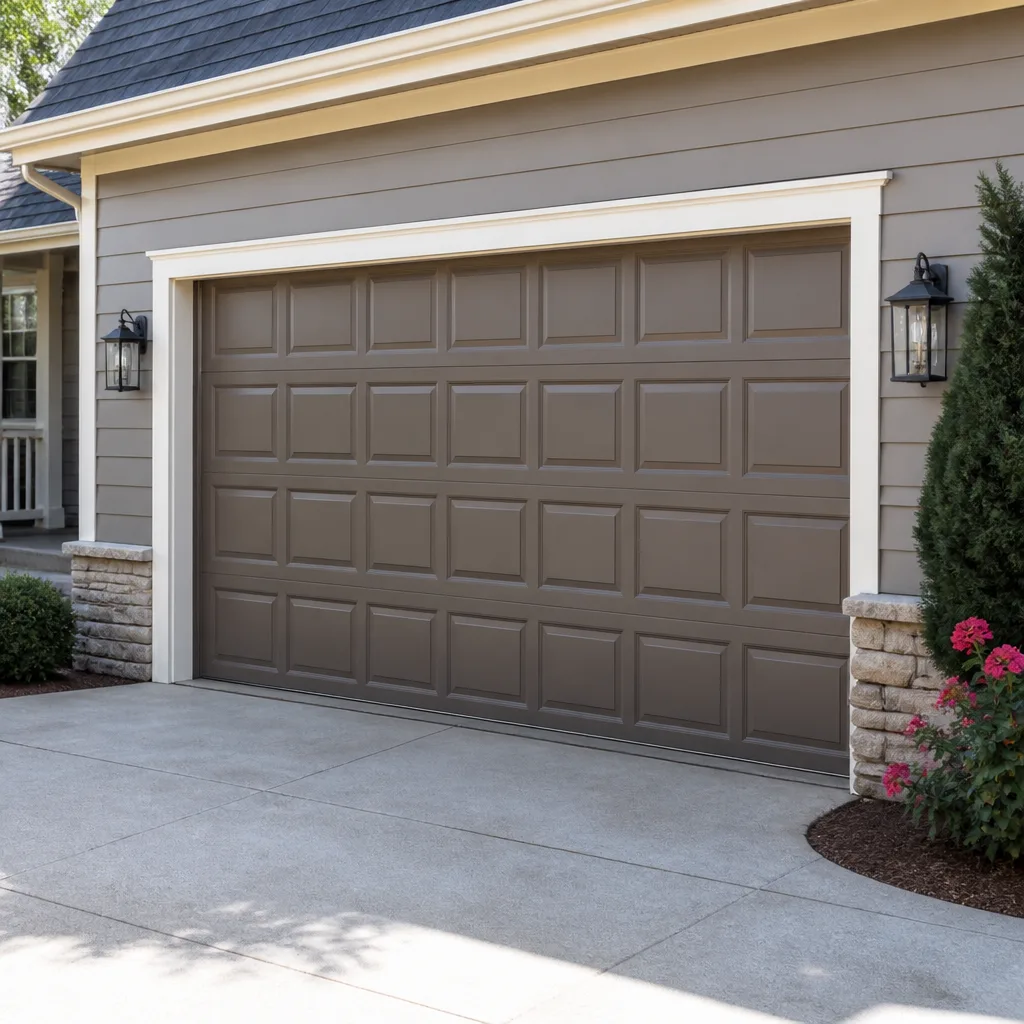 Raised-panel steel
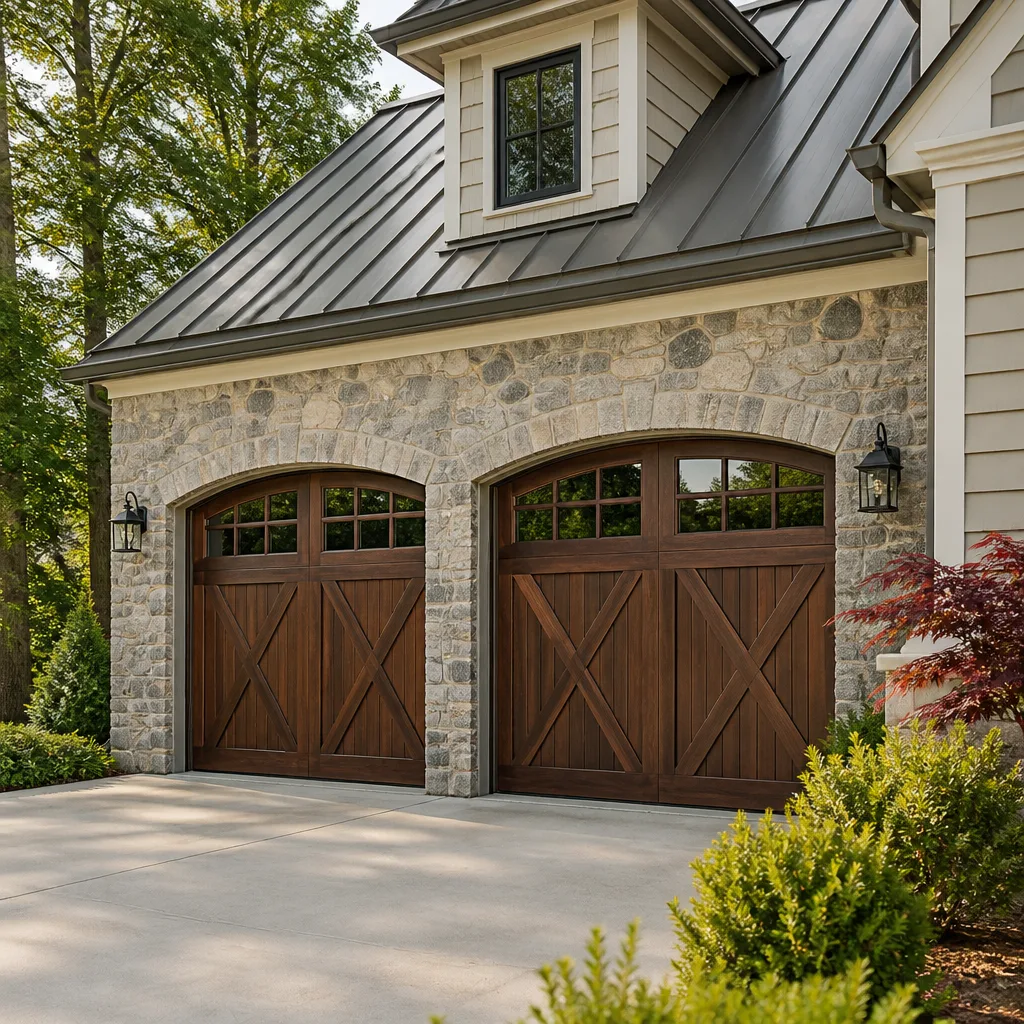 Carriage house
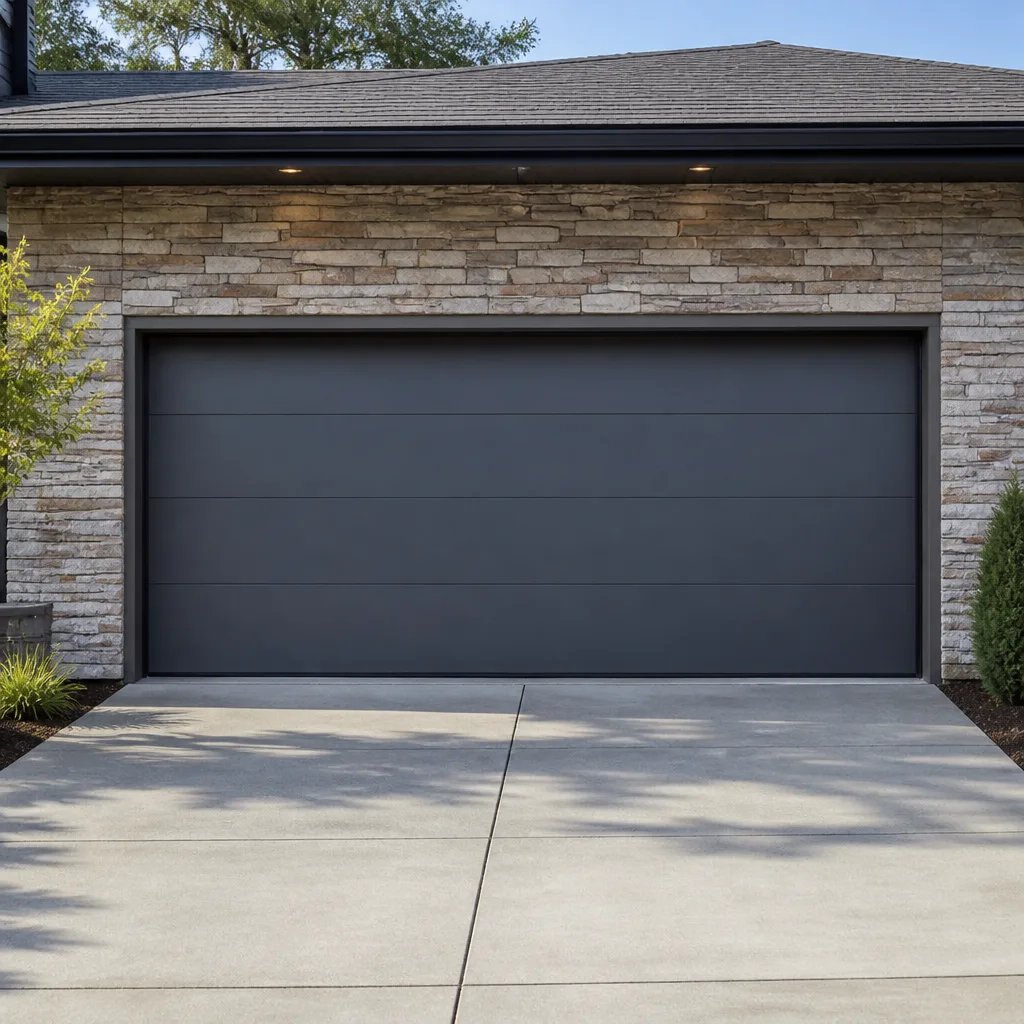 Modern flush
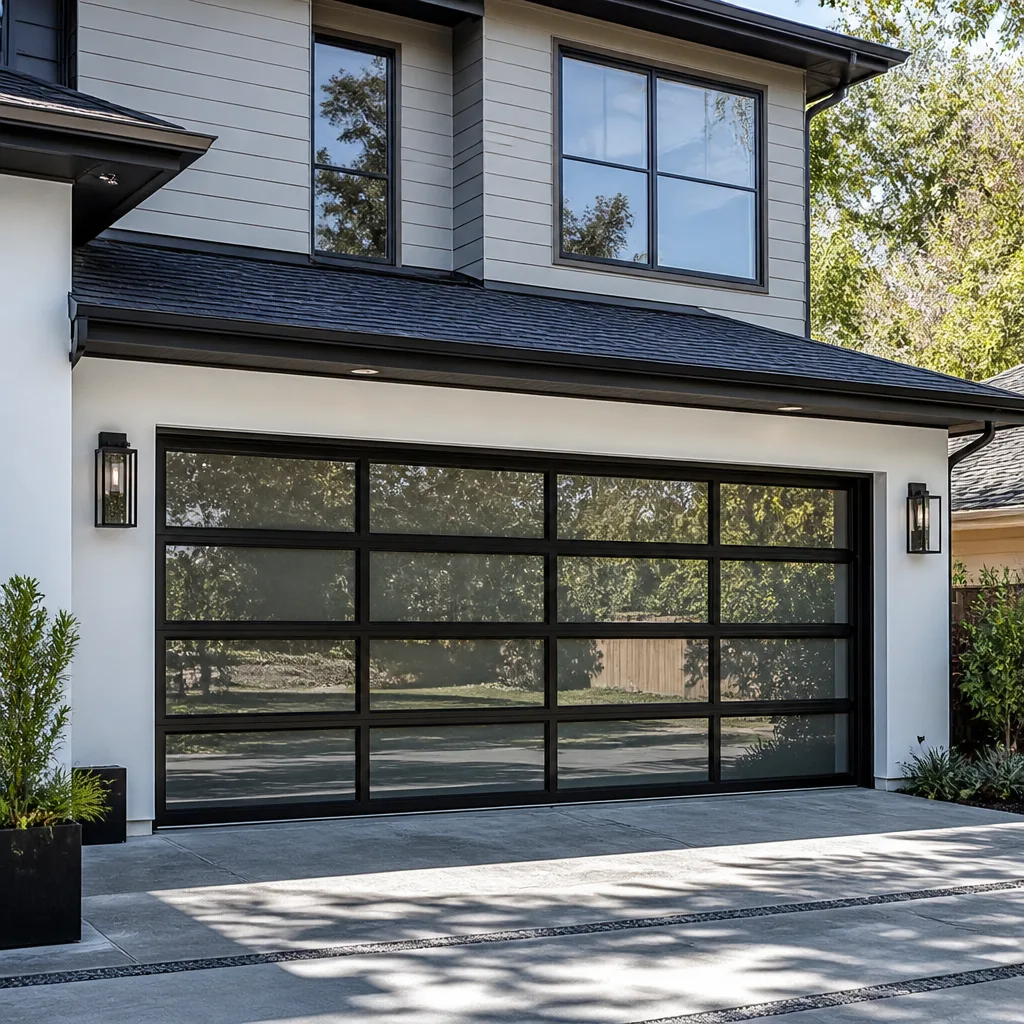 Full-view glass
 LiftMaster openers
 Chamberlain openers
Full 25-point door and opener safety check with every visit - springs, cables, rollers, tracks, and your LiftMaster or Chamberlain opener included
You get a price before we start. It does not change when the pro arrives.
Get your free estimateGarage Door Warning Signs: A Buckeye Homeowner’s Reference Guide
Two homeowners hear the same grind from the same year-old door. One lives where winters bite and the metal actually contracts. The other lives in Buckeye, where the door bakes at 110 degrees in July and the sun lands on one panel for six hours straight. The sound matches; the cause doesn’t. That gap between what a door sounds like and what the local climate is actually doing to it is where most garage door confusion starts. In this guide, we walk through the warning signs that matter in Buckeye specifically: UV-cracked seals, warped sections, heat-driven sensor drift, and the noise patterns that tell you whether the door or the opener is the problem. You’ll get a 30-second self-test, an urgency scale, and the mistakes we see most often.
Quick Answer
The most important garage door warning signs for a Buckeye homeowner are a bottom seal that’s cracked or crumbly to the touch, a door section that’s warped or faded unevenly from one-sided sun exposure, grinding or popping noises from overhead, an opener that reverses for no clear reason in the heat of the day, and a remote whose range cuts out intermittently. Any of those are worth a professional look. Grinding that changes pitch, a door that won’t stay up, or a visibly bent track are stop-using-it-immediately signs.
Styles & brands we work with
- Raised-panel steel
- Carriage house
- Modern flush
- Full-view glass
- LiftMaster openers
- Chamberlain openers
Table of Contents
- The Warning Signs That Are Specific to Buckeye’s Desert Climate
- Spring Wear vs. Opener Wear: How to Tell Which One Is Struggling
- The Noise Taxonomy: Which Squeaks, Grinds, and Pops Are Cosmetic and Which Are Not
- Intermittent Failures, Heat-Related Sensor Drift, and Why the Remote Gets Blamed
- The 30-Second Self-Test: Door Problem or Opener Problem?
- The Urgency Scale: What Can Wait a Week and What Can’t Wait a Day
- What Makes a Buckeye Garage Door Different From a Door Anywhere Else
- Seasonal Checks That Prevent Most Summer Failures
The Warning Signs That Are Specific to Buckeye’s Desert Climate
Most “garage door warning signs” lists were written for temperate climates. They talk about winter contraction, frost on the track, rust from damp. None of that applies here, and it means the signs that actually matter in Buckeye often get misread. The desert doesn’t rust your door; it bakes it, dries it out, and loads the sun onto the same side of the panel every single afternoon.
Here’s what to look at first.
- Bottom seal that’s cracked, crumbly, or missing chunks. The vinyl or rubber bottom seal is the part that takes the most UV. In Buckeye it’s often the first thing to fail, usually well before the rest of the door shows any problem. Run a finger along it. If it crumbles or leaves black on your skin, it’s done. A failed seal also lets dust and hot air in, which pushes your opener harder to keep the door shut.
- A door section warped or faded unevenly from one-sided sun exposure. If your door faces west or southwest, the same panels get hammered all afternoon. Over time you’ll see a slight bow, and the paint will fade faster on that side. A warped section is more than cosmetic: it drags against the track, loads the springs unevenly, and eventually stresses the opener.
- Faded paint that signals the weatherstripping is next. Chalky, faded paint on the sun-facing side is your early indicator that UV has been degrading the rubber and vinyl on that face too. If the paint is faded, walk the perimeter and check the perimeter weatherstripping before you have a draft and dust problem to go with it.
- Hairline cracks in the panel itself. Metal expands and contracts across a wide temperature swing in the desert. That thermal cycling, plus UV, is what eventually cracks the panel surface. A hairline crack on a sun-facing panel is a repair-now item before it spreads.
None of those four show up on the standard list. All four show up in Buckeye.
Spring Wear vs. Opener Wear: How to Tell Which One Is Struggling
This is where a lot of DIY diagnosis goes wrong. The door “feels heavy” or “struggles to open,” so the homeowner assumes the opener is dying and calls to replace it. Sometimes it is. More often in a door that’s a few years old, it’s the springs that have given up some of their lift, and the opener is being asked to carry weight it was never meant to carry. Replacing the wrong component leaves the real problem in place.
Here’s the distinction in plain terms.
- Springs do the lifting. They’re the counterbalance. When they lose tension, the door gets heavy, jerky, and hard to lift by hand.
- The opener pulls or pushes the door along the track. When it’s failing, you get grinding, a motor that runs but doesn’t move the door, or an opener that reverses mid-cycle.
Here’s how to tell them apart without touching anything dangerous.
- Disconnect the opener using the manual release cord (usually a red handle) while the door is closed.
- Lift the door with your hand to about chest height. Let it go gently at chest height.
- A healthy door should stay where you put it, or drift down very slowly.
- If it drops fast, feels very heavy, or takes real effort to lift, the springs are the problem, not the opener.
- If it lifts easily and balances, but the opener still grinds or reverses, the opener is the problem.
Do not attempt to adjust, wind, or replace the springs yourself. Torsion springs carry a lot of stored force and can cause serious injury. That step is for a trained technician only. But the lift test above is safe, and it tells you which half of the system to call about.
The Noise Taxonomy: Which Squeaks, Grinds, and Pops Are Cosmetic and Which Are Not
Garage doors are metal machines, and machines make noise. Not all noise means failure. Here’s a practical breakdown of what we hear on Buckeye doors and what it usually means.
Cosmetic or easily fixed
- A high-pitched squeak when the door starts moving. Usually a dry roller or a dry hinge. A small amount of proper garage door lubricant on the rollers and hinges resolves it most of the time.
- A steady rattle as the door travels. Loose hardware, a nut or bolt that’s backed off, or a slightly loose panel section. Tighten the visible fasteners or have it checked.
- A light tapping or knocking when the door reaches the fully open position. A worn trolley carriage or a loose opener rail connection.
Worth a professional look
- A grinding sound coming from the opener housing itself. That’s usually a stripped gear or a worn drive inside the opener. Not dangerous, but it means a repair or replacement.
- Popping or snapping when the door is fully down. A spring or cable is stressed. Stop using the door and get it looked at.
- Loud bang followed by a door that won’t lift. A spring has broken. Do not try to open the door manually. Call for service.
Stop using the door now
- A metal-on-metal shriek from the track or a bowed track. The door is binding and could come off the track.
- A cable that looks frayed, kinked, or has jumped a drum. Cable failure is dangerous.
- A door that hangs at an angle on one side. A spring or cable has failed and the door is being held by one side only.
Intermittent Failures, Heat-Related Sensor Drift, and Why the Remote Gets Blamed
One of the most common patterns we see on Buckeye doors is a homeowner convinced the remote is broken. “It works in the morning, doesn’t work at noon, works again in the evening.” They replace the remote battery. Then the remote itself. Nothing changes. The real culprit is usually one of three heat-driven problems, none of which live in the remote.
- Safety sensor drift. The two safety sensors at the base of the door (one on each side) need to see each other clearly to allow the door to close. When they’re in direct sun, the receiving sensor can flood with light and lose the beam. This is more common on west-facing and south-facing garages. Intermittent “won’t close” behavior that only happens in the afternoon is the tell.
- Thermal protection kicking in on the opener motor. Modern openers have a thermal cutoff that shuts the motor down when it gets too hot. A door that runs perfectly at 9am and stalls at 3pm, then works again after a cooldown, may be a door that’s overworking the motor in the heat. This is common in an opener that’s being asked to lift a door with worn springs.
- Battery and circuit-board drift with temperature. Less common, but the logic board on older openers can behave erratically when the housing temperature swings. Openers mounted in a garage that reaches 120-plus degrees in summer sit in extreme conditions compared to the same unit installed in a temperate climate.
The fix for sensor drift is often simple: reposition the sensors so they’re shaded or protected from direct afternoon sun, or clear the dust that’s built up on the sensor lens. Heat-driven motor stalls, on the other hand, usually mean an underlying spring issue or a motor that’s on the way out. That distinction is where a brand-agnostic diagnosis matters – we work on the system already in your garage, whether that’s a LiftMaster, a Chamberlain, or a Genie, and the recommendation follows what the door actually needs, not what brand we’re trying to sell.
The 30-Second Self-Test: Door Problem or Opener Problem?
Before you call, run this test. It takes half a minute and tells you which half of the system to describe on the phone, which saves a trip and often saves money.
- Look at the door closed. Is it sitting level at the floor? Are both bottom corners touching or within a finger-width of the ground? If one side is higher, that’s a spring or cable issue – stop here and call.
- Pull the manual release cord to disconnect the opener. (The red handle.) Do this only when the door is fully closed.
- Lift the door by hand to about chest height. It should feel like lifting 10 to 20 pounds on a properly balanced door. If it feels like you’re lifting a refrigerator, the springs are the problem.
- Release it gently at chest height. A balanced door holds. A door that drops to the closed position on its own has spring tension problems.
- Reconnect the opener. Press the wall button or remote. Does the opener move the door smoothly? If the door lifts easily by hand but the opener grinds, reverses, or lurches, the opener is the problem.
- Watch the door travel to fully open and fully closed. Does the safety beam stay unbroken the whole way? Does the door reverse when you wave something through the beam during close? If it fails either, that’s a sensor issue.
Whichever test fails, that half is what needs professional attention. If nothing fails and the door is just noisy, that’s usually a lubrication and tightening job.
The Urgency Scale: What Can Wait a Week and What Can’t Wait a Day
Not every warning sign is a five-alarm event. Here’s how we sort them for our own customers, which is roughly how you should too.
| Warning sign | Typical urgency |
|---|---|
| Dry squeak on roller or hinge | Low – lubricate, can wait a week |
| Loose rattle while traveling | Low – tighten fasteners or schedule a check |
| Faded paint or worn bottom seal | Medium – replace seal before it gets worse |
| Warped panel or hairline crack in panel | Medium – schedule a professional look soon |
| Intermittent sensor drift | Medium – clear or reposition sensors, then monitor |
| Opener grinds or reverses on its own | High – call within a day or two |
| Door won’t stay up when lifted by hand | High – spring or cable, call now |
| Loud bang, snapped spring, angled door | Emergency – stop using, call immediately |
| Bowed or bent track | Emergency – stop using, call immediately |
The one category that surprises homeowners is the noise-and-sensor middle tier. Those feel like “annoyances” for weeks, and then a real failure happens during the worst heat of summer. Getting ahead of those has real value in Buckeye.
What Makes a Buckeye Garage Door Different From a Door Anywhere Else
A garage door in Buckeye lives harder than the same door in most of the country. The intense direct sun, the wide daily temperature swing from morning to afternoon, and the dust that fills the guide track all push components past their rated lifespan a bit faster than they’d fail in a temperate climate. The practical result is that a door that’s five years old in Buckeye often shows the wear of a door twice that age somewhere else.
That shapes what we look at first. The bottom seal isn’t an afterthought, it’s often the first thing to check. The safety sensors on west-facing garages get inspected for sun exposure, not just alignment. Faded paint on the sun side is treated as an early indicator of weatherstripping failure, not just an aesthetic issue. And the springs on a door that’s been baking in an uninsulated garage tend to lose tension faster than a homeowner expects.
It also shapes how we approach a repair. A garage door is a closed system of springs, cables, drums, tracks, rollers, and a drive motor, and the components talk to each other. A worn spring loads the opener. A warped panel drags on the track. A cracked seal lets dust in that roughs up the rollers. If you fix one symptom without understanding the system, you’re often back in a year. That’s why a specialist handles both the door hardware and the opener side of the work. Whether it’s a LiftMaster opener or a Raynor panel, we know the system and we know what to look for.
The other thing to know: a garage door is not the same as a gate or a fence. Gates have spring systems and motors too, but the load paths and safety requirements are different. If your neighbor tells you “it’s just like a gate,” that’s not a reliable guide. A garage door technician trained on residential doors handles what’s actually there. If you’re in doubt about what a repair involves, our garage door repair page explains the process step by step.
Seasonal Checks That Prevent Most Summer Failures
Most of what fails in July was giving signals in April. Here’s the short maintenance routine we recommend for Buckeye homeowners.
Late winter / early spring
- Wipe down the bottom seal and inspect for cracking or crumbling.
- Test the manual release and do the lift test to confirm the springs are still holding tension evenly.
- Lubricate the hinges, rollers, and the opener rail with a garage-door-specific lubricant (not general-purpose oil, which attracts dust).
- Tighten any visible fasteners along the track and hinges. Look for any that have backed off.
- Check the safety sensors for dust on the lens and confirm the beam is unbroken.
Late spring, before peak heat
- Walk the exterior of the door. Look for faded paint, warped panels, or hairline cracks, particularly on the sun-facing side.
- Confirm the safety sensors on west- and south-facing garages are protected from direct afternoon sun. If they aren’t, a small shade or repositioning is often enough.
- Test the door through a full open-and-close cycle at the hottest part of the day. Any reversal, stall, or grind that only shows up in the heat is a sign of thermal trouble worth a call.
Two short checks twice a year catch the majority of what we see fail. The other advantage is that a small repair catches the load before it puts stress on the opener.
Common Mistakes to Avoid
- Replacing the opener when the springs are the real problem. If the door feels heavy by hand, the springs are tired. A new opener on old springs will simply burn out faster.
- Greasing every moving part with whatever’s in the garage. General-purpose oil and WD-40 attract dust. In a Buckeye garage, dust on the rollers will turn into a grinding paste. Use garage-door-specific lubricant only.
- Ignoring a faded seal until it’s gone. The bottom seal is the cheapest, easiest part to replace on the whole door. Left to crumble entirely, it becomes a dust-in and heat-in problem that stresses everything else.
- Assuming a remote problem means a remote fix. Intermittent failures in the heat are almost always sensor or motor issues, not the remote. Replacing the remote is usually wasted money.
- Blaming the door for the sun. West-facing garages in Buckeye take more UV than most homeowners account for. Any panel that’s getting hammered should be inspected proactively, not just when it’s already cracked.
- Treating a spring adjustment like a weekend project. Torsion springs hold enough energy to cause serious injury. That’s a job for a trained technician, not a YouTube tutorial.
- Waiting until a failure to call for a quote. Most repairs are cheaper and simpler when caught early. A small issue in spring is a bigger one in July, and often a full replacement situation rather than a fix.
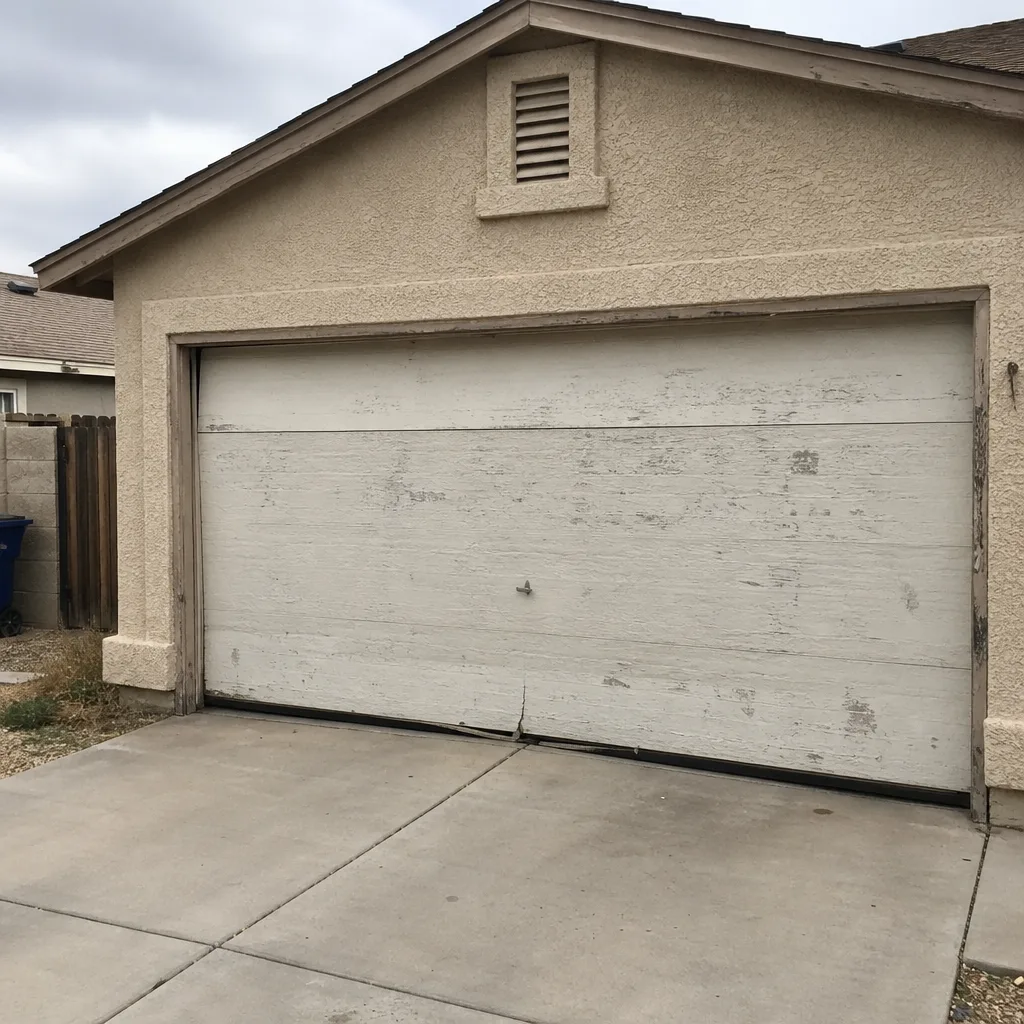
See the difference
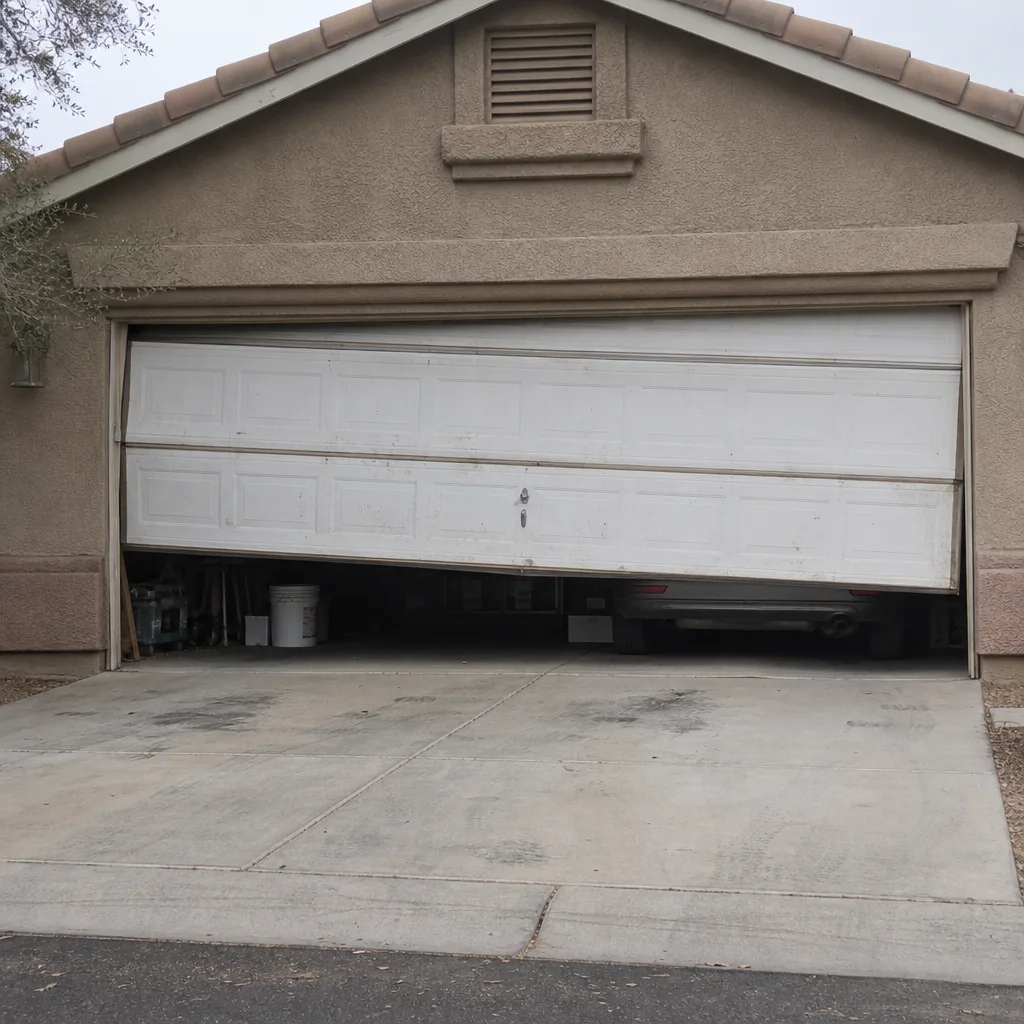 Before
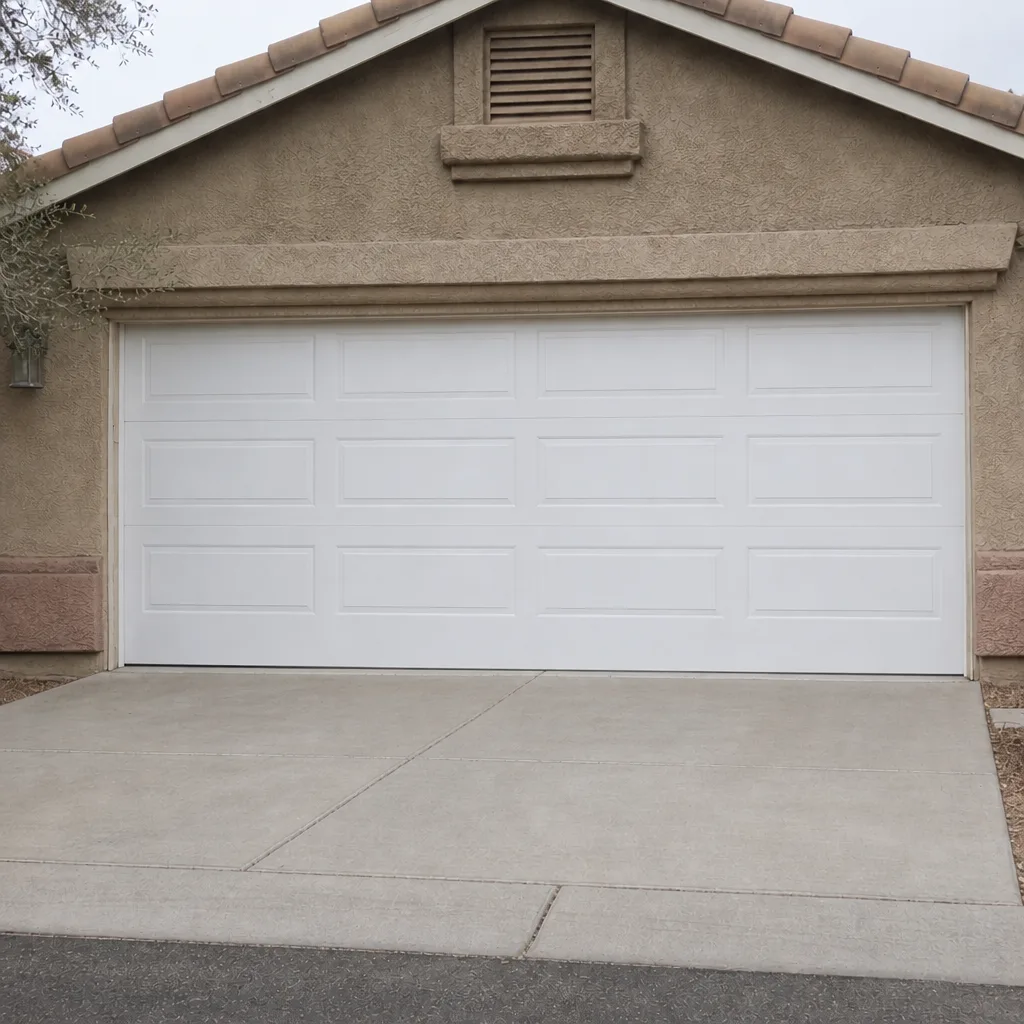 After
 Before
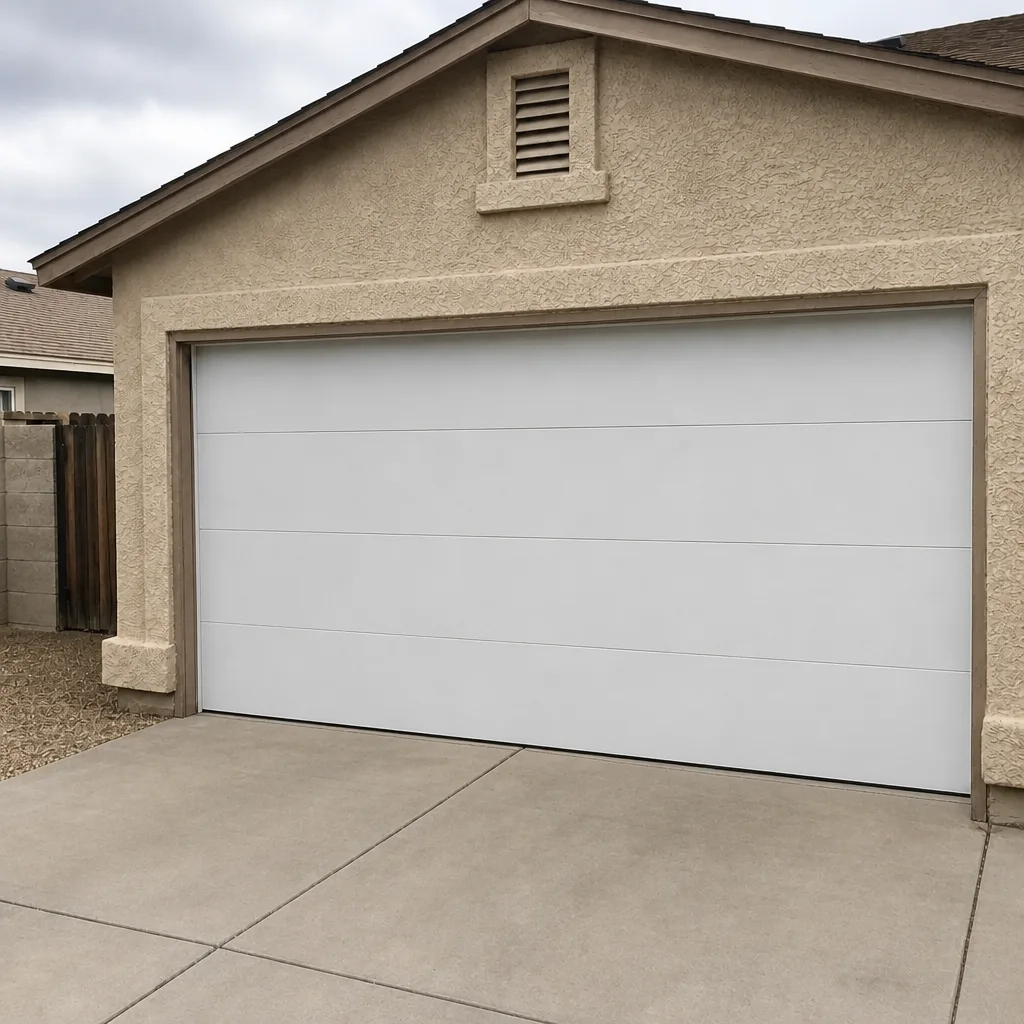 After
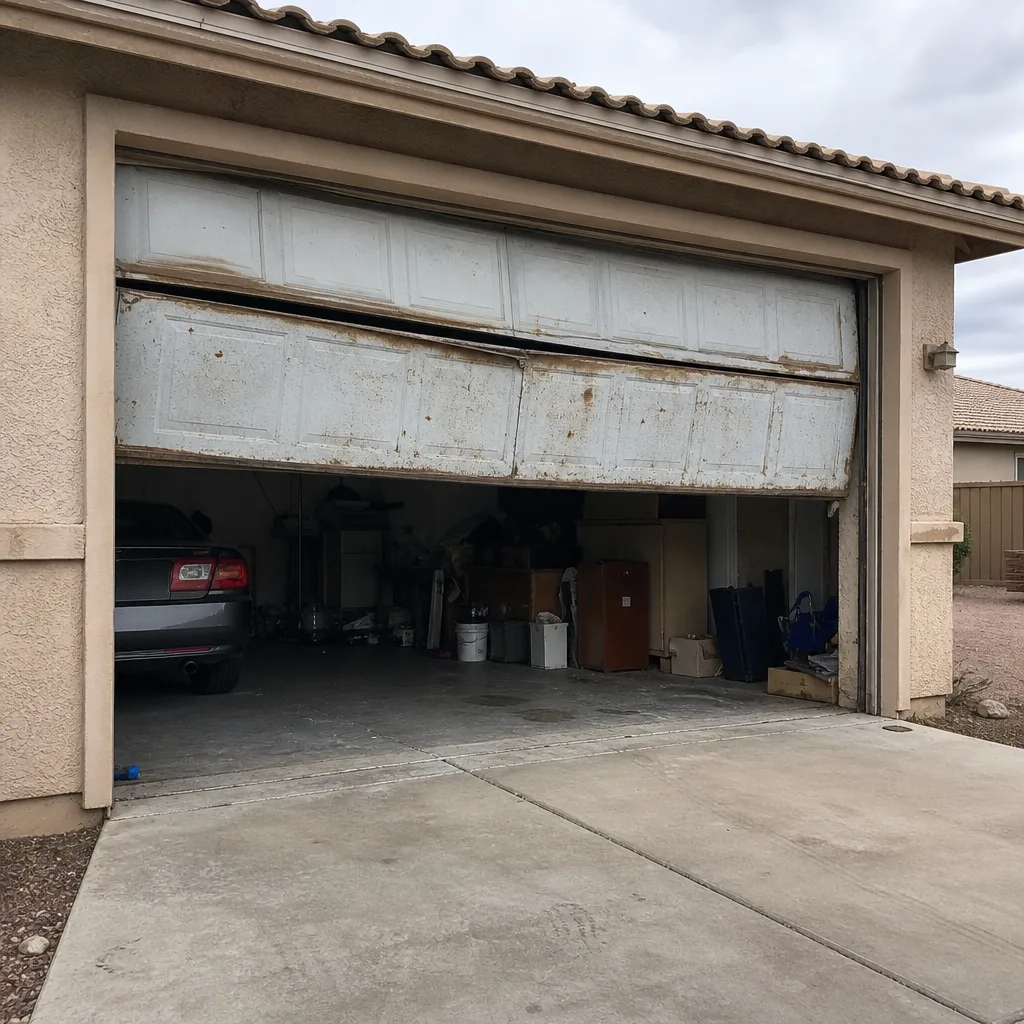 Before
 After
When to Call a Professional
Call a professional if the door won’t stay up when you lift it by hand, if you hear a loud bang and the door loses tension, if a cable looks frayed or has jumped a drum, if the door is angled or bound in its track, if the opener grinds or reverses mid-travel, or if the same “sensor issue” keeps recurring despite repositioning. Any of those is a stop-using-it-and-call situation. If you’re in the “annoyance” tier – a squeak, a rattle, a worn seal, a faded panel – a professional look now is usually the cheaper path than waiting for the failure. Brightline Garage Door Repair offers free estimates in Buckeye. Call (833) 519-6766. We answer 24/7. Fast dispatch from 7am to 7pm, Sunday through Friday. Our technicians have up to 15 years of experience working on LiftMaster, Chamberlain, Genie, Clopay, Amarr, Wayne Dalton, Craftsman, and Raynor equipment. If your opener is the concern rather than the door, our garage door opener repair page covers what’s involved and how we diagnose it. And if you want the full picture of what we handle across the area, our Buckeye page has it. The price is set per job by the written estimate, quoted and agreed before any work starts.
Frequently Asked Questions
A cracked or crumbling bottom seal. It’s the simplest, cheapest part to replace, but most homeowners don’t check it until the seal is fully gone and a draft or dust problem has already started. Run a finger along the inside of the bottom edge. If it crumbles or leaves black on your skin, replace it. Call (833) 519-6766 for an exact quote – estimates are free.
That pattern usually points to heat, not a dead opener. The two most common causes are safety sensors flooding with direct afternoon sun or the opener’s thermal protection shutting the motor down when it’s overworked in the heat. Repositioning or shading the sensors resolves the first. The second usually means an underlying spring issue loading the motor. Call us for a diagnosis.
Disconnect the opener with the manual release cord, then lift the door by hand. A door that lifts easily and holds position has good springs, so the problem is the opener. A door that feels very heavy or drops to the floor when released has tired springs, so the problem is the counterbalance. Either way, the springs themselves are a professional-only repair.
Sometimes, but less often than most homeowners assume. In a Buckeye garage, intermittent failure that follows the sun’s position across the sky is far more likely heat-driven sensor drift or thermal cutoff on the opener than a failing remote. Test the door at the hottest part of the day and note the pattern before you replace anything.
A metal-on-metal shriek from the track, a loud bang followed by a door that won’t lift, popping or snapping when the door is fully down, or any grinding sound coming from the opener housing that gets worse with use. Those point to load-bearing failures or motor damage. Stop using the door and call for service. A dry squeak or a light rattle is not in that category.
Sometimes, on a standard bottom seal that slides into an aluminum retainer without removing the door, yes. But if the seal has fused to the retainer, or the panel is warped, or the door has hairline cracks that need attention too, that’s a job to have done properly. In Buckeye, the sun-facing side is often the one that needs work, and a specialist can tell you quickly whether it’s a five-minute job or not.
The Bottom Line
Most garage door failures give you weeks of warning first – they’re just warnings that don’t show up on a generic maintenance list. In Buckeye, watch for a crumbly bottom seal, faded or warped panels on the sun side, a loud or popping noise from the springs, an opener that drifts or stalls in the afternoon heat, and intermittent sensor failures that follow the sun across the sky. Test the door by hand to sort load-bearing problems from opener problems. Handle the small stuff early and you’ll rarely see the emergency tier. If you’re unsure about a warning sign, the fastest way to sort it is a call. Brightline Garage Door Repair offers free estimates in Buckeye. Call (833) 519-6766. We answer 24/7. Fast dispatch from 7am to 7pm, Sunday through Friday. One call covers Brightline Garage Door Repair, from a worn seal to a full new door installation.
Written by the team at Brightline Garage Door Repair.