
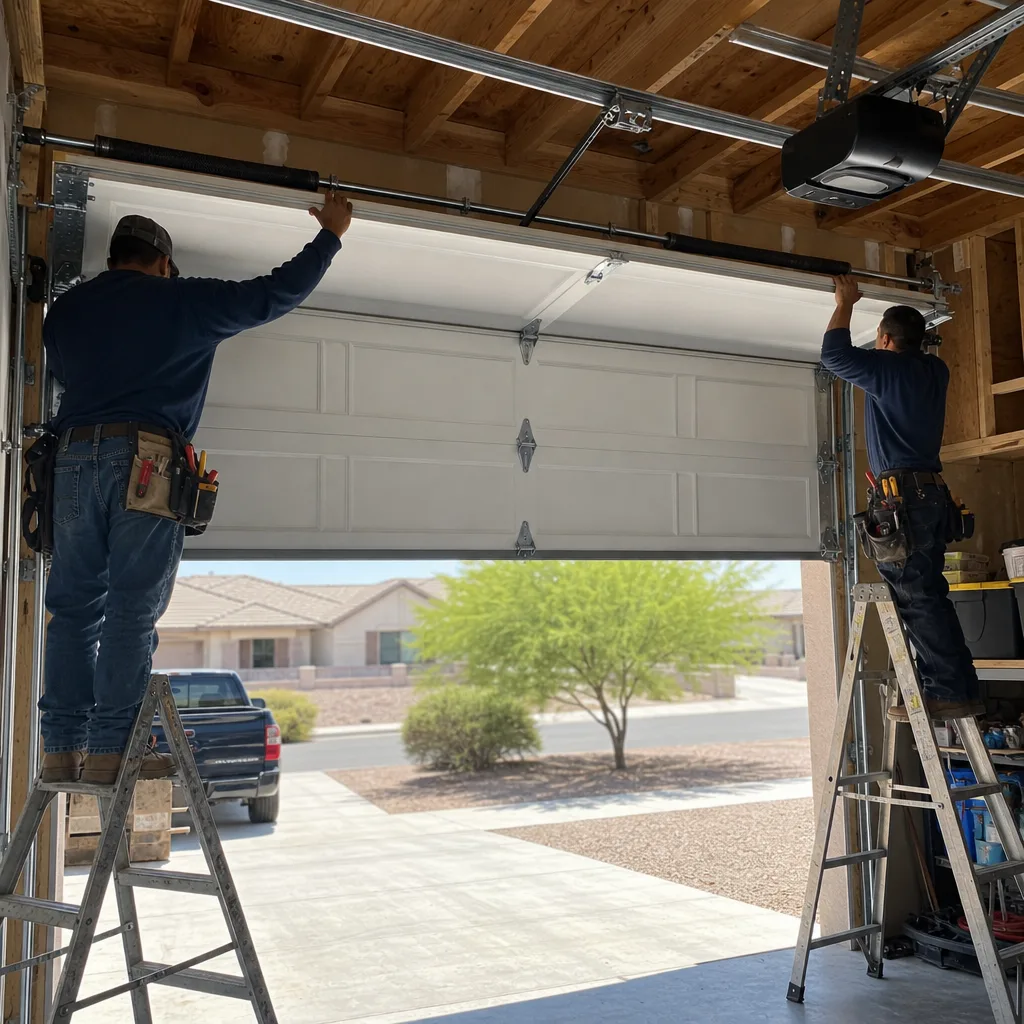
Last updated November 14, 2026
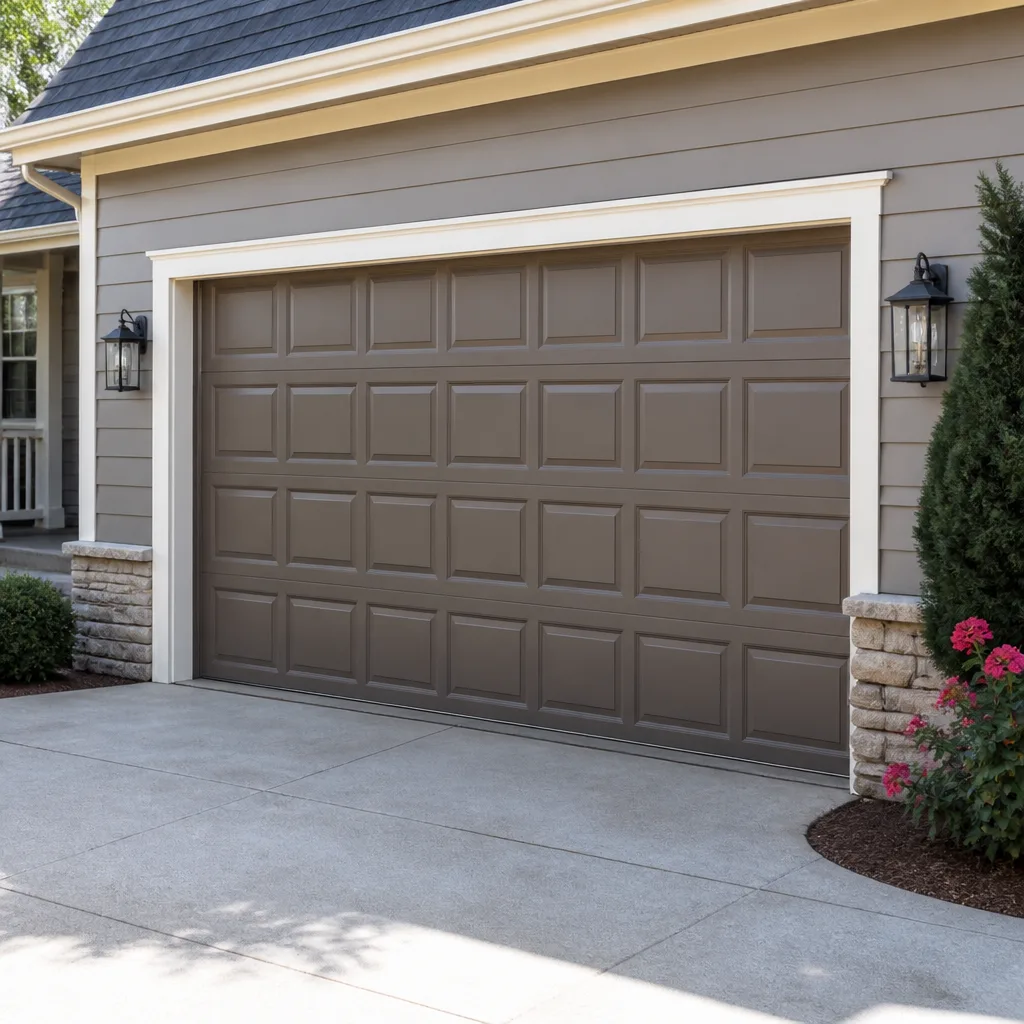 Raised-panel steel
 Carriage house
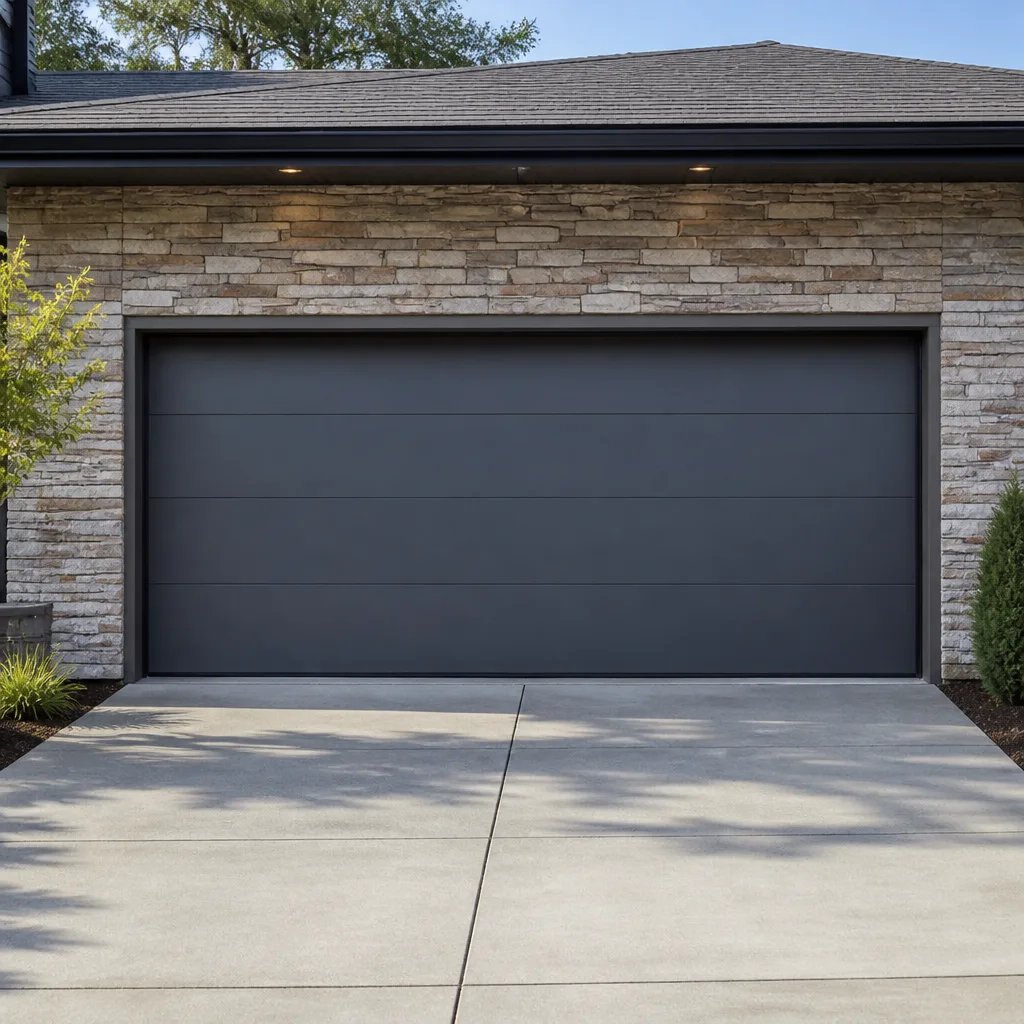 Modern flush
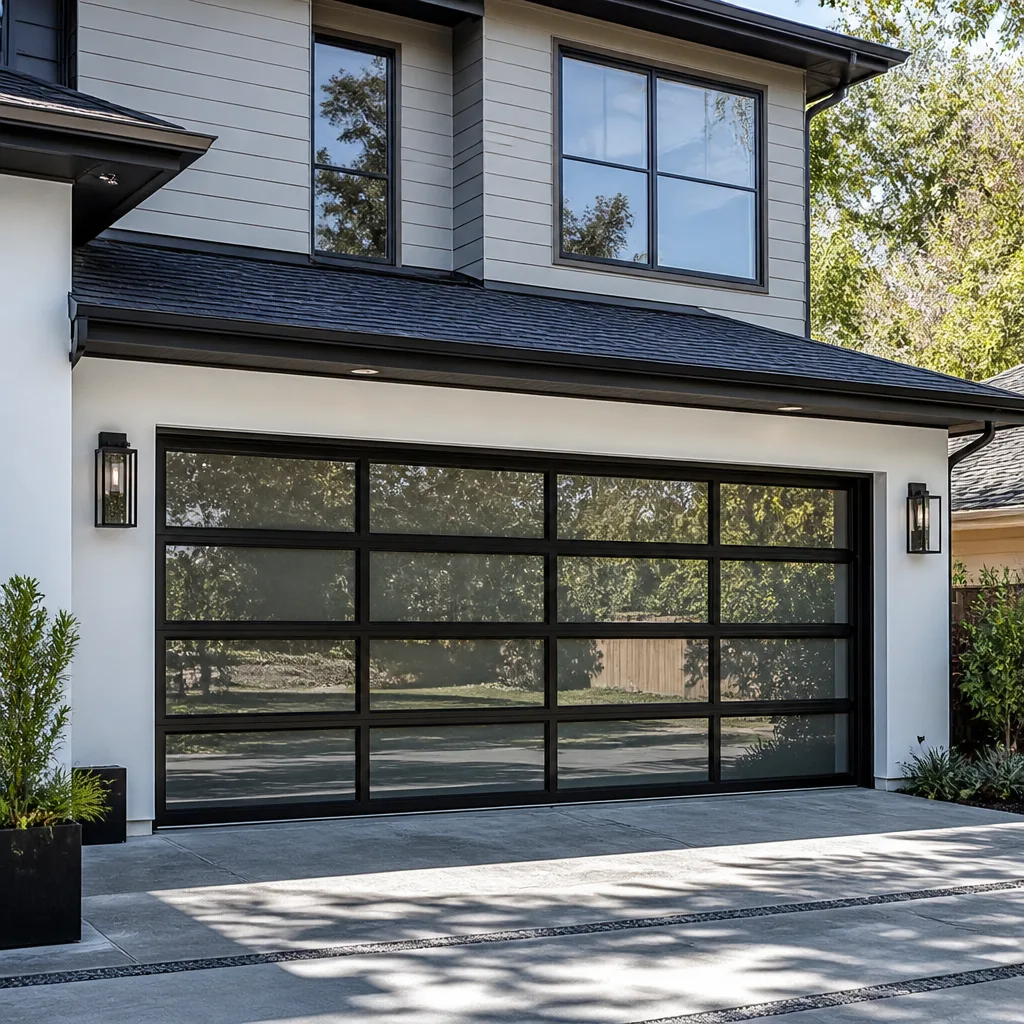 Full-view glass
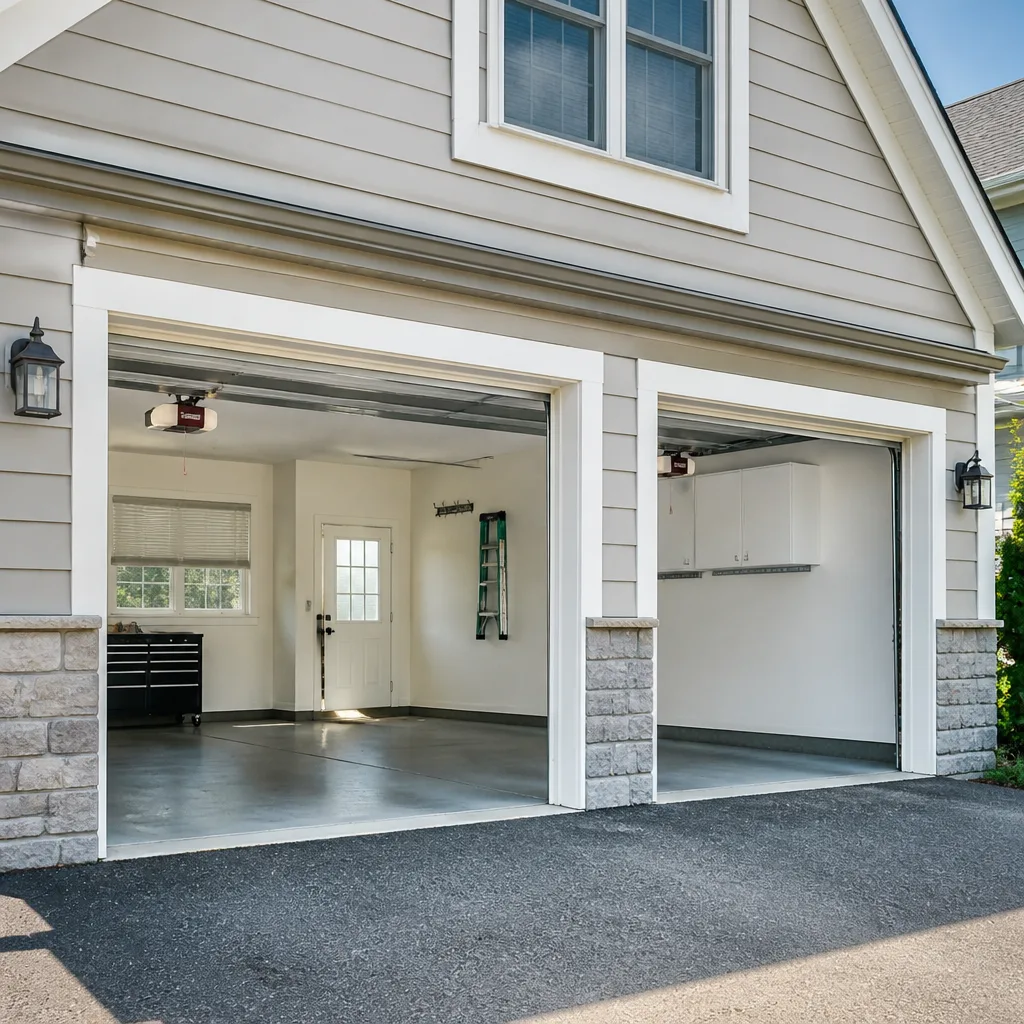 LiftMaster openers
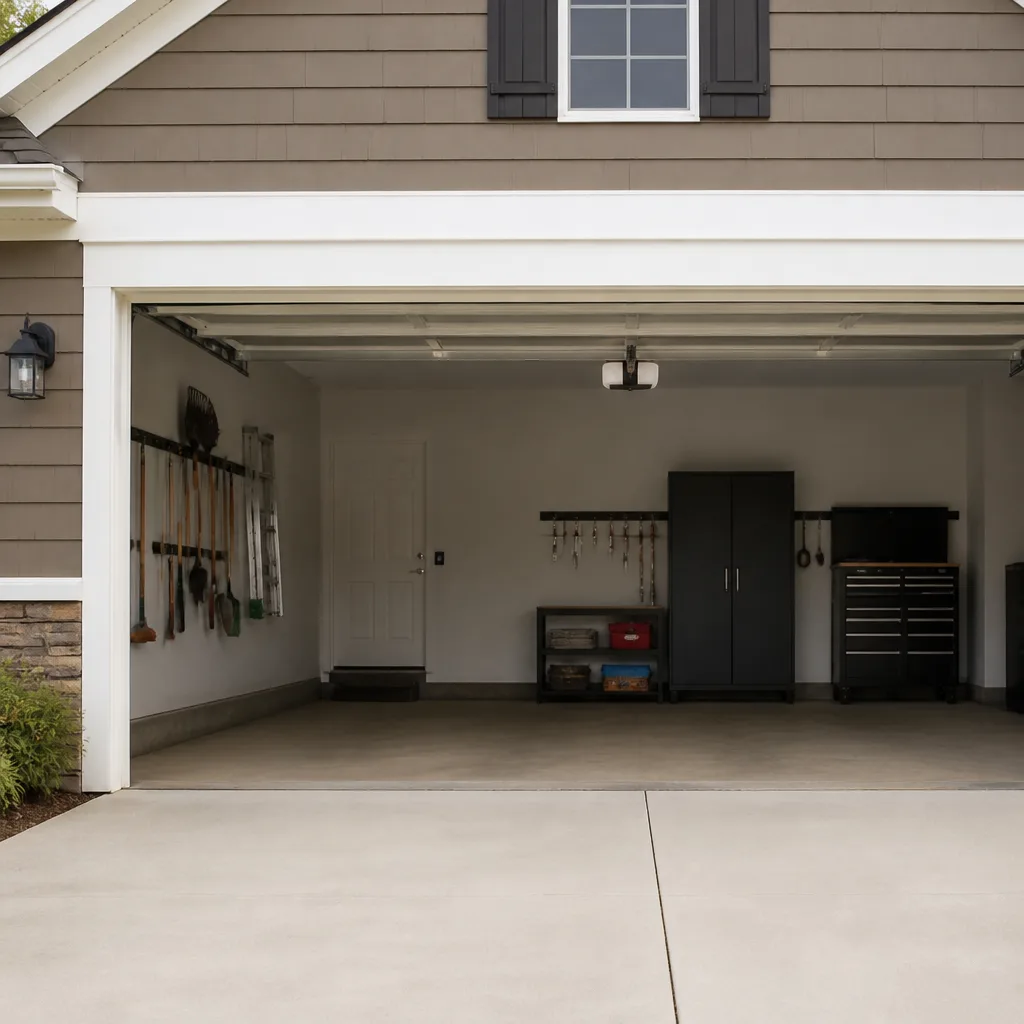 Chamberlain openers
Full 25-point door and opener safety check with every visit - springs, cables, rollers, tracks, and your LiftMaster or Chamberlain opener included
You get a price before we start. It does not change when the pro arrives.
Get your free estimateGarage Door Repair Maintenance Schedule: What to Do and When
If you’re lubricating your garage door springs every six months because a blog said so, you’re probably doing it at exactly the wrong time for Buckeye’s climate. Months are a poor calendar here. Your hardware doesn’t care that it’s January. It cares that the afternoon temperature swings from 68°F to 106°F in a single season, that monsoon dust works its way into every roller and hinge, and that the sun hits your south-facing door with a UV load that breaks down rubber seals faster than most guides admit. In this guide, we walk through a maintenance schedule built around temperature and desert conditions rather than the calendar, component by component, so you know what to check, when to check it in Buckeye, and what “replace now” actually looks like.
Styles & brands we work with
- Raised-panel steel
- Carriage house
- Modern flush
- Full-view glass
- LiftMaster openers
- Chamberlain openers
Quick Answer
The right garage door maintenance schedule in Buckeye runs on two seasonal windows, not a monthly calendar: a pre-summer service before the sustained 100°F+ heat sets in, and a post-monsoon service after the humidity and dust season ends. Between those windows, component checks happen by trigger (noise, visible rust, slack cable), not by month. Springs, cables, rollers, and weatherstripping each have their own realistic service interval.
Table of Contents
- Why a Calendar-Based Schedule Misses the Point in Buckeye
- The Two Critical Seasonal Windows for Buckeye
- Which Lubricants Actually Survive Buckeye Heat
- Spring and Cable Inspection Protocol
- Weatherstripping: The Component Buckeye UV Destroys First
- Realistic Service Intervals by Component
- Step-by-Step: The Pre-Summer and Post-Monsoon Walkthrough
- Opener and Safety Sensor Checks
- Common Mistakes to Avoid
- When to Call a Professional
- Frequently Asked Questions
- The Bottom Line
Why a Calendar-Based Schedule Misses the Point in Buckeye
Most garage door maintenance advice is written for a temperate climate. You’ll read “lubricate every six months,” “check springs annually,” “inspect weatherstripping each spring” – and none of it accounts for what actually stresses components in Buckeye. The two forces that wear out garage door hardware here are thermal expansion and ultraviolet radiation, and neither one follows a twelve-month cycle in the way a midwestern guide assumes.
Metal expands when it’s hot and contracts when it cools. In Buckeye, a steel door panel can swing through a temperature range of 40°F or more between a cool winter morning and a warm afternoon, and through a much wider range between night and a July afternoon. Those cycles work screws loose, let rollers drift out of their tracks, and fatigue the metal in torsion springs. The physics runs on a thermal clock, and that clock has two distinct peak stress periods here: the ramp into summer heat and the close of monsoon season, when humidity has been sitting on metal hardware for weeks and then suddenly dries out.
UV is the second force. Rubber and foam weatherstripping, plastic sensor lenses, and even the outer jacket on opener wiring all degrade under sustained sun exposure. A bottom seal that might last several years in a shaded Oregon driveway can crack and flatten much faster on a west-facing Buckeye door. Treating weatherstripping as an afterthought, the way most generic guides do, leaves the component most likely to fail on your door off the schedule entirely.
So the schedule we recommend for a Buckeye home runs on triggers and windows. Two full seasonal services, plus component-specific checks that fire on what you see and hear rather than on a recurring date. If you’d rather hand the whole schedule to a specialist, our garage door repair team is set up to walk through the full checklist on one visit.
The Two Critical Seasonal Windows for Buckeye
Buckeye’s year splits cleanly into two maintenance milestones. Time your garage door service around these two windows and you’ll catch problems before they become repairs. Skip them and you’ll usually find out something failed at the worst possible moment – a jammed door on a morning you’re already running late.
Window 1: Pre-Summer (Before Sustained 100°F+ Heat)
This is the higher-stakes window. The goal is to get every moving part into a known-good state before daily highs settle above 100°F and stay there. Heat is unforgiving to neglected hardware: old lubricant thins out, tired springs lose tension faster, and a loose bolt becomes a stripped bracket.
- Lubricate hinges, rollers, and the torsion spring with a heat-stable product (more on which ones below).
- Check and tighten all hinge, bracket, and track bolts to spec.
- Inspect springs and cables for rust, fraying, or slack.
- Test the door balance by hand – it should lift smoothly and hold.
- Examine weatherstripping for UV cracking and flattening.
- Test the safety reverse and photo-eye sensors.
Window 2: Post-Monsoon (After Humidity and Dust Season)
Once the monsoon season winds down, the priority shifts from heat to cleanup. Weeks of humidity and airborne dust leave grit in the tracks, moisture that has begun to work on bare metal, and seals that took a beating. This second service is about resetting the door after the hardest part of the year.
- Clear dust and debris from tracks and wipe them clean.
- Re-lubricate after cleaning (dust works into old grease and turns it into an abrasive paste).
- Inspect for rust bloom on springs, cables, and hardware.
- Re-check weatherstripping that may have hardened or separated during the humidity cycle.
- Test the opener force setting and the safety reverse.
Between these two windows, don’t ignore the door. Do a quick visual and listen test once a month. If you hear grinding, see a sagging panel, or notice a cable that looks slack, that’s the trigger to act – the calendar can wait.
Which Lubricants Actually Survive Buckeye Heat
The garage door lube that works in a mild climate often doesn’t survive a Buckeye summer. Two product categories fail here in predictable ways: general-purpose penetrating sprays (think WD-40) and cheap silicone sprays. The penetrating spray is mostly solvent, and it evaporates off hot metal fast, leaving parts drier than before – and worse, it dissolves existing grease on its way out. Cheap silicone sprays gum up above 100°F, attracting dust that then binds into the mechanism. Either way, you’re undoing good work every few weeks.
What actually holds up on metal in desert conditions:
- A lithium- or moly-based grease for hinges, bearings, and the torsion spring coils. These stay put at high temperatures and resist washout.
- A heat-stable spray lubricant rated for high temperatures (look for products labeled for extreme heat) for rollers and track contact points where a heavier grease would trap too much dust.
- Nothing abrasive and nothing sticky – the goal is a thin, stable film that survives heat and doesn’t attract grit.
How you apply matters as much as what you apply. A light film on the springs, a few drops on each roller bearing, and a thin line on the hinge pivot points, wiped down afterward so the excess doesn’t collect dust. Avoid spraying the track itself with grease: dust settles into the grease and the door starts dragging. Clean bare metal tracks with a rag and a dry lubricant instead. In our experience across the doors we service in Buckeye, the homes that get this wrong are also the ones that hear roller noise first.
Spring and Cable Inspection Protocol
Springs and cables are the parts of your garage door that carry real stored energy, and they’re also the parts you should look at but never touch. What we want you to do here is a visual inspection and a listen test, not a repair. If anything on this list looks wrong, stop and call a trained technician.
What “normal wear” looks like
- Aging torsion springs that still look uniform, with a slight dull patina and no visible gaps in the coils.
- Cables that sit evenly wound on the drums, with a light sheen of lubricant and no visible broken strands.
- Some surface discoloration on springs from normal heat cycling.
What “replace now” looks like
- A visible gap between coils on a torsion spring, or a spring that looks stretched and separated. That spring has broken.
- Cables that are frayed, kinked, or have visible broken wire strands – a cable failure is a serious safety event, not a routine wear item to ignore.
- Bowed cable drums, cables that have jumped off the drum, or a door that hangs crooked when you lift it by hand.
- Any grinding, snapping, or popping sound when the door moves.
Safety note: torsion springs and the cables under tension can cause serious injury if you handle them without the right tools and training. Never try to release tension, unwind a spring, or cut a cable yourself. Call a professional the moment you see any of the “replace now” signs above.
Springs and cables typically need visual inspection at both of Buckeye’s seasonal windows, and functional testing (balance, smooth travel) monthly in between. Springs in a hot climate often cycle harder than in cooler areas, so keep an eye on them – the pre-summer window is the best time to catch a spring that’s starting to fatigue. If a spring or cable has already let go, our Brightline Garage Door Repair team can diagnose it and give you a clear written estimate before any work begins.
Weatherstripping: The Component Buckeye UV Destroys First
Most maintenance guides mention weatherstripping in one line and move on. In Buckeye, it deserves its own section, because the sun hits your door’s rubber seals with more sustained UV exposure than almost any other climate in the country. Rubber seals dry, crack, and flatten under that load far faster than a generic “annual inspection” would catch, and a failed bottom or side seal is the first thing that lets dust and pests in – not a spring or a hinge.
There are three seals on most residential doors, and each fails differently:
- Bottom seal (retainer seal): the big rubber strip along the ground. In Buckeye heat it flattens and hardens, sometimes within a couple of years. Check for visible cracks, a seal that’s separated from the retainer, or daylight at the corners.
- Side jambs: the strips down each side. UV cracking and curling are the tell. If the jamb seal isn’t touching the door edge, it’s failed.
- Top seal: smaller, but the same UV load. Often overlooked until water or dust comes in at the top.
Inspect these at both seasonal windows and after any stretch of heavy sun – a quick visual on the bottom seal once a month is worth the two seconds. If the rubber has gone hard and inflexible, or you can see cracks running through it, replace it before the next heat wave. Replacing weatherstripping is one of the least expensive maintenance items on the door, and it protects everything behind it from dust and moisture attack.
Here’s the part generic guides miss: the bottom seal is the door’s dust and pest barrier in Buckeye, and once it fails, grit and insects get inside the garage and into the track area. That grit is what turns a smooth door into a dragging one. If you notice the door getting dirtier inside than usual, look at the bottom seal before anything else.
Realistic Service Intervals by Component
One blanket “annual tune-up” recommendation doesn’t work here. Different components age on different timelines in Buckeye, and a schedule that treats them all the same either over-servicing easy parts or under-servicing the ones that matter. Here’s how we’d time each component for a typical residential door in this climate:
- Rollers: inspect at each seasonal window; replace the rollers on a rolling basis as they wear (nylon rollers usually outlast steel, and in this heat you’ll hear a worn roller before you see it).
- Springs: visual inspection at both windows, monthly listen test. A torsion spring that starts to lose tension tells you it’s failing before it snaps.
- Cables: visual inspection at both windows. Any kink, fray, or slack means a call.
- Hinges and brackets: bolt check and lubrication at both windows.
- Weatherstripping: visual check monthly, and full inspection at both seasonal windows. Replace when it hardens or cracks.
- Opener chain or belt: tension check and lubrication at each seasonal window. A belt-driven LiftMaster or a chain-driven Raynor unit both want this – the mechanism just needs to stay clean and tensioned.
- Safety sensors: test the reverse function monthly; clean the photo-eye lenses monthly (dust buildup is the number one cause of “my door won’t close”).
- Door panel and paint: a wash and wax once a year before summer protects the finish from UV fade, which matters especially on steel doors.
This is not a rigid rulebook. A door in heavy daily use, an aging door, or one exposed to the harshest sun may need attention faster. The principle is: the seasonal windows catch the big stuff, and component triggers catch the rest.
Step-by-Step: The Pre-Summer and Post-Monsoon Walkthrough
Here’s how to run each seasonal service as a numbered sequence. Do these in order, and stop if any safety item turns up. If you’d rather not run the tension and spring checks yourself, our team offers a free estimate before any work on our garage door opener repair side and repairs.
Pre-Summer Walkthrough
- Clear the area. Remove anything stored under or near the door path. Never work the door while someone is in the opening.
- Listen first. Run the door a full cycle and listen for grinding, squealing, or popping. Note where it comes from.
- Balance test. With the door closed, disengage the opener (pull the release cord) and lift the door by hand halfway. It should feel manageable and, when released, hold its position. A door that drops or won’t hold means the springs need professional attention.
- Visual spring and cable pass. With the door fully closed and springs relaxed, look for gaps between coils, fraying, or slack. Do not adjust anything.
- Lubricate metal parts. Heat-stable grease on the springs and hinges, a thin film on rollers. Wipe excess.
- Tighten bolts. Check the hinge and bracket bolts with a wrench. Hand-tight, not cranked.
- Rebalance and re-engage the opener. Run the door again. It should travel smoothly and sit flush when closed.
- Test safety reverse. Place an object in the door’s path and confirm the door reverses on contact. Test the photo-eye pair by blocking the beam.
Post-Monsoon Walkthrough
- Clean the tracks. Wipe dust and grit from the tracks with a dry rag. Don’t use a greasy cleaner on the track.
- Re-lubricate moving parts after cleaning, same heat-stable products as before.
- Rust inspection. Look for orange bloom on springs, cables, and hardware. Light surface rust is cosmetic; deep pitting means call.
- Seal inspection. Check all three seals: bottom, side, top. Replace if hardened or cracked.
- Opener force test. With the door closed, place a small object in the path and confirm the force setting is sensitive enough to reverse. If it pushes through, the opener needs service.
- Sensor and photo-eye check. Clean the lenses and re-test the beam alignment.
- Full door cycle. Run the door up and down twice. Note any change in sound or speed.
Whether the door is carrying a Chamberlain or a Wayne Dalton opener, the walkthrough is the same – the maintenance principles apply to the whole door and drive system together. If you’d rather have a hands-on audit, our Buckeye team can run the full checklist and hand you a clear picture of what’s solid and what’s due.
Opener and Safety Sensor Checks
The opener is the most-used appliance in the garage and the easiest to neglect. It doesn’t fail dramatically – it just gets noisy, sluggish, and eventually stops reversing. A few checks keep it healthy without opening a can of worms.
- Chain or belt tension: check at each seasonal window. A sagging chain slaps the rail and a loose belt skips. Lubricate the chain, tighten per the opener’s manual, and inspect the drive gear for wear.
- Force settings: test monthly. If the door pushes through a small object instead of reversing, the settings have drifted and the opener needs attention.
- Safety sensors (photo-eyes): test monthly by blocking the beam with a hand. The door should not close. Clean the lenses – dust is the most common cause of the door refusing to close.
- Remote and wall station: change batteries at the start of each year; if a remote has stopped working, don’t assume it’s dead – it may need re-pairing.
- Battery backup (if equipped): test it before the pre-summer window so you know it’ll hold the door up during a power cut.
If you notice that even a fresh adjustment doesn’t fix a force or reverse problem, the opener’s control board or drive may be the issue. That’s the point to call a specialist – generalist handymen often replace the whole opener when the actual fault is one worn gear or a loose belt. Our garage door opener repair team works on LiftMaster, Chamberlain, Genie, Craftsman, and the other brands we service, so the diagnosis is based on what the opener actually needs.
Common Mistakes to Avoid
- Lubricating on a fixed six-month calendar. Buckeye’s heat and dust mean the timing should follow seasonal windows, not the month on the wall. Lubricating in the middle of a July heat wave with the wrong product wastes the effort and can attract dust.
- Using WD-40 or cheap silicone spray on springs and hinges. Both evaporate or gum up in extreme heat. Use a heat-stable grease or high-temperature spray.
- Ignoring weatherstripping. Buckeye UV destroys bottom and side seals faster than most guides acknowledge, and a failed seal lets dust into the track, shortening the life of everything else.
- Tightening bolts to “as tight as possible.” Over-torqued hinge and bracket bolts strip threads and distort the door panel. Hand-tight is enough.
- Testing the safety reverse with your body. Use an object, never your hand or foot. Test it, but test it safely.
- Treating spring or cable noise as “normal.” A grinding spring or a slack cable is not a maintenance item to postpone – it’s a call today. Any DIY attempt on springs or cables is dangerous.
- Skipping the post-monsoon clean. Dust that settles into old grease turns into an abrasive paste and wears the rollers faster. Clean before you re-lubricate.
When to Call a Professional
Most of the schedule above is safe to handle yourself. Certain situations are not, and it’s worth knowing the line. Call a professional immediately if you see a visible gap in a torsion spring, a frayed or kinked cable, a door that hangs crooked, or hear a snapping or popping sound when the door moves – those are spring, cable, or bracket failures that can cause serious injury. Call if the opener won’t reverse, if the door won’t close reliably, or if the force settings drift and won’t hold. Call if you notice a stripping or grinding noise from the opener itself, or if the door pulls to one side. And call if you simply want the full walkthrough done correctly – an audit by someone who works on the brand already in your garage is faster and safer than guessing.
Brightline Garage Door Repair offers free estimates in Buckeye – call (833) 519-6766. We answer 24/7. Fast dispatch from 7am to 7pm, Sunday through Friday. We work on the brand already in your garage, whether it’s a LiftMaster opener, a Raynor spring assembly, or a Clopay panel, and the price is set by a written estimate before any work begins.
Frequently Asked Questions
Twice a year, timed to the two critical windows: before sustained 100°F+ heat sets in, and after monsoon season ends. Between those windows, do monthly listen and visual tests. The seasonal timing matters more than the month on the calendar because heat, UV, and dust are the real drivers of wear here.
You can apply a heat-stable grease or high-temperature spray to the coils while the door is fully closed and the springs are relaxed. What you cannot safely do is adjust tension, unwind a spring, or cut a cable. If you see gaps, fraying, or hear popping, call a professional – springs and cables carry dangerous stored energy.
A lithium- or moly-based grease for hinges and springs, and a heat-stable spray rated for high temperatures for rollers. Skip WD-40 and cheap silicone sprays, both of which evaporate or gum up above 100°F. Wipe off excess so the film doesn’t trap dust.
UV exposure. Buckeye’s sun breaks down the rubber in bottom seals faster than in most climates. Check the bottom seal once a month, replace it as soon as it hardens or cracks, and wipe it down during the post-monsoon window. A failed seal lets dust into the track, which drags the door.
The seasonal windows stay the same regardless of brand. What changes is the specific hardware and the tension settings – which is why we service every major brand on the door, including Wayne Dalton and Raynor, so the maintenance is aligned to the exact system you own rather than a generic checklist.
You can safely handle the cleaning, lubricating, and monthly safety checks. For springs, cables, opener force settings that won’t hold, or a full audit, call a specialist. Call (833) 519-6766 for a free estimate. We answer 24/7. Fast dispatch from 7am to 7pm, Sunday through Friday.
The Bottom Line
The best garage door maintenance schedule in Buckeye isn’t monthly or annual – it’s seasonal, built around the two stress windows (pre-summer heat and post-monsoon cleanup) with monthly listen and visual checks in between. Use heat-stable lubricants, not penetrating sprays. Inspect springs and cables visually but never touch them. Treat weatherstripping as a real component, not an afterthought, because UV destroys it faster here than almost anything else. Time service by trigger and season, not by the calendar, and your door will last longer and run quieter. For a free estimate on any repair, opener work, or a full installation, call (833) 519-6766. We answer 24/7. Fast dispatch from 7am to 7pm, Sunday through Friday.
Written by the team at Brightline Garage Door Repair.
See the difference
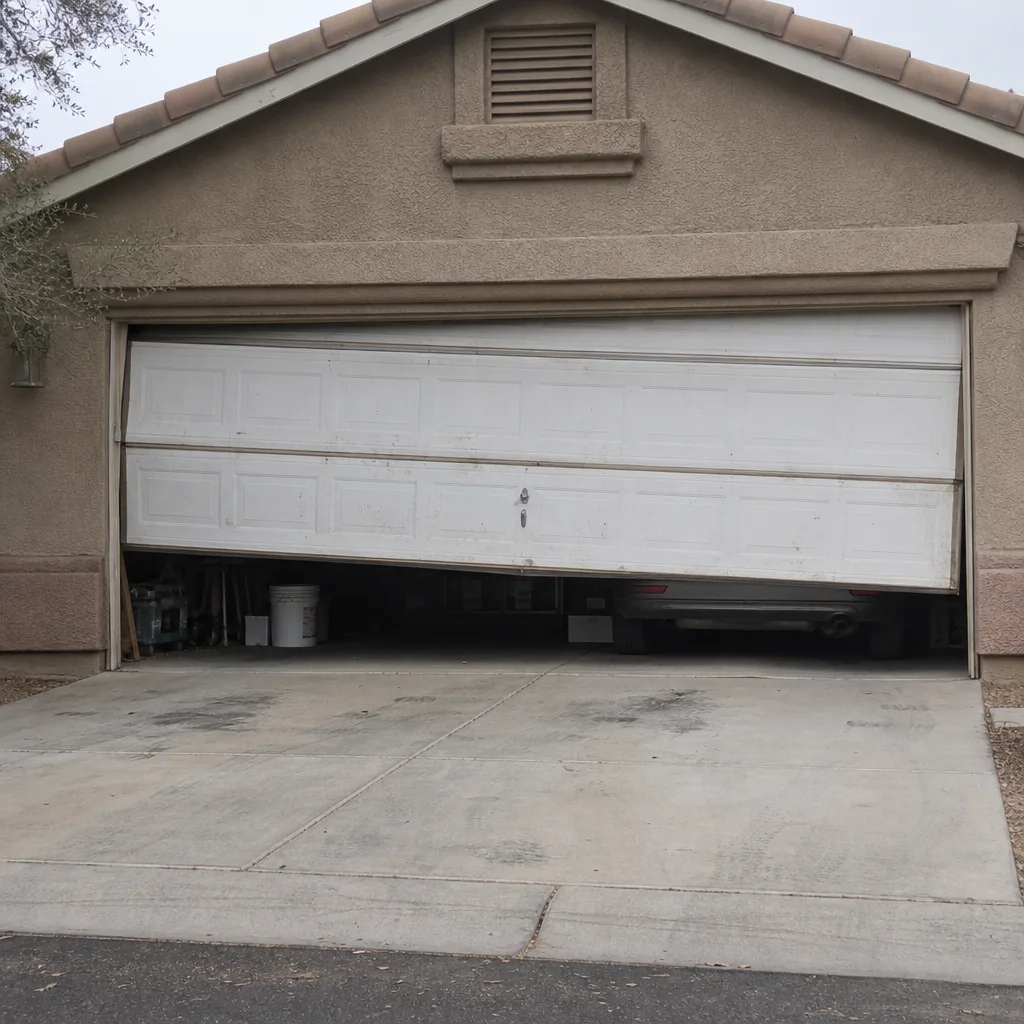 Before
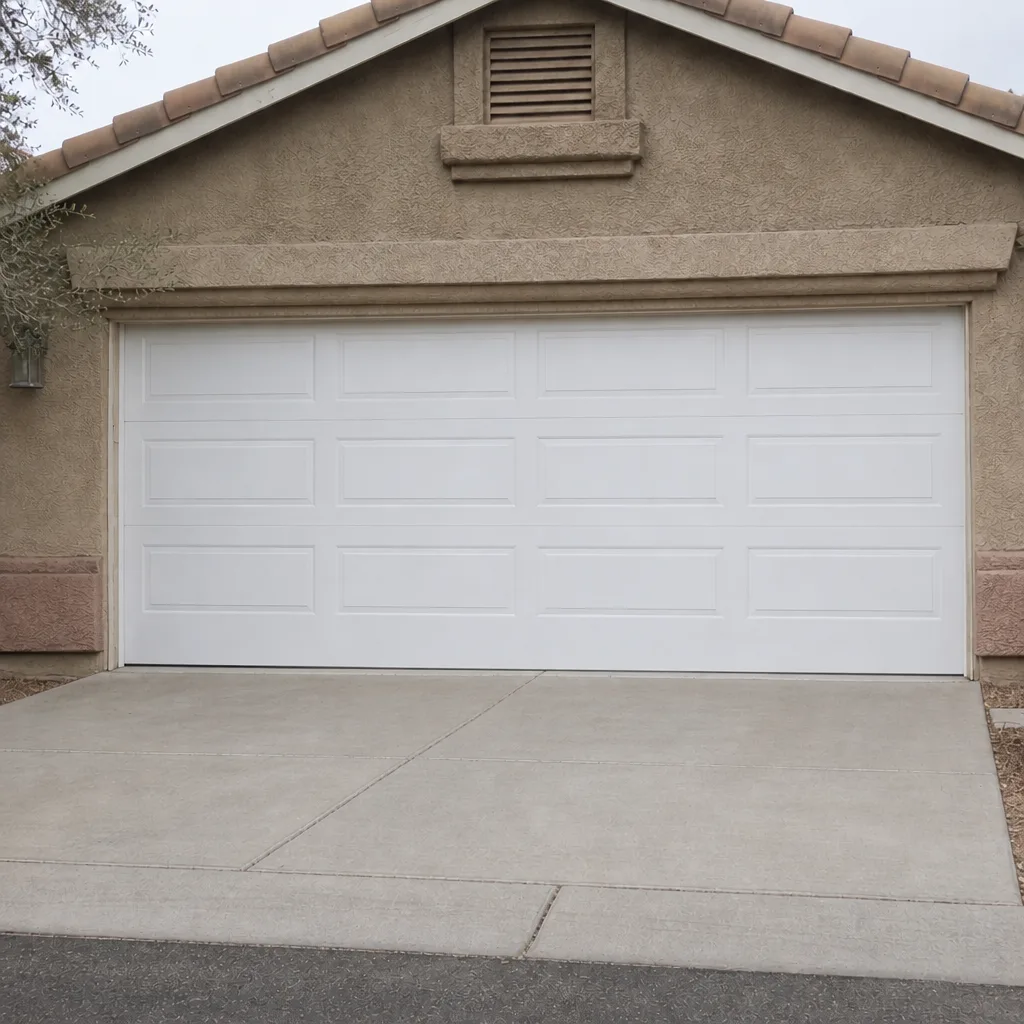 After
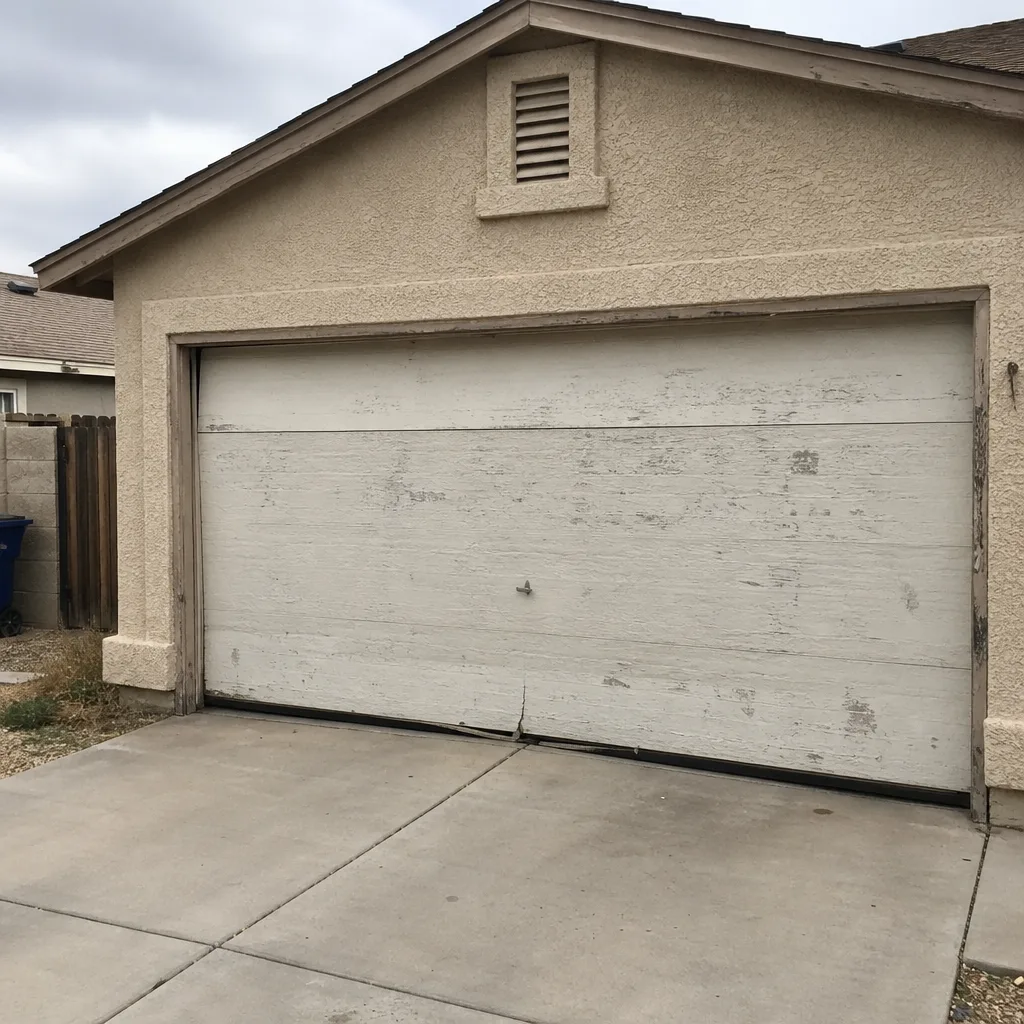 Before
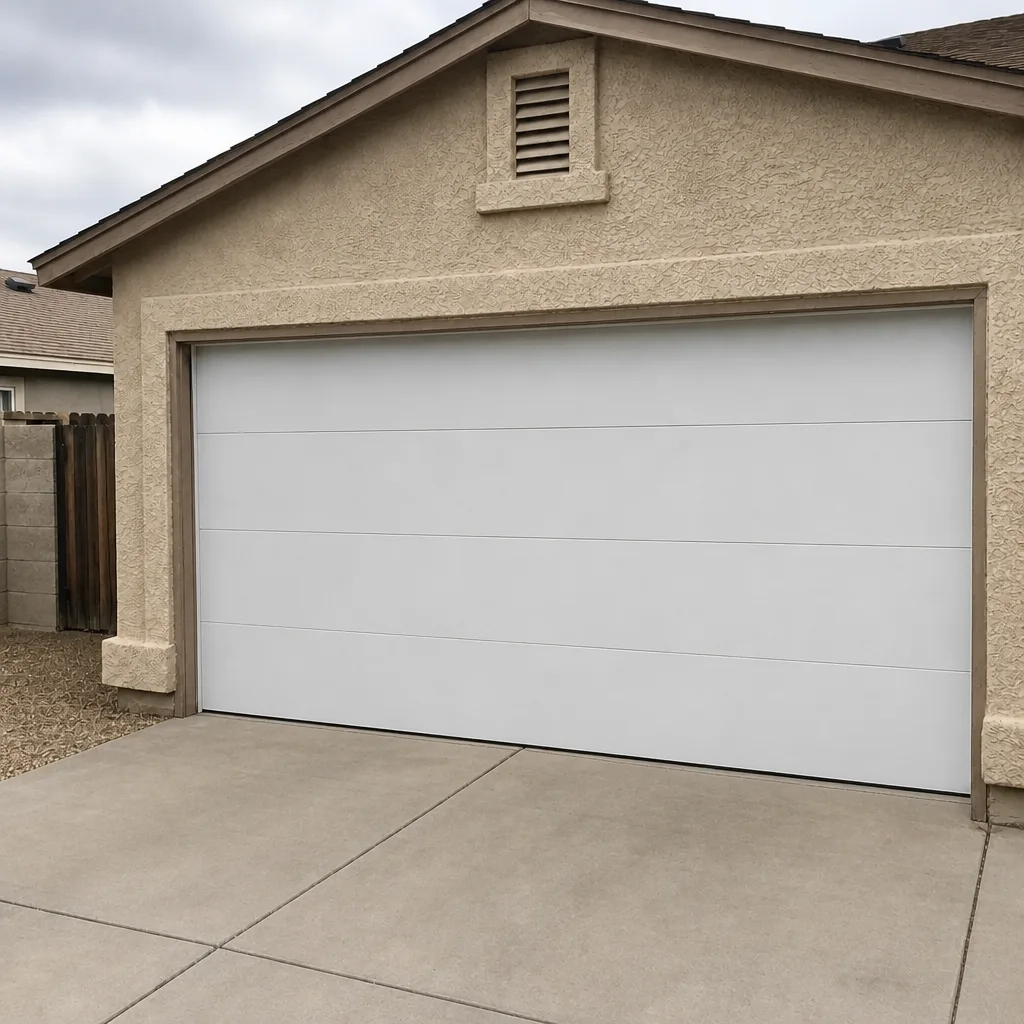 After
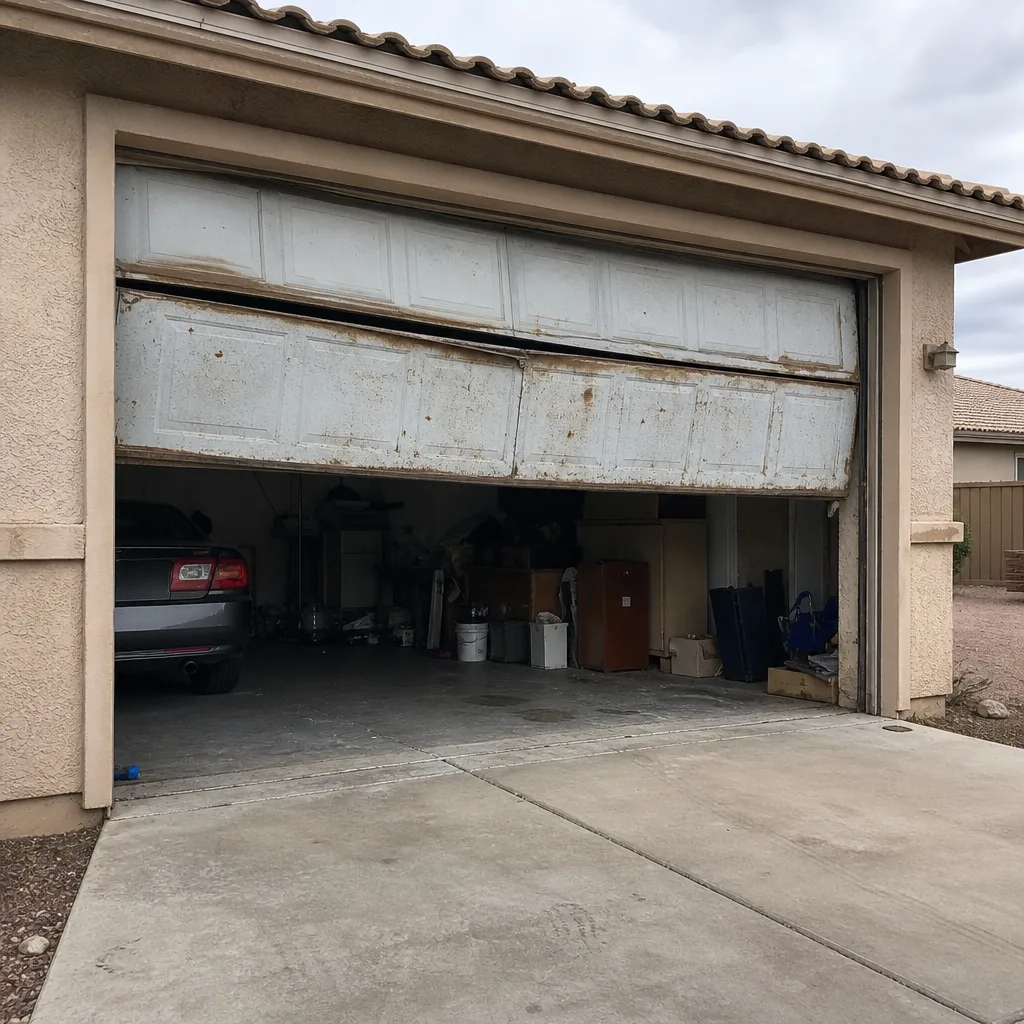 Before
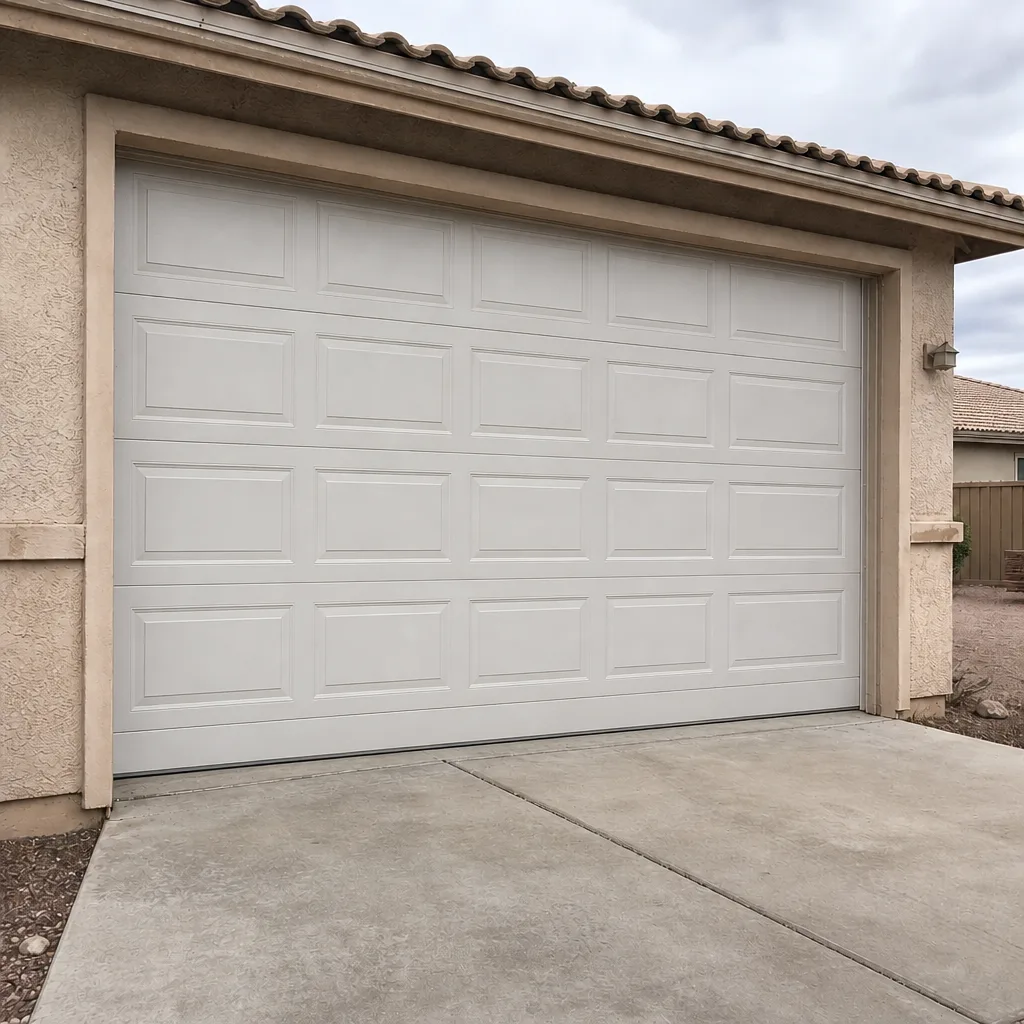 After