
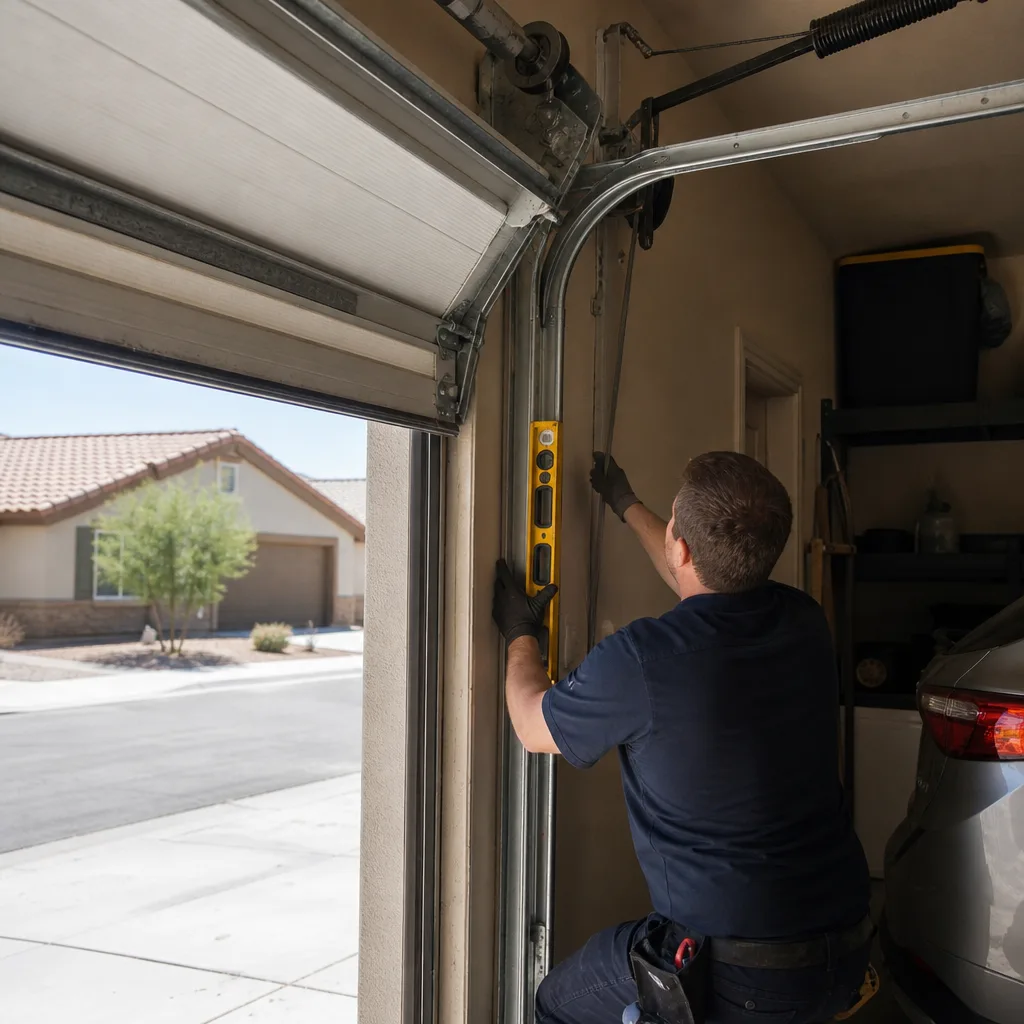
Last updated November 14, 2026
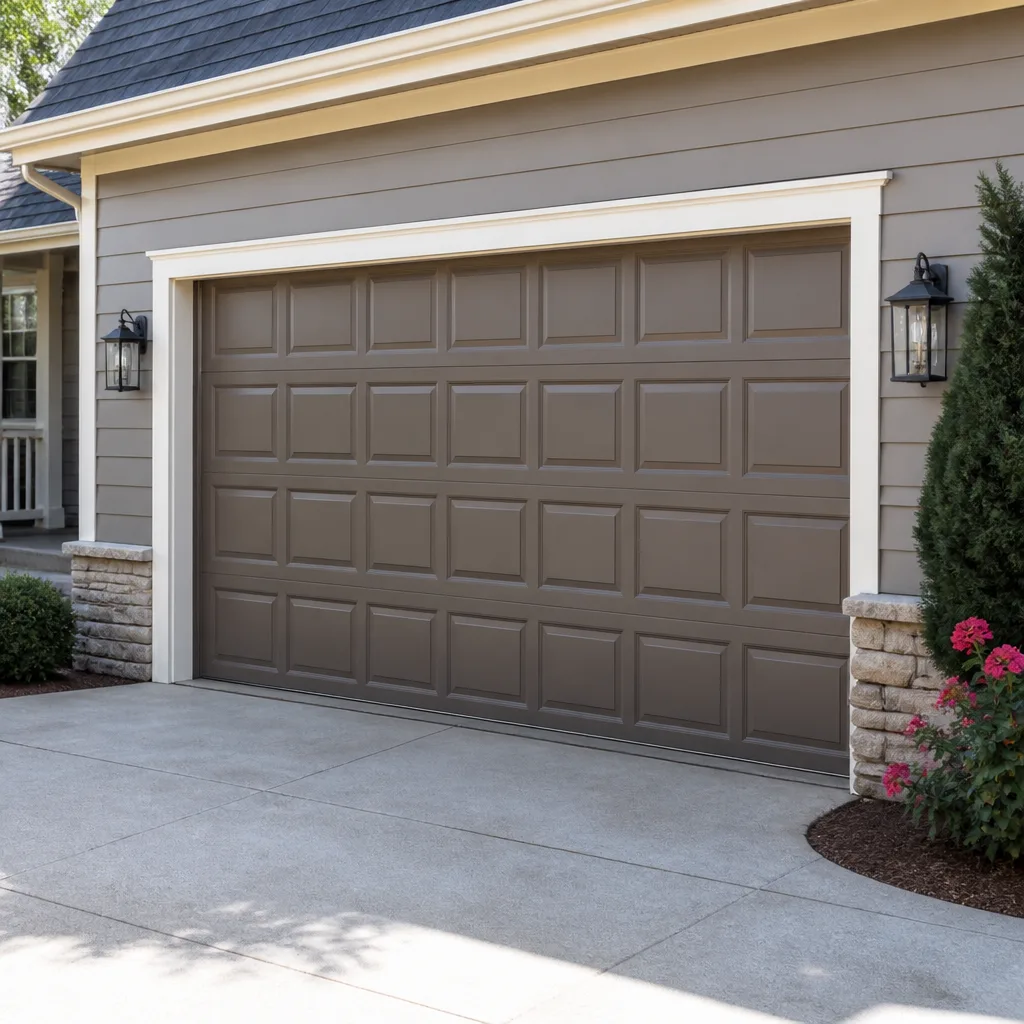 Raised-panel steel
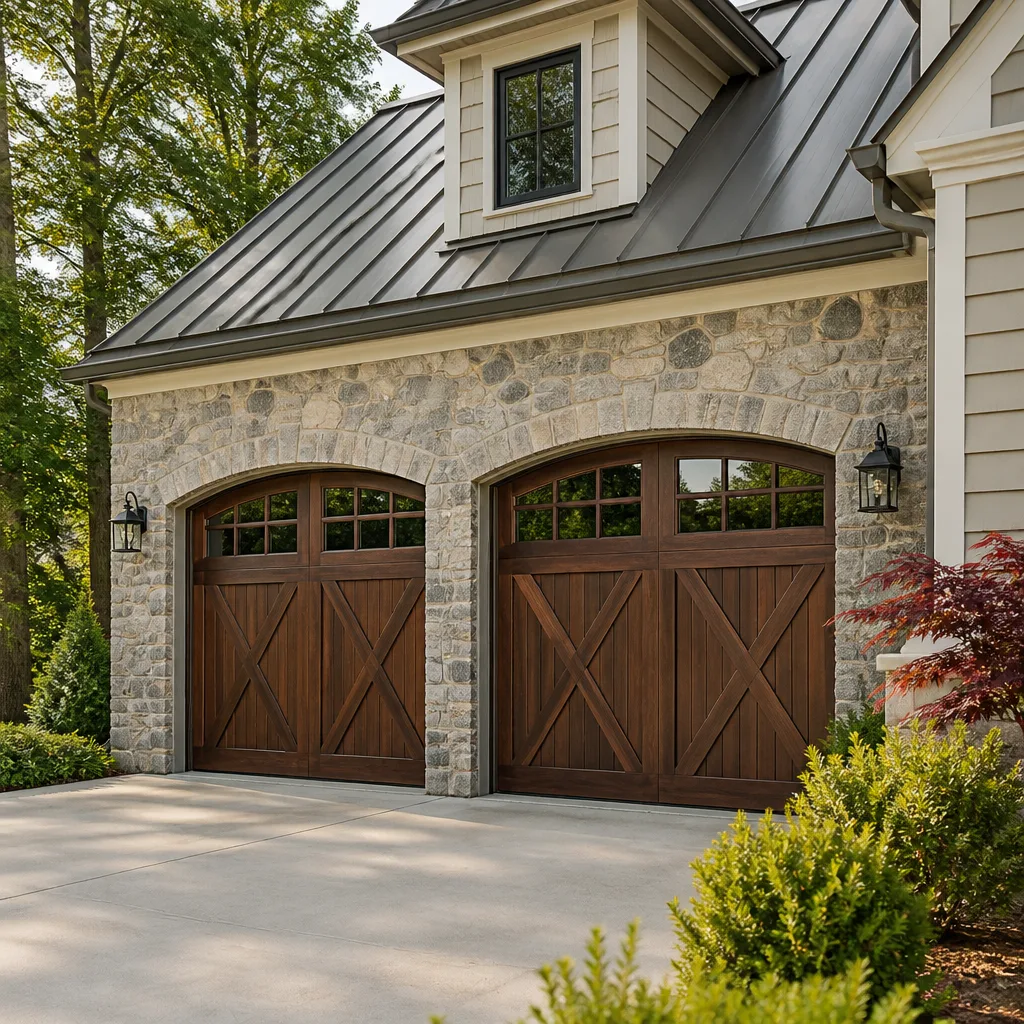 Carriage house
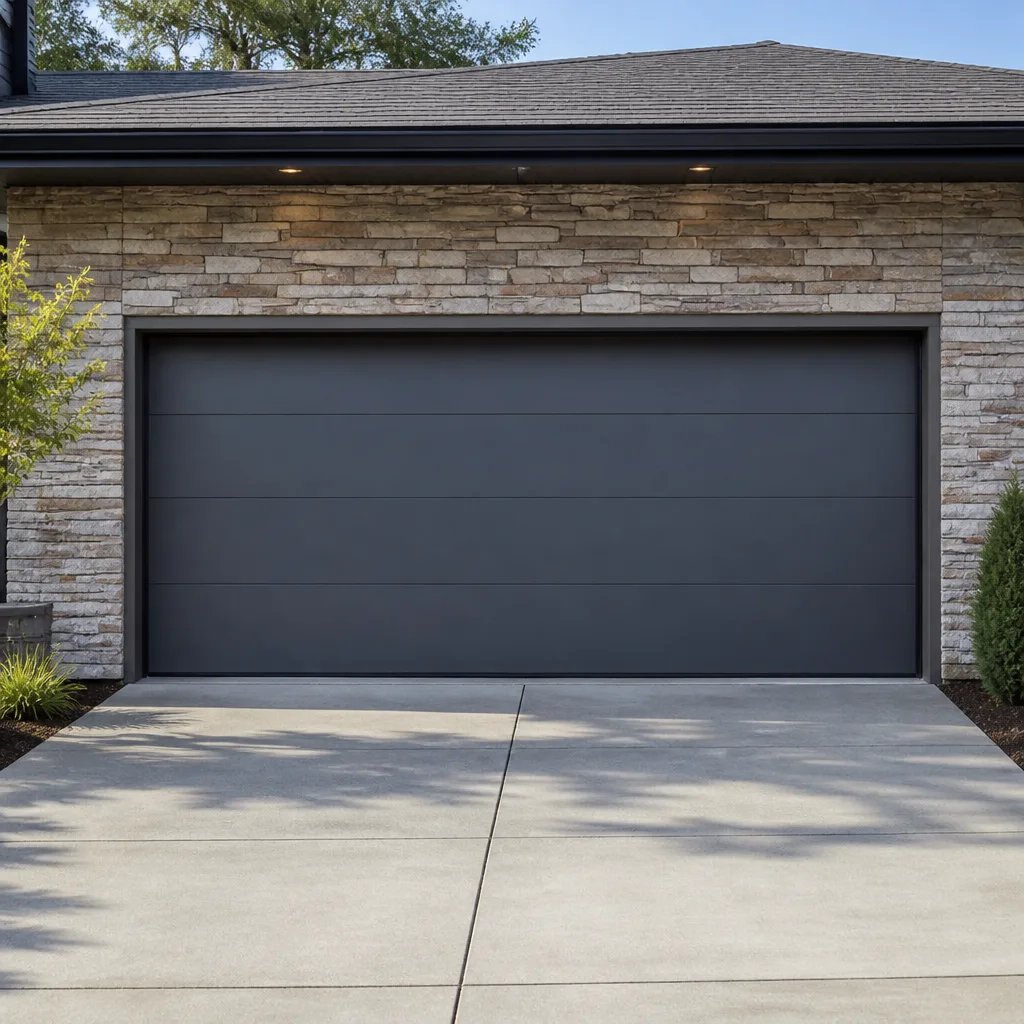 Modern flush
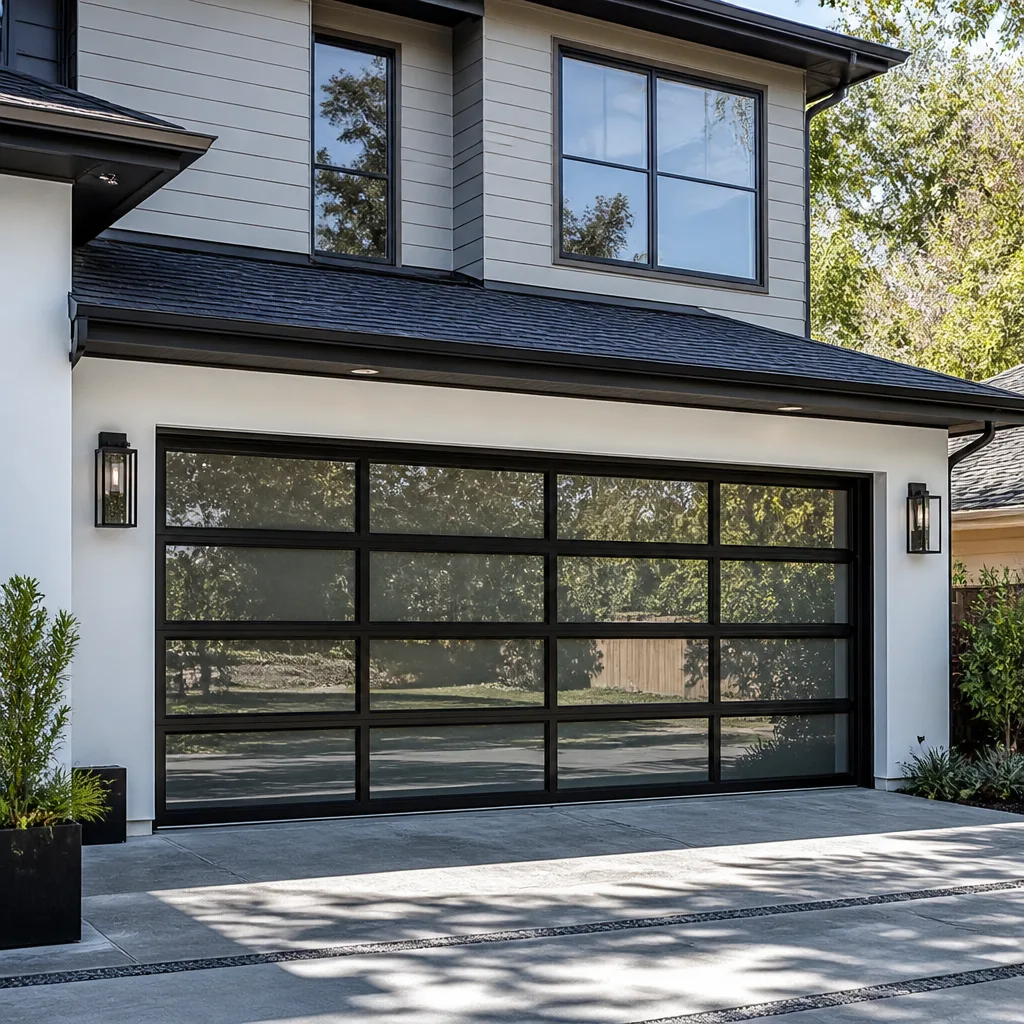 Full-view glass
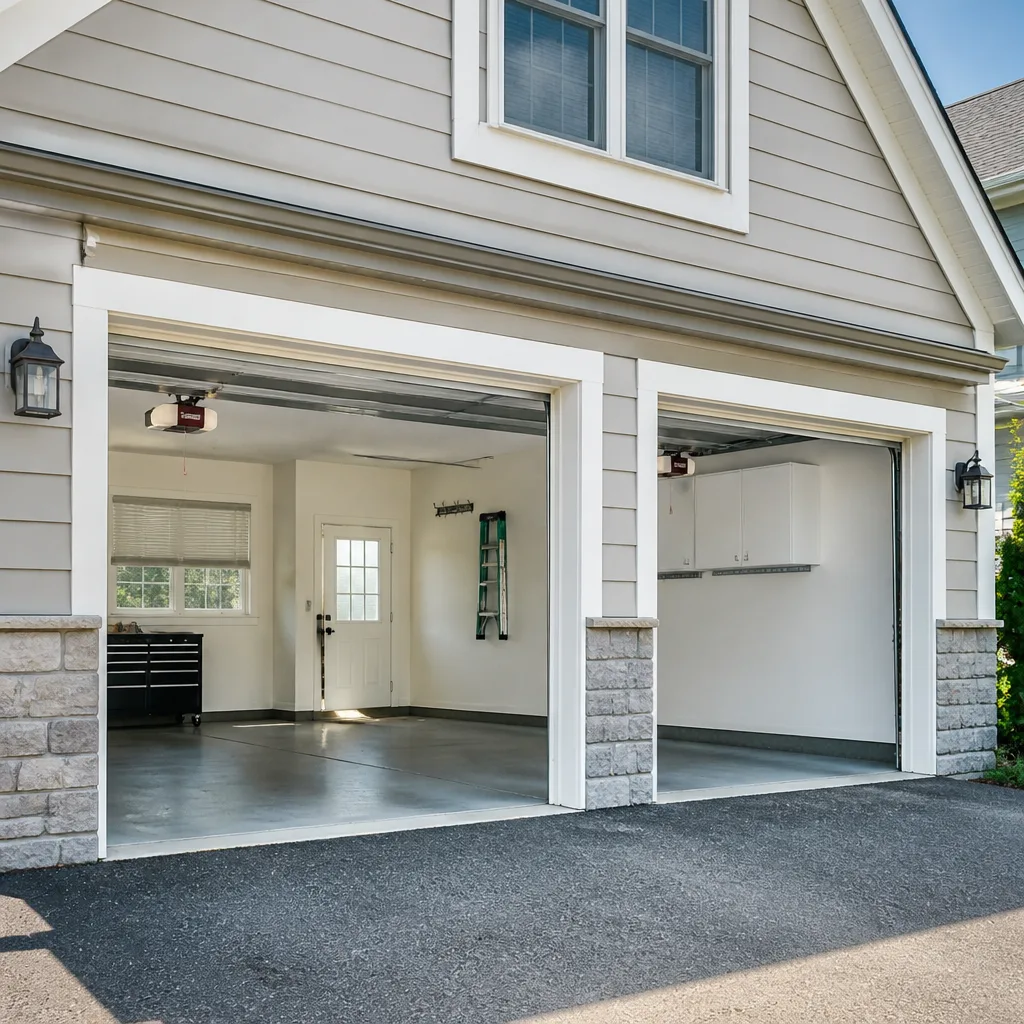 LiftMaster openers
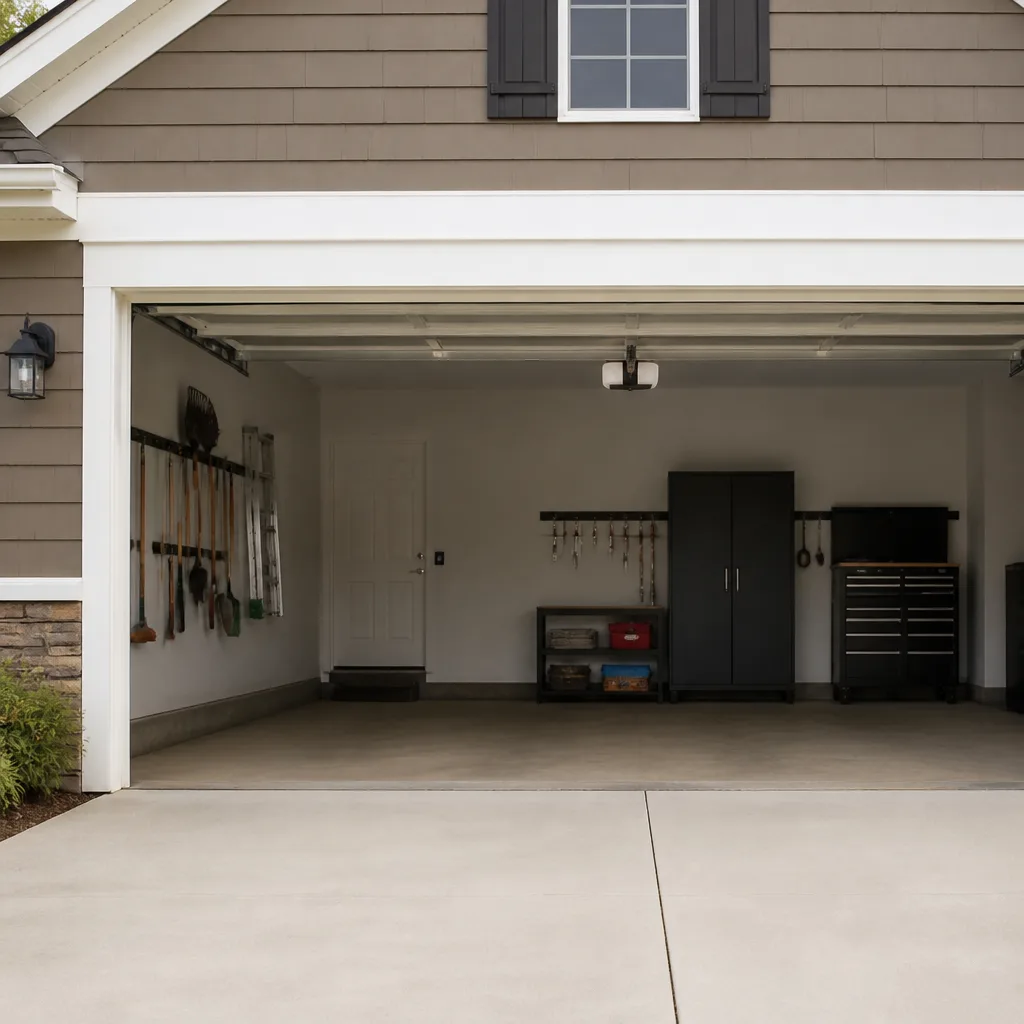 Chamberlain openers
Full 25-point door and opener safety check with every visit - springs, cables, rollers, tracks, and your LiftMaster or Chamberlain opener included
You get a price before we start. It does not change when the pro arrives.
Get your free estimateGarage Door Cost Breakdown: The Buckeye Homeowner’s Reference for 2026
Most homeowners start shopping for a garage door by typing the job into a search bar, and most of them end up with a national average that has almost nothing to do with what a door costs in Buckeye in 2026. Those averages blend Manhattan co-ops, century-old Chicago bungalows, and rural farm shops into one number. Buckeye is none of those places. Labor here prices differently, the housing stock skews toward newer builds, and the typical two-car garage here is wider than the benchmark most cost guides still print. This reference walks through real cost ranges by job type, explains why quotes vary so widely, and shows you how to compare them line by line before anyone pulls into your driveway.
Quick Answer
In Buckeye in 2026, a torsion spring replacement typically runs $180 – $340 for one spring, a new opener installed ranges from roughly $350 – $850 depending on the drive type and features, replacing a single damaged door panel usually costs $250 – $600, and a full door replacement lands somewhere between $900 and $2,800 depending on size, insulation, and material. A 16-foot double door sits at the upper end of that range because it uses roughly twice the material and hardware of the 9-foot benchmark most national averages are built on. The written estimate you receive sets the final price, and it should reflect the door actually on your house.
Styles & brands we work with
- Raised-panel steel
- Carriage house
- Modern flush
- Full-view glass
- LiftMaster openers
- Chamberlain openers
Table of Contents
- Why National Averages Miss the Mark in Buckeye
- What Does Spring Replacement Cost?
- What Does Opener Replacement Cost?
- What Does Panel Replacement Cost?
- What Does Full Door Replacement Cost?
- The Two-Car Garage Premium
- Why Insulation Pays You Back in Buckeye’s Heat
- How to Compare Quotes Apples-to-Apples
Why National Averages Miss the Mark in Buckeye
The national average for a garage door replacement tells you one thing: what a door costs somewhere in the middle of the country, in a house that may share nothing with yours. When that number lands on a Buckeye homeowner’s screen, it sets an expectation that either makes a fair local quote look expensive or makes a padded one look reasonable. Neither outcome helps you.
Three things push Buckeye pricing away from the national figure. First, labor. The West Valley has been one of the fastest-growing corridors in the country, and that growth has tightened the supply of skilled trade labor, which is reflected in what any qualified technician charges for a half-day of work. Second, material availability. Some door sizes and panel profiles are stocked locally; others have to be ordered, and a special order affects both price and timeline. Third, the housing stock. Buckeye’s newer developments lean heavily toward two-car and oversized garages, and a 16-foot double door is not the door the national average assumes.
We see the mismatch most often in installation conversations. A homeowner expects the number they read online, then gets a quote for a larger insulated double door in a modern color and assumes something inflated it. Usually nothing did. The door they want simply isn’t the door the average describes.
What helps more than any single number is understanding the range for each type of job, so you can see where your quote sits and why. That’s what the rest of this guide does.
What Does Spring Replacement Cost?
Garage door spring replacement in Buckeye typically costs $180 – $340 for one spring, installed. If both springs are replaced as a matched pair – which is standard practice when they’ve reached the same wear – expect roughly double that range, since the labor is shared but the parts double up. Torsion springs, the type found on nearly every door built in the last few decades, cost more to replace than the older extension springs because the work requires tensioning equipment and a trained hand.
A few things move the number within that range:
- Spring type and cycle rating: standard-cycle springs cost less than high-cycle springs rated for more open-close cycles. A high-cycle spring is worth considering on a door that runs several times a day.
- One spring or two: many older single-spring doors were later fitted with a matched pair. If your door carries two springs, the pair price applies.
- What else is worn: cables, drums, and bearings often wear alongside the springs. A technician should tell you what they found and let you decide, not fold it silently into the total.
- Access and door condition: a door with bent track or seized rollers adds time to the job.
Here’s the part that matters for your safety. Torsion springs are under extreme tension, and the tools that handle them are specialized for a reason. A spring that lets go during a do-it-yourself attempt causes serious injury. That’s not a scare tactic; it’s the reason this is one of the few home repairs we actively discourage homeowners from attempting. Leave it to a trained technician – the job takes well under an hour for someone with the right equipment.
Because spring failures are the most common garage door breakdown we see, this is the area where fast help matters most. For a same-day response, see our garage door repair page or call (833) 519-6766. We answer 24/7, with fast dispatch from 7am to 7pm.
What Does Opener Replacement Cost?
Opener replacement in Buckeye runs roughly $350 – $850 installed, depending on the drive type and the features you choose. A basic chain-drive unit with a single remote and a wall switch sits near the bottom of that range. A belt-drive or screw-drive unit with Wi-Fi connectivity, battery backup, and smartphone control sits near the top. The opener itself is usually the smaller part of the total; the labor and the safety adjustments that follow installation matter just as much.
Drive type is the biggest cost lever:
- Chain drive: the least expensive option and the most durable for heavy doors, but also the loudest. Fine for a detached garage; noticeable in a bedroom above the door.
- Belt drive: quieter and smoother, which is why it’s common in homes where the garage sits under or beside living space. Costs more than chain.
- Screw drive: fewer moving parts and quiet operation, priced between chain and the premium end of belt.
- Jackshaft (wall-mount): mounts beside the door instead of on the ceiling, which frees overhead storage and suits high-lift or cathedral-ceiling garages. Priced at the upper end.
Brand familiarity affects how smoothly the job goes. We work on LiftMaster, Chamberlain, Genie, and Craftsman units regularly, along with the other major makes, so the technician arriving at your house already knows how the hardware on your ceiling behaves. If your current opener is a Chamberlain that’s been struggling, or a Genie that’s stripped a gear, the diagnosis starts from familiarity rather than from scratch.
One thing worth stating plainly: the written estimate comes before any work starts, and the price on it is the price. If a technician discovers something unexpected mid-job – a damaged header bracket, a misaligned rail – you’ll hear it from them before anything extra happens. For dedicated help with the drive system specifically, our garage door opener repair page covers the diagnostic side in more depth.
What Does Panel Replacement Cost?
Replacing a single damaged door panel typically costs $250 – $600 in Buckeye, depending on the panel’s profile, material, and whether the manufacturer still produces a matching replacement. A sectional door is made of panels, and when one panel takes an impact – a backed-into door, a misjudged bike handlebar, a stray branch – the rest of the door is often fine. Replacing one panel costs a fraction of a full door, which is why it’s worth asking whether the damage is panel-level before assuming you need a whole new door.
The catch is matching. Door profiles change over the years, and a panel only works if it matches the existing ones in height, thickness, color, and window pattern. Clopay and Amarr, two of the makes we service most often, both offer panel replacement on many of their current lines, but older doors from discontinued lines can leave no match available. When that happens, the honest answer is that either the whole door gets replaced or the damaged panel gets a same-size replacement in a close color – and you should be told which before anything is ordered.
What drives the number:
- Material: steel panels sit toward the low end, aluminum and wood toward the high end.
- Insulation: an insulated panel costs more than an uninsulated one of the same size.
- Windows and inserts: a panel with glass or decorative inserts adds cost.
- Color matching: standard colors are easier to match than custom finishes.
- Section height: panels come in different heights, and a non-standard height may need to be ordered.
Panel replacement is scheduled work, not same-day work. The panel has to be identified, ordered, and delivered before the job happens, so plan on a lead time rather than an immediate fix. A free measure and a written price get that process started.
What Does Full Door Replacement Cost?
A full garage door replacement in Buckeye generally falls between $900 and $2,800, installed, depending on size, material, insulation, and the condition of the existing track and opener. The low end of that range covers a basic uninsulated single-car steel door in a standard size. The high end covers a large, insulated, windowed double door in a premium finish with new hardware throughout.
Here’s the range broken out by door type:
- Single-car steel door, uninsulated: roughly $900 – $1,400 installed.
- Single-car steel door, insulated: roughly $1,100 – $1,800 installed.
- Double-car steel door, insulated (16-foot): roughly $1,600 – $2,600 installed.
- Premium wood or full-view aluminum: at the top of the range and often above it, depending on the design.
These are estimates for planning, not a fixed quote. What you actually pay depends on the door you choose, the state of your current track and opener, and whether the new door’s weight requires a heavier-duty opener or torsion system. The written estimate sets the final price, and the right time to get it is after a technician has measured your opening and checked what’s already there.
Every full installation starts the same way: a measurement, a conversation about what you want the door to do, and a written quote. No surprise upcharges, no numbers pulled from the air. If your opener is older, a new door with a different weight may warrant a new opener at the same time – but you should be told that as a recommendation, not a requirement.
For a full look at what installation involves in this city, see our Brightline Garage Door Repair overview or call (833) 519-6766. Estimates are free.
The Two-Car Garage Premium
Most cost guides are built on a 9-foot single-car door. Most of the homes in Buckeye’s newer developments have a 16-foot double door. That difference is the single biggest reason a Buckeye quote comes in higher than a national average, and it’s the reason so many homeowners walk away from their first quote convinced something was inflated.
Nothing was. A 16-foot door uses nearly twice the material, twice the track length, and heavier springs to counterbalance the extra weight. A door that size can’t be installed with the same hardware as a 9-foot door, because the physics don’t allow it. The price difference is structural, not padding.
What that means in practice:
- Springs: a double door carries heavier springs than a single, so spring cost is higher even before you count the pair.
- Openers: a larger door needs a motor rated for the door’s weight. A budget opener that works fine on a 9-foot door can strain on a 16-foot.
- Panels: a 16-foot replacement panel is larger and costs more per section.
- Track and hardware: more length, more rollers, more brackets.
- Installation time: a bigger door takes longer to hang and adjust, which is reflected in labor.
If you’re comparing your quote against the number you saw online, check which door the average was built on. If it says 9-foot and your door is 16-foot, the comparison isn’t fair. For context on how local pricing fits together across the community, our Buckeye page covers the market side.
Why Insulation Pays You Back in Buckeye’s Heat
Insulated garage doors cost more upfront – usually $150 – $400 more than an equivalent uninsulated door – and in Buckeye that difference has a measurable path back to you. An attached garage shares a wall with the house. An uninsulated door lets that garage behave like an oven in summer, and the shared wall absorbs some of that heat. An insulated door slows that transfer.
This isn’t a rebate or a program claim; it’s basic building physics. The garage sits on the sunny side of the house for hours every afternoon in a Buckeye summer, and the interior of an uninsulated garage can climb well above outdoor temperatures because the door acts as a radiator. The wall between garage and house then becomes a steady source of heat gain, which your air conditioner has to work against.
Where insulation pays back fastest:
- Attached garages with a bedroom or living space above or beside them. The heat gain reaches living space more directly.
- Garages used as a workspace or home gym. Comfort matters more when you’re in the space daily.
- Homes with HVAC equipment or a water heater in the garage. Insulation keeps that equipment from working harder than it needs to.
- North-and-west-facing garages in particular. The sun angle hits these hardest in summer afternoons.
For a detached garage, the payback is less obvious, but the comfort gain is still real. If the garage is where you keep your car and not much else, a basic insulated door still adds a quieter, more solid feel that a hollow uninsulated door never has. When a technician measures your opening, ask them to walk you through insulation options at a couple of price points so you can compare backed by actual numbers rather than a product brochure.
How to Compare Quotes Apples-to-Apples
The hardest part of hiring a garage door contractor isn’t finding one. It’s knowing whether the two quotes in front of you describe the same work. A quote is only worth comparing if it tells you exactly what’s included, and many don’t. Here’s how to read them.
Every quote should make these line items explicit:
- Door or part identification: the specific make, model, size, and material – not just “double door, steel.”
- Labor, separated from parts: if the quote bundles everything into one number, ask for the split.
- Hardware included: springs, rollers, hinges, cables, drums, and brackets – and whether any of them are new.
- Opener: whether the price includes a new opener or reuses the existing one, and if reused, whether it can handle the new door’s weight.
- Warranty terms: what’s covered, for how long, and whether it’s manufacturer-only or covers labor as well.
- Disposal and haul-away: whether removal of the old door is included or billed separately.
- Permit handling: whether a permit is required in Buckeye for your job – ask the city’s building department – and who files it.
- Written pricing: a signed estimate, not a verbal one.
When two quotes differ by 30% or more, the gap is usually one of three things: OEM versus aftermarket parts, warranty coverage, or what the quote silently leaves out. Aftermarket springs and cables can look identical and last a fraction as long. A warranty that covers parts but not labor is cheap for a reason. A quote that leaves off disposal will collect it at the end.
Ask each contractor one direct question: “What’s not in this quote?” The answer separates a complete bid from one that will grow.
One difference you’ll notice comparing shops: some are locked into a single manufacturer, and their recommendation happens to match whatever that manufacturer sells. We work on the brand already in your garage, whether that’s LiftMaster, Chamberlain, Genie, Clopay, or one of the other major makes. That’s the standard we hold ourselves to – a recommendation driven by what your door needs, not by which brand we’re trying to move. For a free estimate, call (833) 519-6766. We answer 24/7, with fast dispatch from 7am to 7pm.
Common Mistakes to Avoid
- Accepting a single verbal number over the phone. A phone estimate can’t measure your door, check the track, or weigh the opener load. It’s a guess dressed up as a price. Get a written estimate after a technician has seen the door.
- Assuming the national average applies to your garage. Buckeye’s stock leans toward 16-foot doors, and the national number assumes 9 feet. Comparing them makes a fair quote look high.
- Choosing on price alone. The cheapest quote often wins by cutting parts quality or warranty coverage. A spring rated for more cycles costs more and lasts longer; that’s a buying decision, not padding.
- Replacing an opener on a door that needs a spring instead. A door that won’t lift usually has a counterbalance problem, not a motor problem. Diagnosing the door before quoting the opener saves you hundreds.
- Skipping the disposal question. Hauling off an old door costs as a separate line item in many quotes. Confirm whether it’s included before signing.
- Ignoring insulation because the garage “is just a garage.” In a Buckeye summer, a heat-soaked attached garage pushes straight into your cooling load. The upfront difference usually comes back.
- Letting a quote stay vague on the door model. “Steel double door” describes hundreds of doors at wildly different prices. Insist on make, model, size, and material in writing.
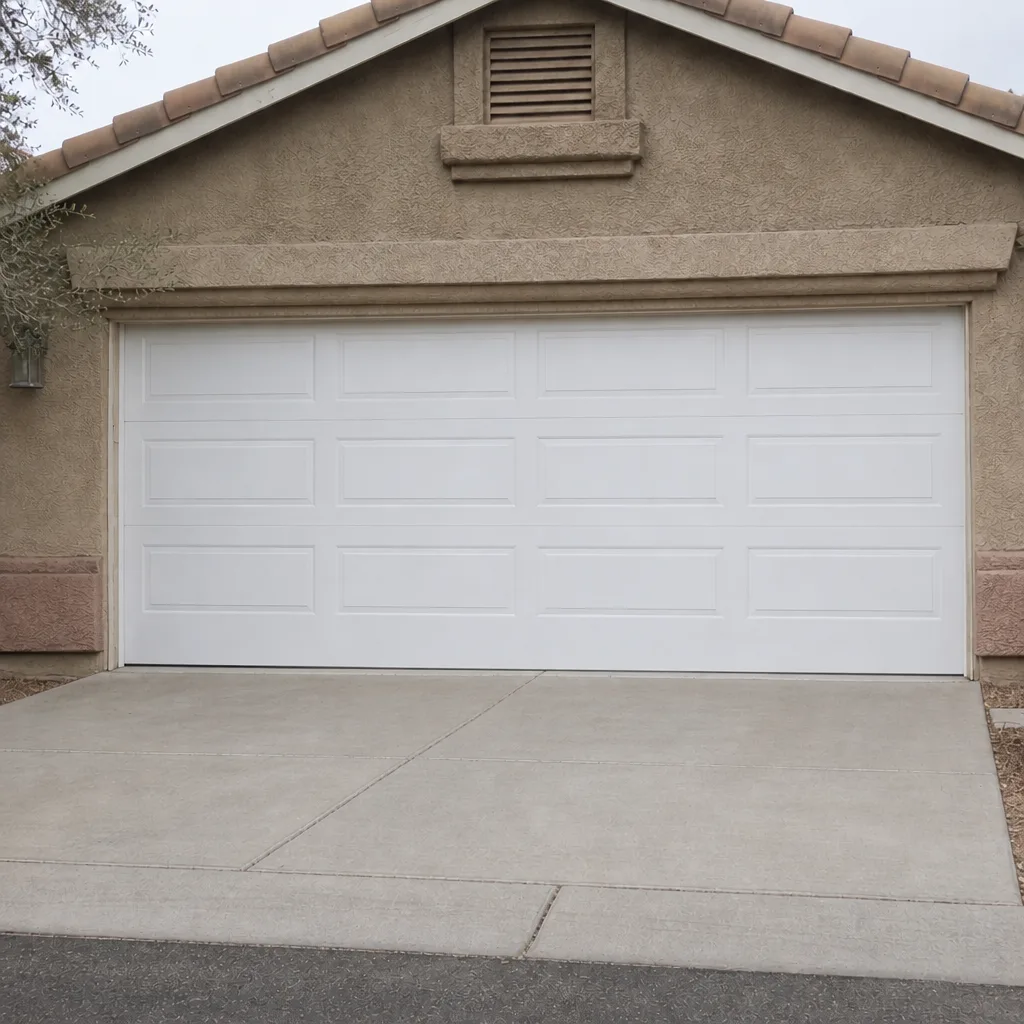
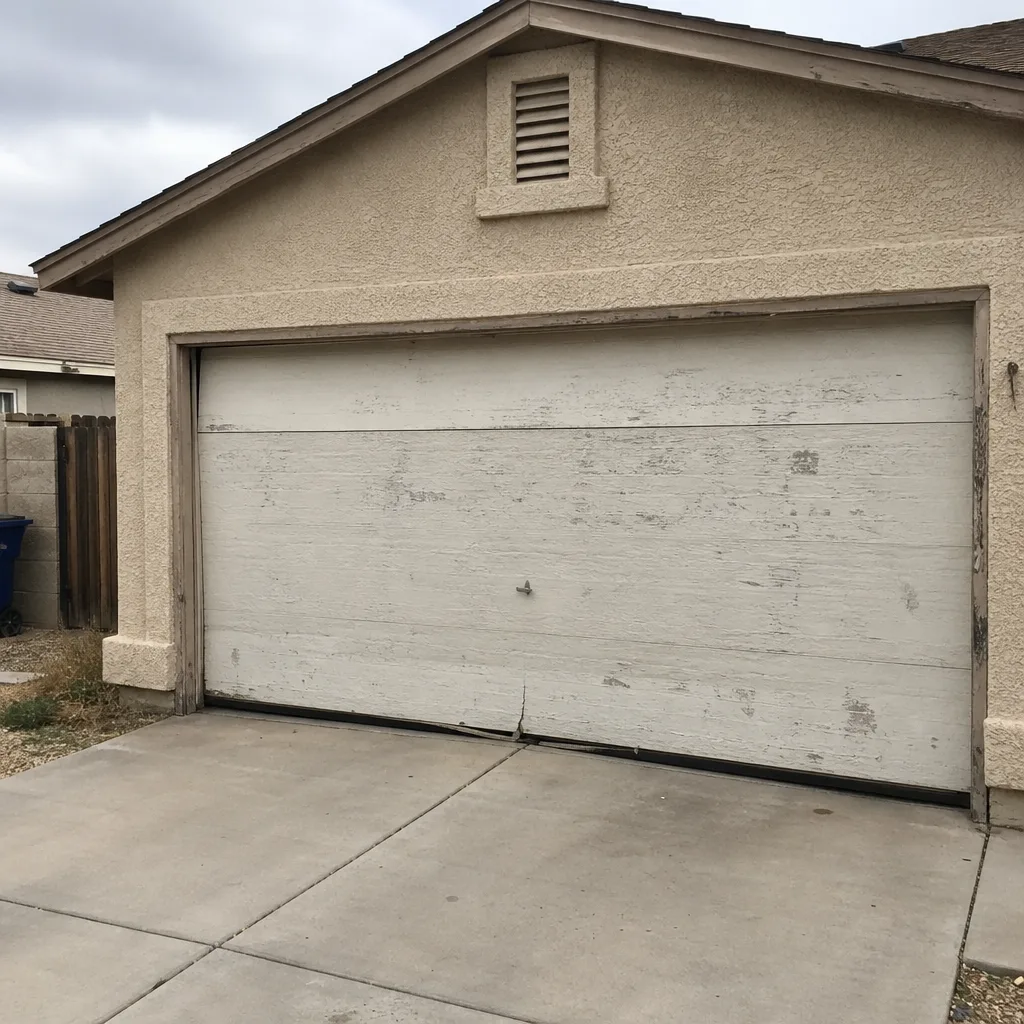
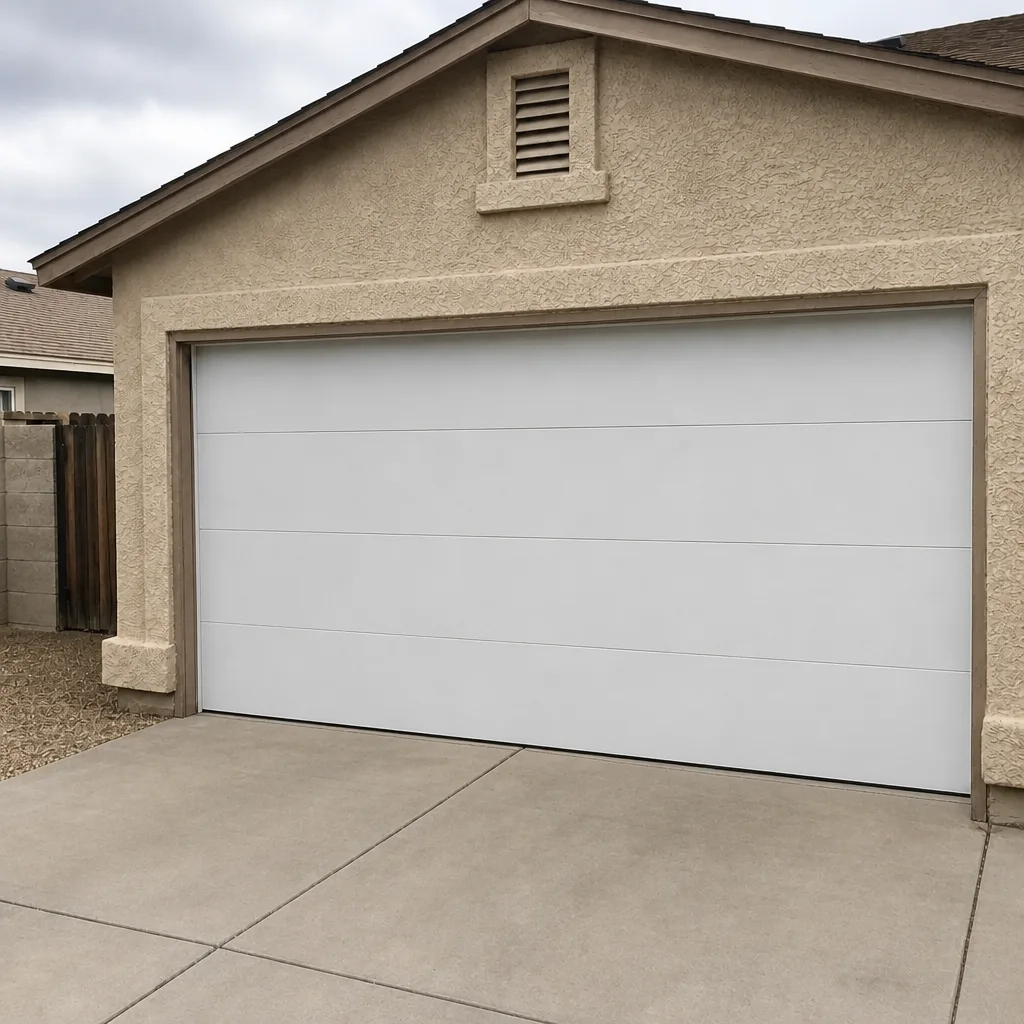
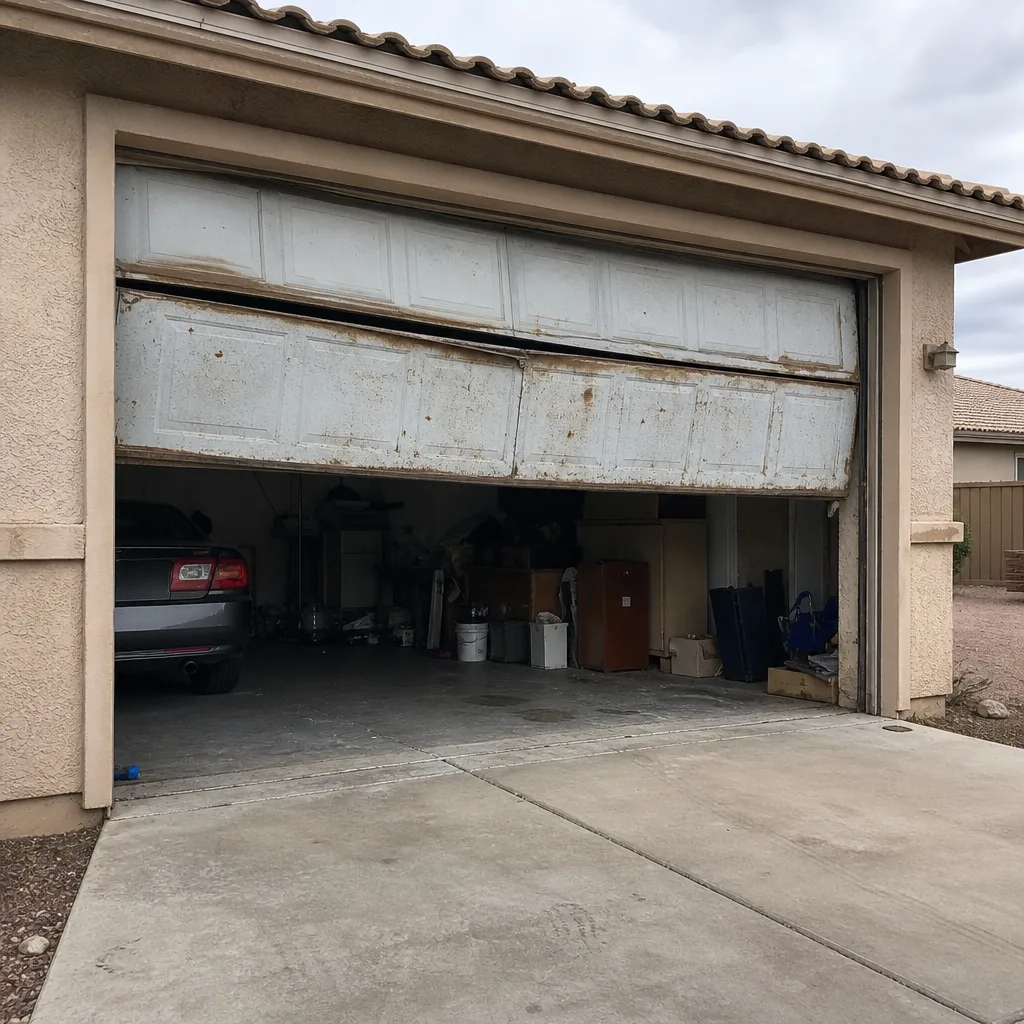
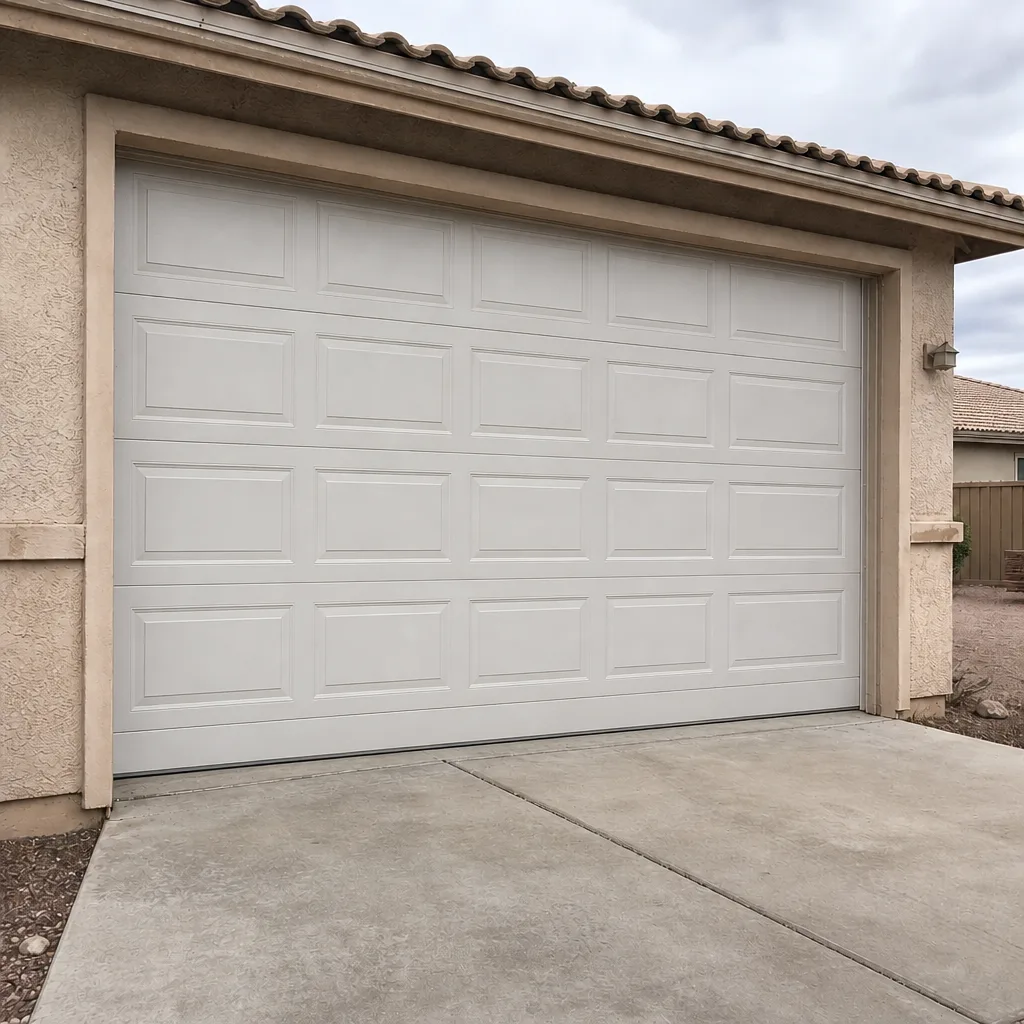
See the difference
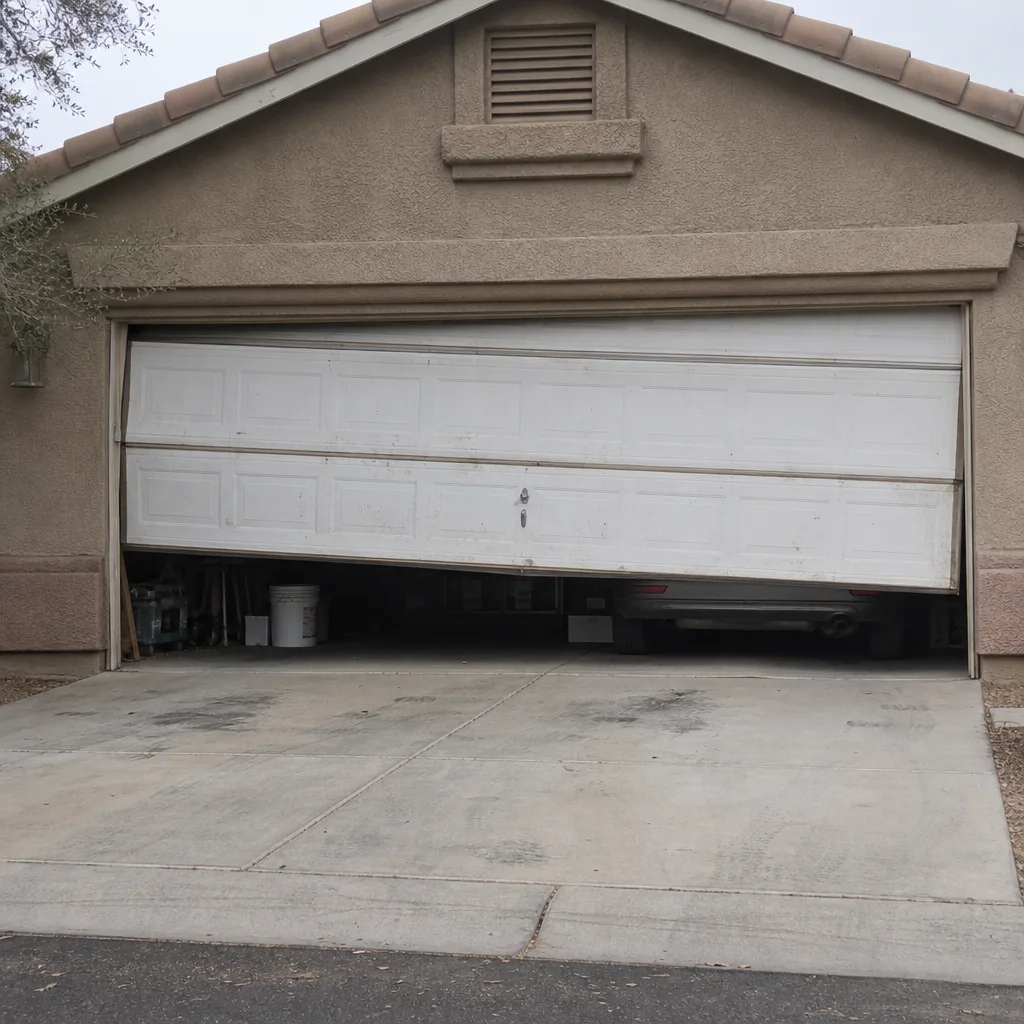 Before
 After
 Before
 After
 Before
 After
When to Call a Professional
Springs, cables, and torsion hardware are under extreme tension, and that’s the point at which you should stop and call. If a spring has snapped – usually announced by a loud bang from the garage – or the door feels unusually heavy lifting it by hand, the counterbalance system has failed. Leave it alone. A technician with the right equipment will handle it safely.
Call a professional when the door comes off its track, when the opener runs but the door doesn’t move, when the door reverses or stops halfway without a clear obstruction, or when a panel is damaged badly enough that the door won’t sit flush. Call when you’re planning a new door or opener and want an accurate quote rather than a phone guess.
Brightline Garage Door Repair offers free estimates in Buckeye. Our technicians have up to 15 years of experience, and we work on the door or the opener – repair, opener service, and full installation all fall within the same trade, so one call covers what might otherwise take three. Call (833) 519-6766. We answer 24/7. Fast dispatch from 7am to 7pm.
Frequently Asked Questions
Full door replacement in Buckeye generally runs $900 – $2,800 installed, depending on door size, material, insulation, and hardware condition. A basic single-car steel door sits near the low end and a large insulated double door with windows sits near the high end. The written estimate you receive after a measure sets the final price. Call (833) 519-6766 for an exact quote – estimates are free.
Same-day service is often possible for repair and opener work, depending on the day’s schedule. We answer 24/7, and dispatch runs 7am to 7pm. A call outside those hours is booked into the next opening. Call (833) 519-6766 to check availability for a repair.
No. The price is quoted and agreed before any work starts, and the written estimate reflects what the technician found on site. If something unexpected turns up mid-job – a cracked header bracket, a seized cable drum – you hear about it before the work continues, and you decide. What’s on the estimate is what you pay.
Our technicians are trained for the work and the business is insured, and the estimate you receive is in writing before anything starts. We don’t publish figures we can’t verify. If you need documentation for a specific job, ask when you call and we’ll tell you what’s available.
A 16-foot double door uses nearly twice the material and heavier counterbalance hardware than a 9-foot door. More panel area, longer track, stronger springs, and a heavier-duty opener all follow from the size. The difference between a Buckeye quote and a national average often comes down to this: the national figure assumes a 9-foot door, and most Buckeye garages have a 16-foot.
No. Torsion springs are under extreme tension, and the tools that safely handle them are specialized. A spring that releases during a do-it-yourself attempt causes serious injury. This is one job where calling a trained professional is the only reasonable path.
They reduce heat transfer into the attached house through the shared wall, which lowers the load on your air conditioner during Buckeye’s hottest months. That’s a physical effect rather than a claimed statistic, and the payback shows up fastest on garages under or beside living space. Ask for insulation options at a couple of price points when you get your estimate.
The Bottom Line
Garage door pricing in Buckeye in 2026 is not the national number, and treating it as one will either scare you off a fair quote or let you sign a padded one. The work splits into four common jobs – spring, opener, panel, and full door – each with its own range and its own drivers. The two-car premium explains most of the difference from national averages. Insulation pays back in our summers. And a quote is only comparable if it spells out the parts, the model, the warranty, and what’s not included. Get a free measure and a written price before deciding anything, and compare on content before you compare on cost.
When you’re ready, call Brightline Garage Door Repair at (833) 519-6766 for a free estimate. We answer 24/7. Fast dispatch from 7am to 7pm.
Written by the team at Brightline Garage Door Repair.