
Last updated November 14, 2026
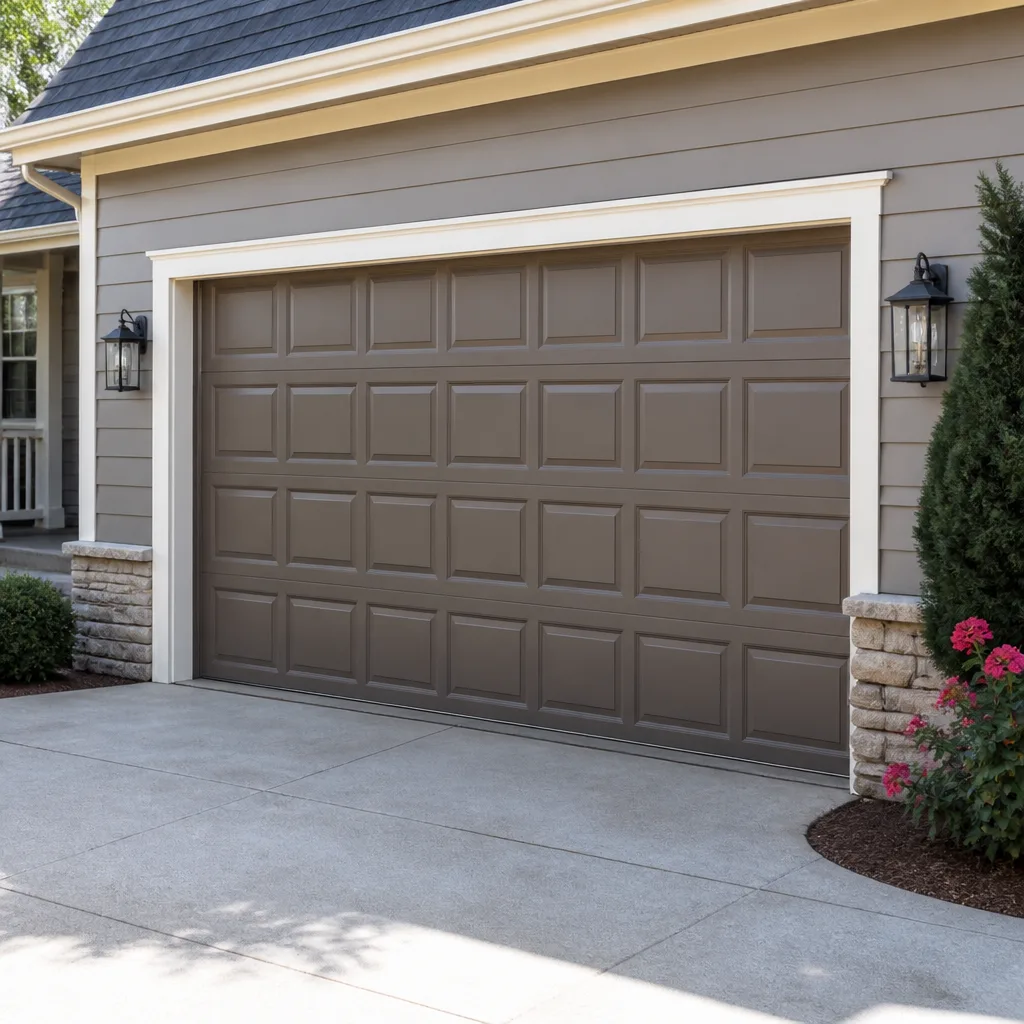 Raised-panel steel
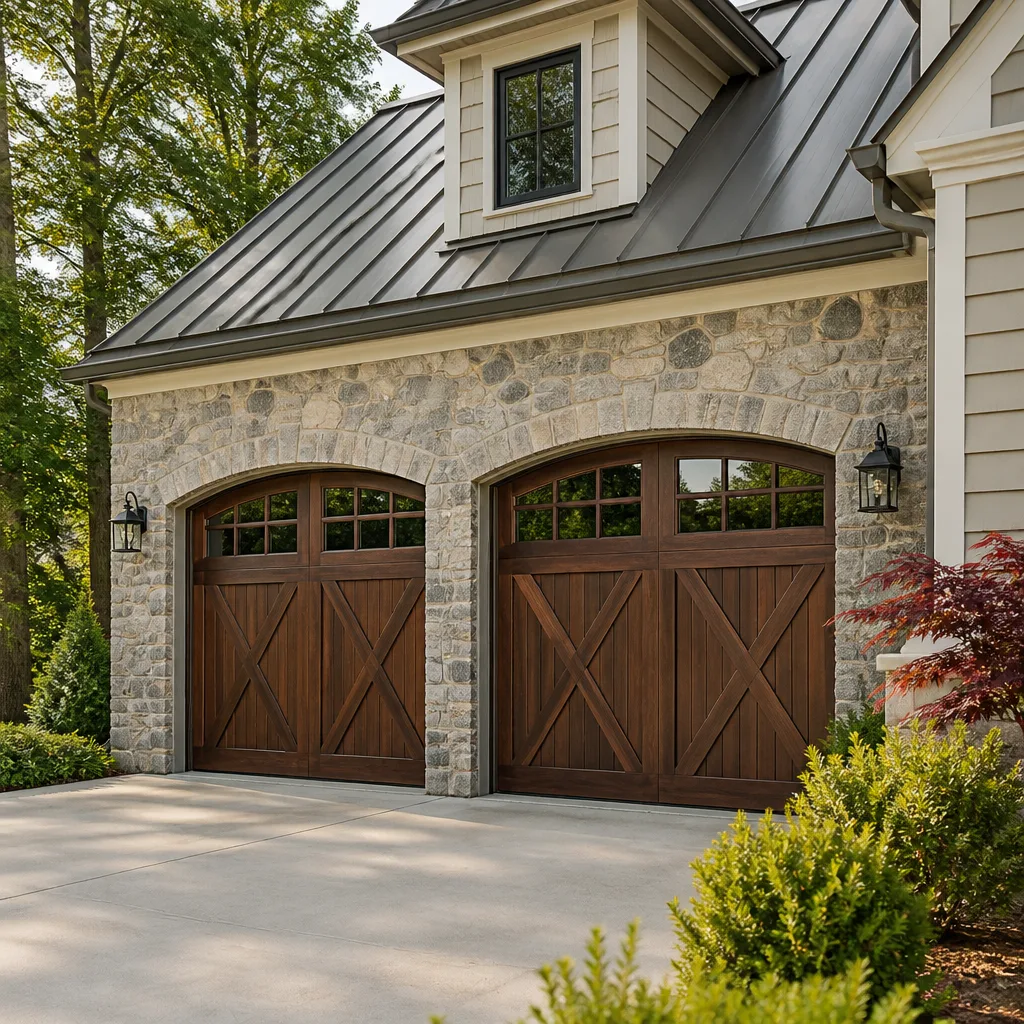 Carriage house
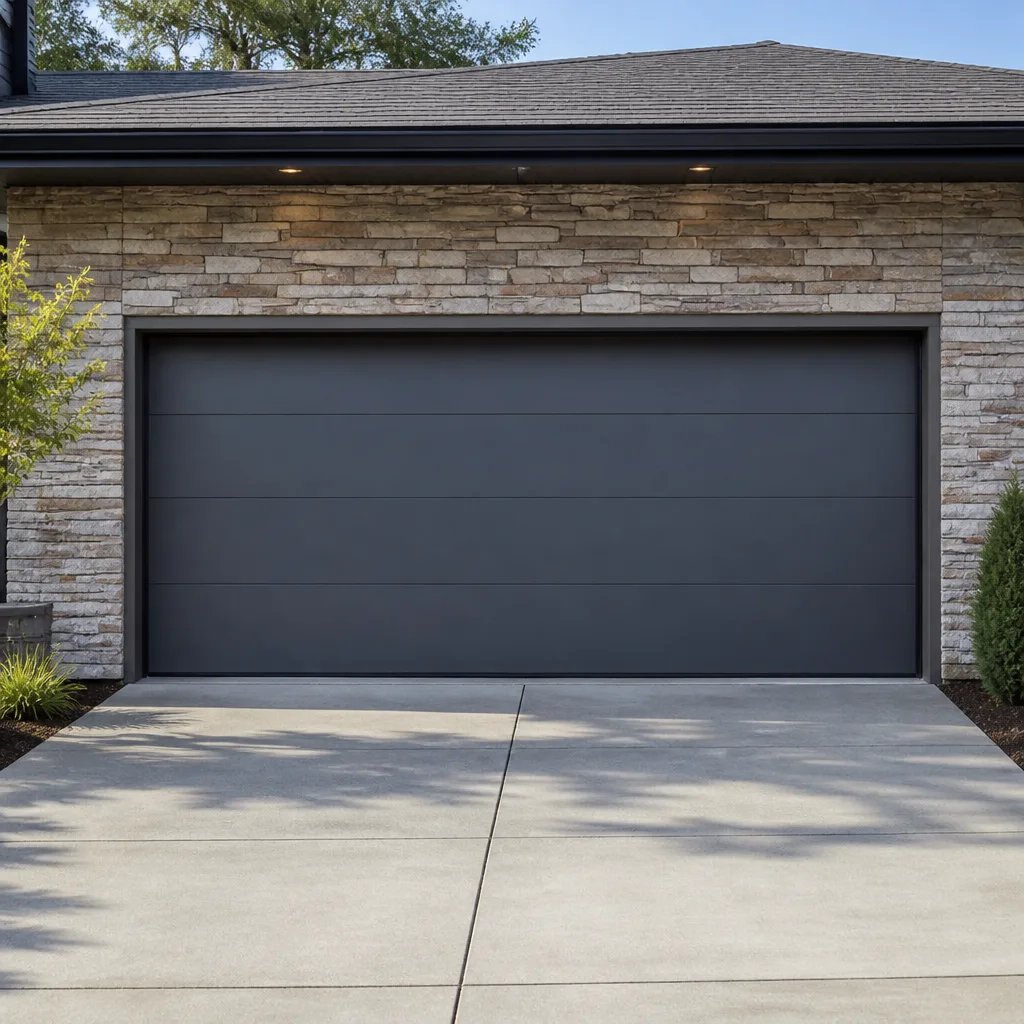 Modern flush
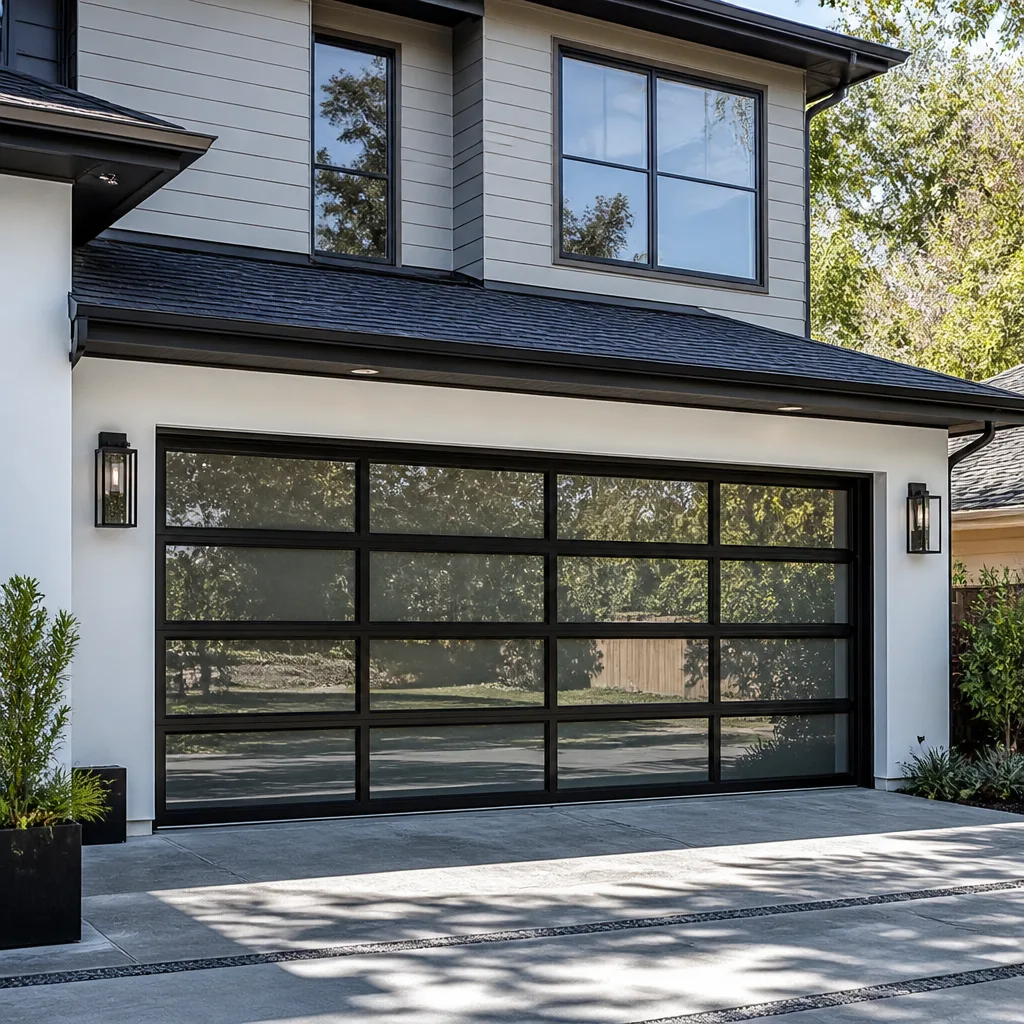 Full-view glass
 LiftMaster openers
 Chamberlain openers
Full 25-point door and opener safety check with every visit - springs, cables, rollers, tracks, and your LiftMaster or Chamberlain opener included
You get a price before we start. It does not change when the pro arrives.
Get your free estimateDIY vs Professional Garage Door: The Buckeye Homeowner’s Decision Guide
Garage door springs are under hundreds of pounds of stored tension. That’s not a scare tactic, it’s physics, and it’s why torsion spring replacement has an injury record even among people who watched five tutorials first. The real question isn’t whether you’re handy enough. It’s whether a given task has a risk profile a homeowner can reasonably accept, or whether it belongs in trained hands no matter how confident you feel. We’re going to draw that line clearly: which jobs you can safely handle on a Saturday afternoon in Buckeye, which ones can hurt you, and where the hidden costs of a DIY mistake show up months later.
Quick Answer
Most garage door problems split cleanly into two groups. Safety sensors, remote programming, lubrication, and bottom seals are safe, inexpensive DIY tasks. Torsion springs, extension springs, cables, and track work under load are not, and they cause real injuries every year. If your door involves the second group, call a professional. A free estimate costs nothing, and the repair is done right the first time.
Styles & brands we work with
- Raised-panel steel
- Carriage house
- Modern flush
- Full-view glass
- LiftMaster openers
- Chamberlain openers
Table of Contents
- Where the DIY Line Actually Falls
- Five Garage Door Tasks Homeowners Can Safely Do
- The Jobs You Should Never Attempt Yourself
- The Hidden Cost of a DIY Mistake in Buckeye
- Tools for Legitimate DIY vs. What “I’ll Figure It Out” Really Costs
- The One Diagnostic Step to Always Do Before Calling
- When a Pro Saves Money Even If You Could Do It
- A Simple Decision Framework
Where the DIY Line Actually Falls
The line isn’t about intelligence or experience with tools. It’s about stored energy. A garage door is one of the few things in a typical home that holds enough mechanical force to seriously hurt a careful adult. The counterbalance system, the springs in particular, stores energy to lift a door that weighs well over a hundred pounds. When something lets go on a system holding that load, it lets go fast and without warning.
So the useful test is this: does the task require you to be near stored tension or under a loaded door? If yes, it’s a professional job. If no, it’s fair game for a homeowner who reads the instructions and turns off the power where needed.
Buckeye homes sit in a climate where the garage gets genuinely hot through much of the year. Heat affects metal and the parts around it. It doesn’t create danger, but it does mean parts age at their own pace, and a door that’s been quietly working can start sticking or squealing without much notice. The tasks below are organized around that reality.
We’ve worked on enough doors across the eight major brands to know the temptation to “just try it” is strongest when a door makes a new noise. That’s exactly when a quick look by a trained technician saves the most time. If you want the broader picture of what repair covers, our guide on garage door repair walks through the full scope.
Five Garage Door Tasks Homeowners Can Safely Do
These jobs involve no stored spring tension and no loaded track. You can do them without specialized tools, and if you make a mistake, the worst outcome is a door that still doesn’t work and a call to a professional.
- Safety sensor alignment. The two small sensors near the floor on either side of the opening must face each other and see an unobstructed line. Clean the lenses, check for cobwebs or a bumped bracket, and nudge them until the indicator light on each stops blinking. This solves a large share of “door won’t close” complaints.
- Remote and keypad programming. Syncing a new remote or resetting a keypad code is a menu-and-buttons job. The manual for your opener (LiftMaster and Chamberlain are common in this region, along with Genie) has the exact sequence. It takes minutes and carries zero risk.
- Lubrication. A few drops of a garage-door-rated lubricant on the rollers, hinges, and the length of the opener’s rail quiets many doors and slows wear. Avoid the springs themselves and never use grease that attracts grit.
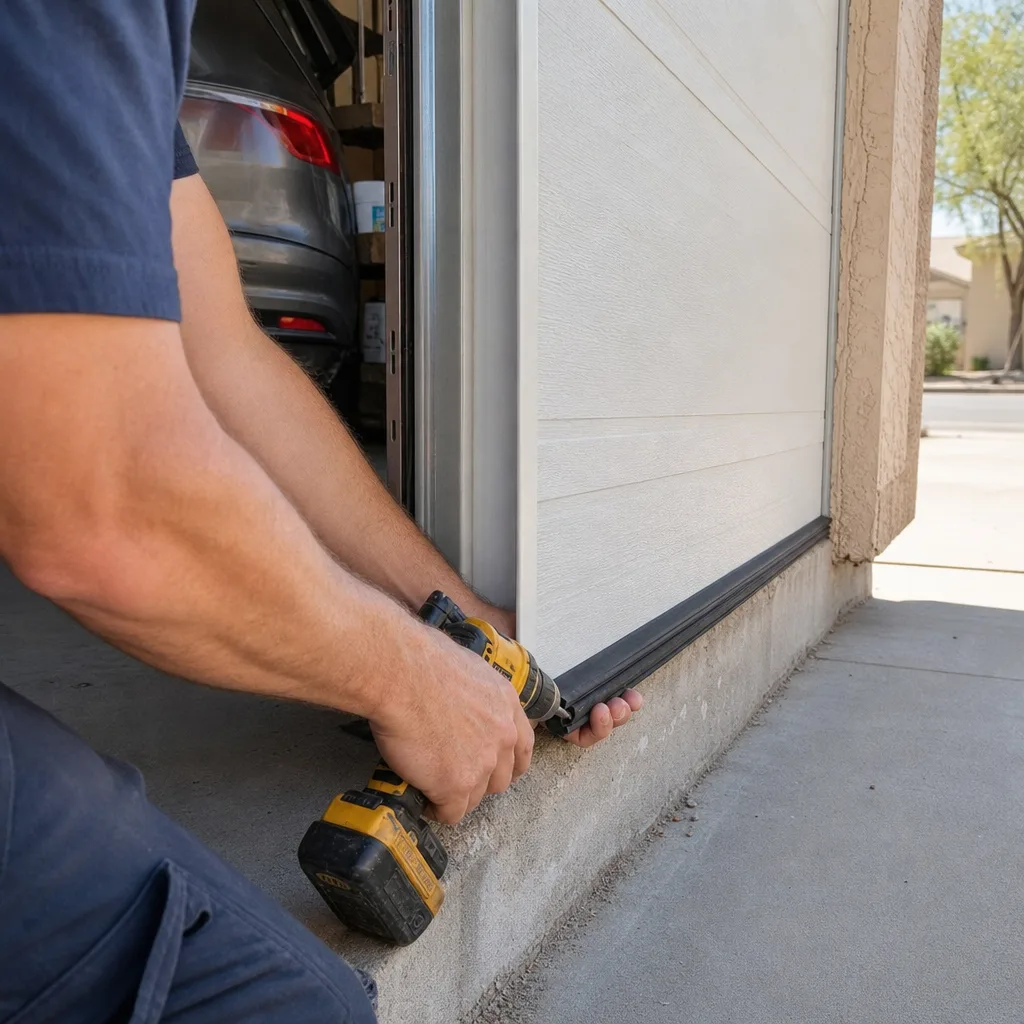
- Bottom seal replacement. The rubber weather seal along the bottom edge wears out and lets in dust and heat. A replacement slide-in or nail-on seal is affordable and installs without touching the counterbalance system.
- Visual inspection and light cleaning. Look along the tracks, check the hinges for looseness, and clear debris. Spotting a problem early is genuinely useful information to bring to a technician.
Our guide to garage door opener repair covers the remote and sensor side in more detail if you want to troubleshoot before deciding a service call is needed.
The Jobs You Should Never Attempt Yourself
This is the part of the guide that matters most. Each of these tasks involves stored energy or a heavy object held under load, and each has a record of injuring people who felt ready. We’re not going to walk you through these step by step, because a how-to that reads well on a screen can still go wrong in a way that ends in an emergency room.
- Torsion springs. The spring above the door stores enormous energy and is held by set screws and a winding system. Releasing that tension incorrectly can whip the winding bars or launch hardware with real force. Correct sizing also matters enormously (more on that below), and a wrong-sized spring fails early or strains the opener.
- Extension springs. These run alongside the tracks and carry the same stored load. Broken or improperly secured, they move fast and unpredictably.
- Cables. Cables hold the door’s weight under extreme tension. A cable that slips while you’re near it can cause a serious injury to hands and arms. Never touch a cable that is slack, frayed, or off its drum.
- Track realignment under load. A bent track with the door attached and the door’s weight bearing on it can shift suddenly. Adjusting a track on a loaded, closed door is not a task to improvise.
- Panel replacement on a door under tension. Swapping a damaged panel sounds straightforward until you realize the door’s balance depends on the spring system staying set. Panel and hardware work usually rides alongside spring service.
If your door has a snapped spring, a fallen cable, or a track that’s clearly out of line, put the phone number in your contacts and stop there. Call (833) 519-6766. We answer 24/7. Fast dispatch from 7am to 7pm, Sunday through Friday.
The Hidden Cost of a DIY Mistake in Buckeye
The visible cost of a mistake is the part you fix twice. The hidden cost is the wear you can’t see. Nowhere is that clearer than spring sizing, and nowhere does sizing matter more than in a hot climate.
Buckeye garages get hot, and heat is hard on door hardware. A door’s springs are matched to the door’s weight and expected cycle count, and a heavy insulated door (common here for exactly the reason you’d guess: keeping the garage cooler) needs a stronger spring than a lighter uninsulated one. Order the wrong spring off a parts site, or match a spring to the door’s size instead of its weight, and the door still opens. It just works harder and fails faster than the spring you were replacing.
That’s the trap. A mismatched spring passes the first few tests, so it feels like a successful repair. The extra strain shows up later, sometimes as a premature break, sometimes as an opener that wears out early because it’s lifting a door it was never balanced to handle.
You can order a precision spring to the correct size, cycle rating, and weight. The part isn’t where homeowners usually go wrong. Installing and tensioning it safely is. The economics only work in your favor if the door is correctly balanced afterward, and balance testing is where a trained eye matters. There’s more on what a proper repair covers on our Buckeye page.
Tools for Legitimate DIY vs. What “I’ll Figure It Out” Really Costs
The safe DIY tasks have modest, honest tool requirements. Anything involving the counterbalance system needs professional tools and, more importantly, professional training. Here’s the realism check.
What the safe tasks require:
- A screwdriver and an adjustable wrench for sensor brackets and hinges
- A garage-door-rated lubricant for rollers, hinges, and the opener rail
- A stepladder tall enough to reach the opener and a flashlight
- The owner’s manual or the model number for your opener (most are printed on the unit)
- A tape measure for a replacement bottom seal
What the dangerous tasks actually demand:
- Winding bars sized to the spring system and rated for the load, not a screwdriver or a punch
- The ability to read a spring’s size and cycle rating and match it to the door’s actual weight
- Balance testing after the swap, which requires knowing how a correctly balanced door should behave
- The judgment to know when a cable, drum, or bearing also needs attention
The gap between those two lists isn’t skill. It’s the difference between a task where a mistake means a door that won’t close and a task where a mistake means an injury. “I’ll figure it out” works fine on a sensor bracket. It doesn’t work on stored tension.
The One Diagnostic Step to Always Do Before Calling
Before you call anyone, do one safe thing: figure out whether the problem lives in the door or the opener. That answer decides whether you need a door repair or opener service, and it’s information any technician will appreciate having.
Here’s the safe check. With the door closed, pull the manual release cord (the handle hanging from the opener rail) to disconnect the opener from the door, then lift the door by hand about halfway. A door in good balance will stay roughly where you leave it and lift with modest effort. If it feels very heavy, wants to fall, or won’t stay put, the problem is the door’s balance, springs, or cables, and that’s a professional job. If the door lifts easily by hand but the opener won’t move it, the problem is in the opener or its drive system.
The one thing you should never attempt: never try to inspect or adjust the springs or cables while diagnosing. You don’t need to touch them to run the balance test, and you shouldn’t. If the door won’t move, the springs or cables are exactly what you should not go near. Leave the manual release reconnected and let a trained technician take over.
That single test saves time and often saves money, because it tells the technician which half of the system to start with.
When a Pro Saves Money Even If You Could Do It
Sometimes a pro pays for itself even when a homeowner could technically do the job. The clearest case is a newer opener.
A new opener often carries a manufacturer warranty, and many of those warranties have conditions attached. Self-repair or an improper install can affect coverage for the parts still under warranty. That’s a consideration worth weighing before you open a five-year-old opener to swap a gear or board. An improper install can void the same logic.
There’s also the brand question. A LiftMaster, Chamberlain, or Genie unit has specific drive systems and part numbers, and installing the wrong replacement part is a common cause of repeat trouble. A garage door specialist who works on multiple brands diagnoses from what’s actually in front of them, not from a single manufacturer’s sales pitch.
And there’s the warranty on the work itself. When a pro does the repair, the repair is on them. When you do it, it’s on you, and a second service call to undo a first attempt costs more than the original job would have. If a job involves the opener’s internal components or any part of the counterbalance system, the math usually favors professional work.
A Simple Decision Framework
Use this framework when you’re standing in the garage staring at a door that won’t cooperate.
- Is the door’s weight being held by a spring or cable? If yes, call a professional. Don’t loosen, adjust, or inspect near this. The repair is measured and priced before work starts.
- Does the problem live in the safe list? Sensors, remotes, lubrication, bottom seal, and visual inspection are yours to handle.
- Does the problem involve the opener’s internal parts or a newer unit? Weigh the warranty and the brand-specific part before deciding. A technician familiar with Amarr, Wayne Dalton, Craftsman, and Raynor doors and the major openers can diagnose quickly and honestly.
- Is the door hard to lift by hand? That’s a balance problem, which belongs with the dangerous jobs. That’s the point where a trained technician is the answer.
- Does the job need a repair or a new door? If the panels are damaged beyond repair, the question isn’t DIY vs. pro, it’s repair vs. installation. That’s measured, priced, and scheduled with a free written estimate.
Here’s our point of view, and it’s simple. We work on the brand already in your garage, not the one we’re trying to sell you. The task list above is honest because the recommendation comes from what your door actually needs.
Common Mistakes to Avoid
- Treating spring replacement like any other repair. It’s the most common dangerous DIY attempt, and the most common injury cause. When a spring breaks, the door becomes heavy and unpredictable, and the tension is still there.
- Ordering a spring by door size, not door weight. A heavy insulated door in a hot Buckeye garage needs a spring matched to its weight. A size-based guess can fail early and strain the opener.
- Ignoring the balance test. Lifting the door by hand with the opener released takes two minutes and tells you whether the problem is the door or the opener. Skipping it leads to replacing the wrong thing.
- Swapping parts without checking the brand. Crafted for one drive system, a part won’t suit another. Match the model before ordering.
- Assuming a new opener will solve a door problem. A heavy, out-of-balance door will wear out a new opener too, and faster than you expect.
- Opening a newer unit yourself and voiding coverage. Check the warranty before touching the internal parts of an opener still under coverage.
- Bending a track back by hand while the door’s weight is on it. A loaded track shifts suddenly. This one belongs on the pro side.
See the difference
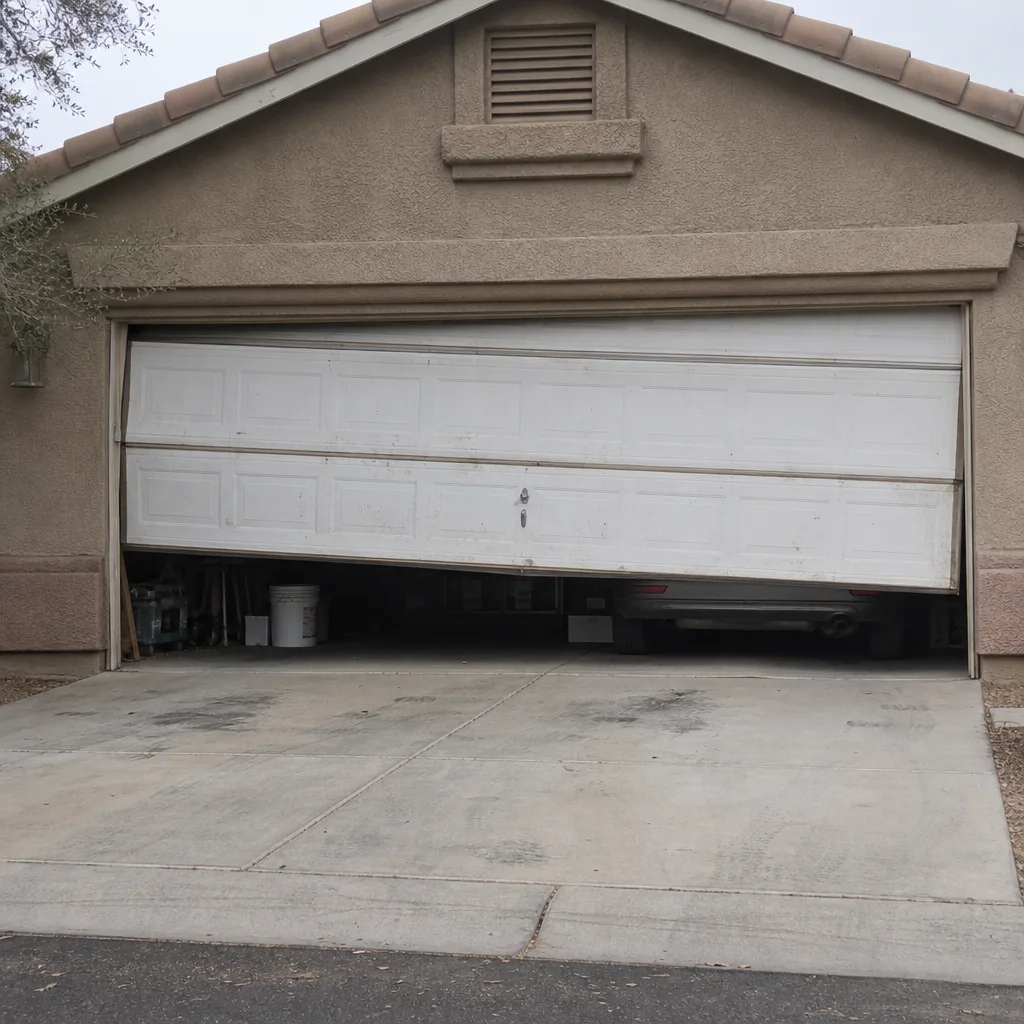 Before
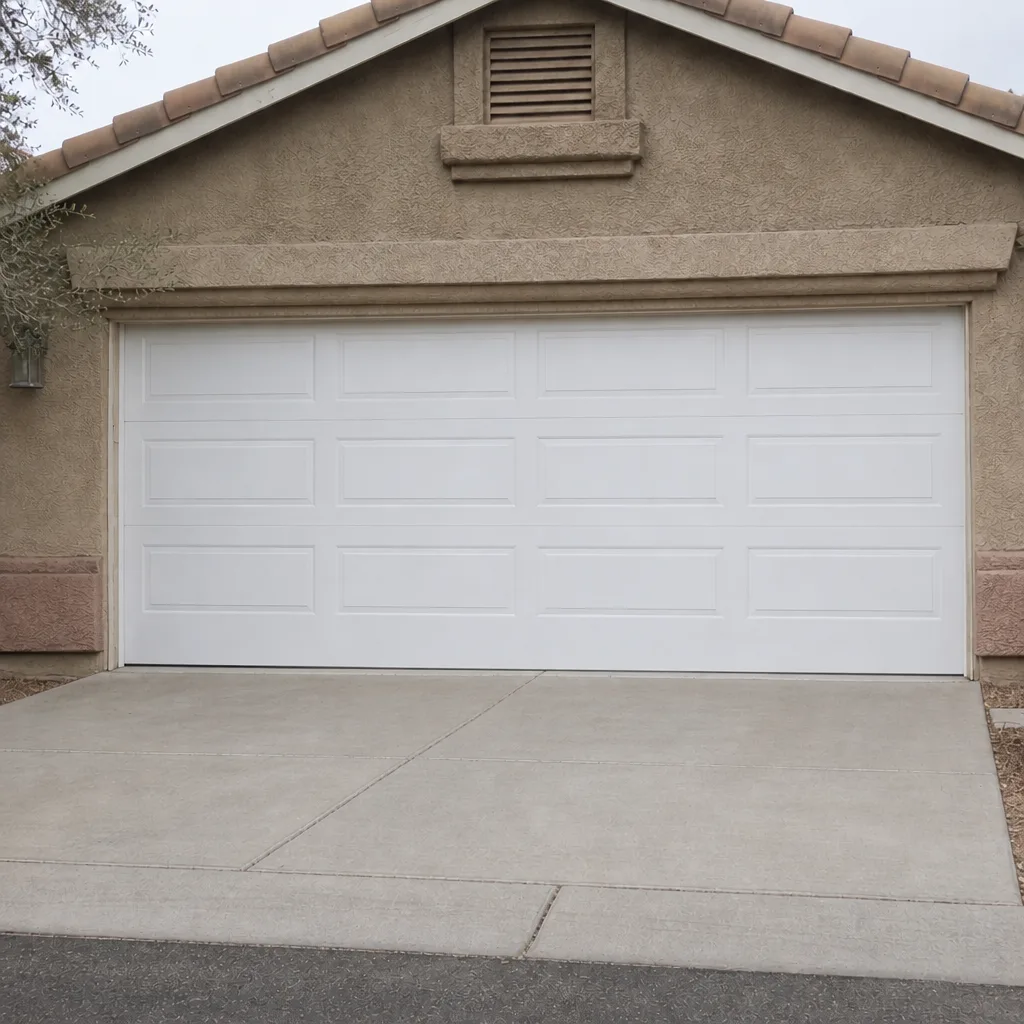 After
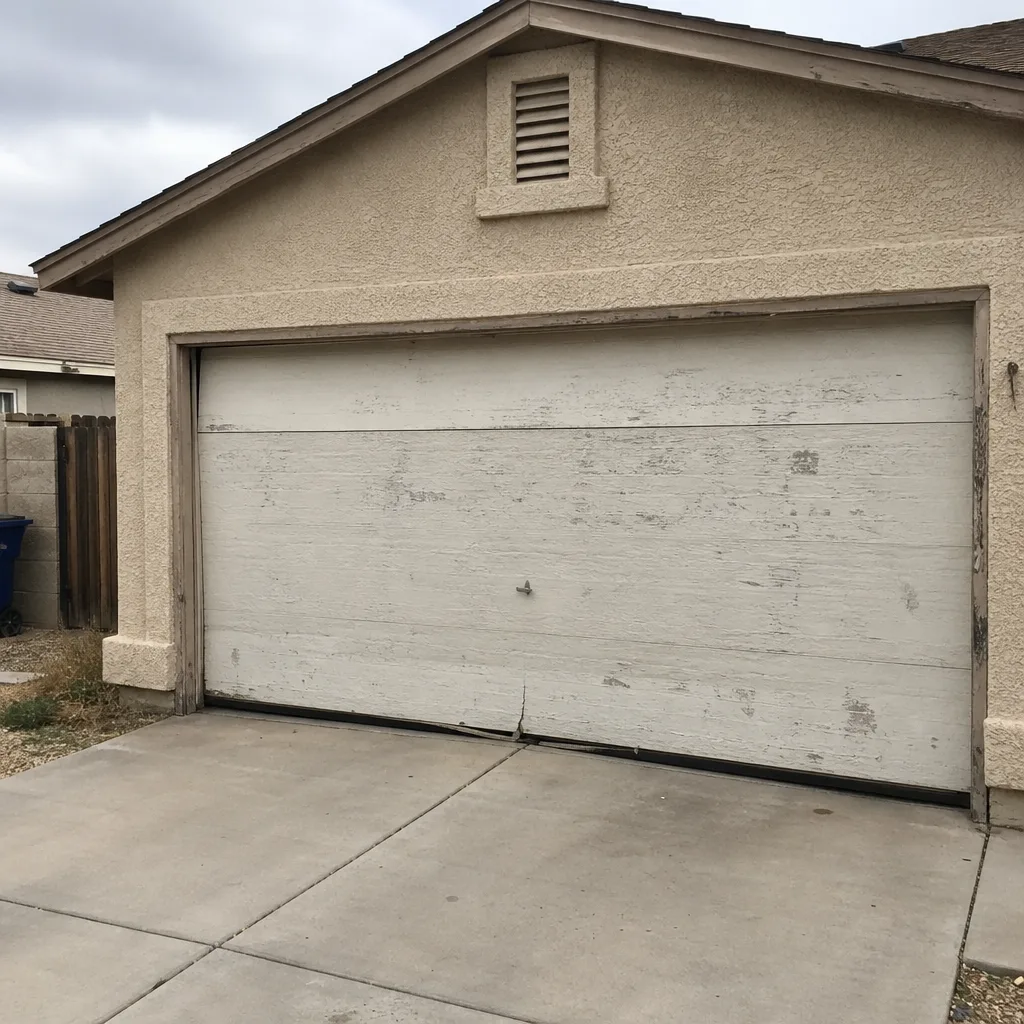 Before
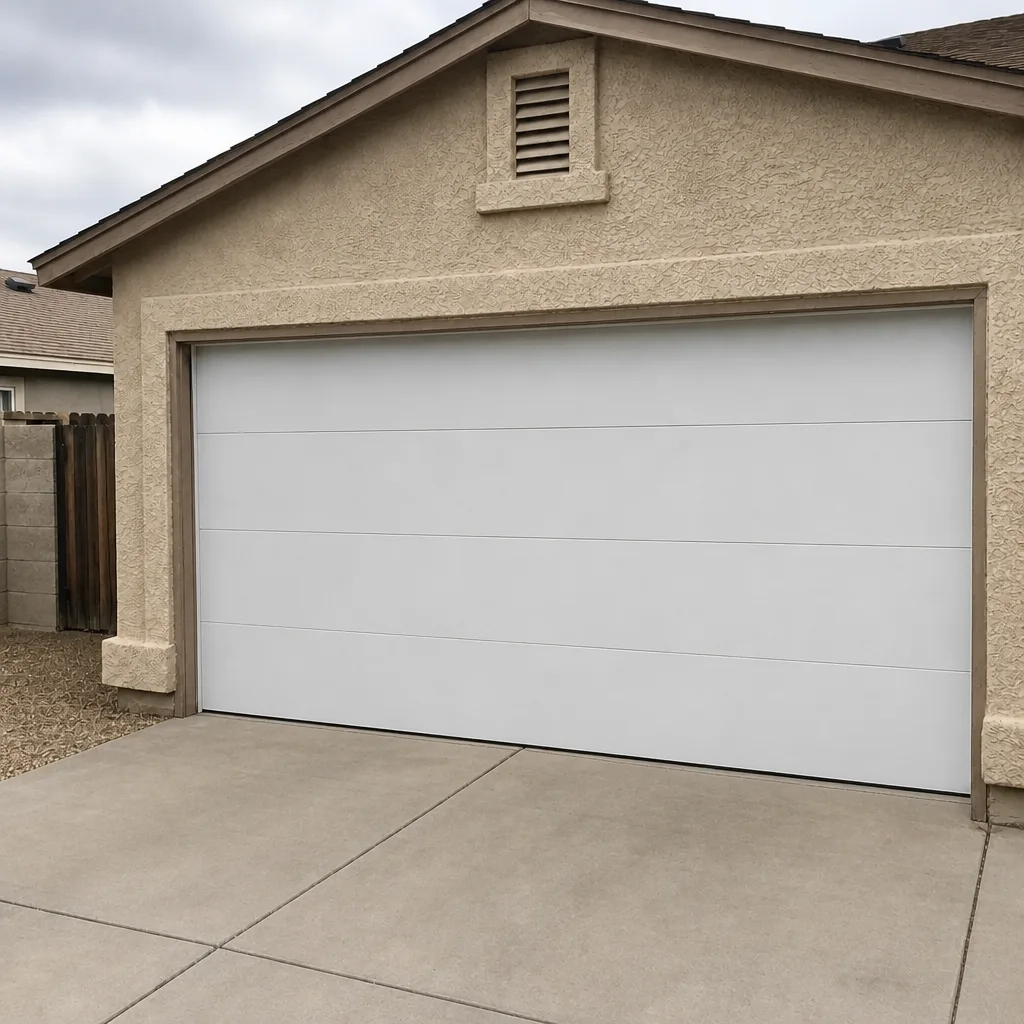 After
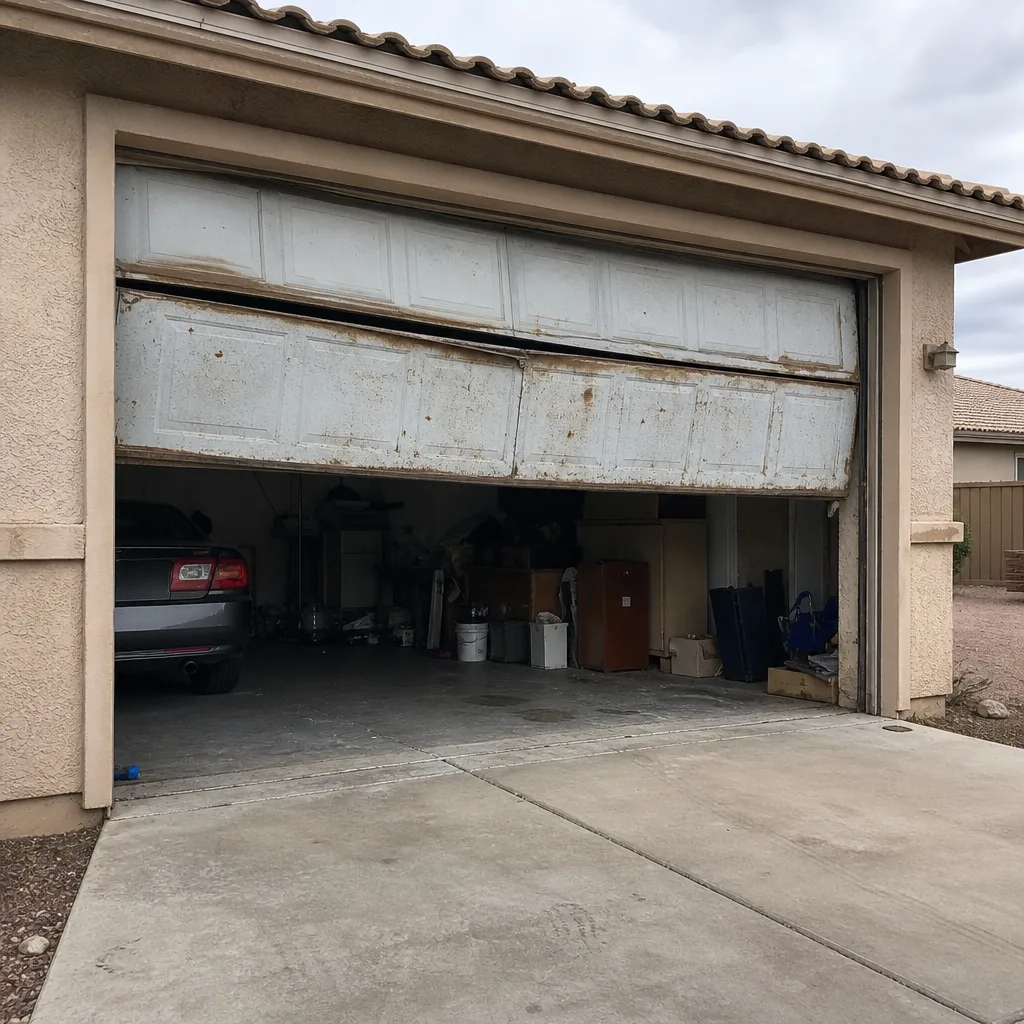 Before
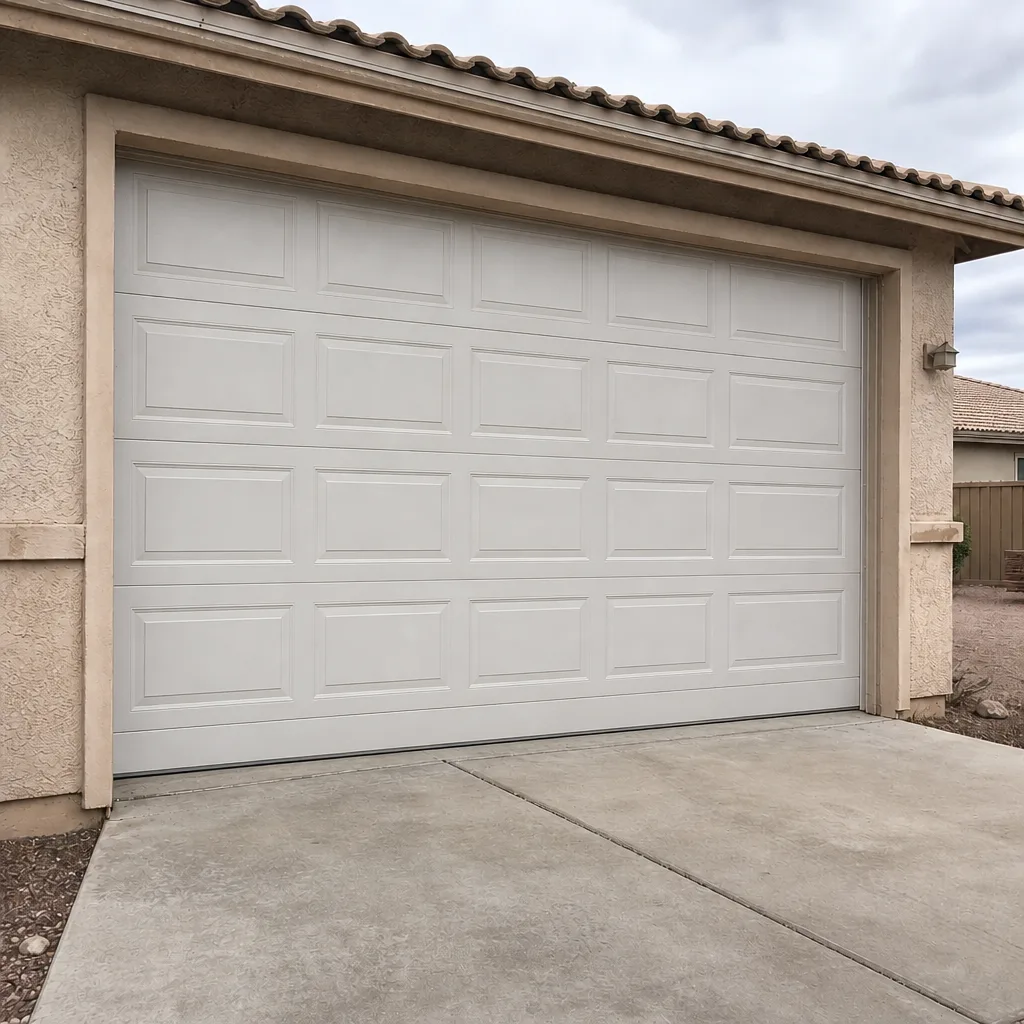 After
When to Call a Professional
Call a professional the moment the problem involves a spring, a cable, or a track under the door’s weight. Call when the door won’t lift by hand, when it falls rather than holds midway, or when a cable is visibly slack or off its drum. Call when the opener is still under warranty and internal component work is needed, and call when the brand matters and you don’t want to guess at part numbers.
For everything else, do the safe task yourself, and know you’ve got someone to call if it’s not the fix. Brightline Garage Door Repair offers free estimates in Buckeye. Call (833) 519-6766. We answer 24/7. Fast dispatch from 7am to 7pm, Sunday through Friday. The written estimate sets the price, and it’s agreed before any work starts. Our technicians have up to 15 years of experience, and we handle repair, opener service, and full installation under one specialist roof.
Frequently Asked Questions
No. Torsion and extension springs hold hundreds of pounds of stored tension, and releasing or tensioning them incorrectly causes real injuries even among people who watched tutorials. This is one job to hand to a trained professional. Call (833) 519-6766 for a free estimate on spring service in Buckeye.
Safety sensor alignment, remote and keypad programming, lubrication, bottom seal replacement, and visual inspection are all safe for a homeowner. None of them involve stored spring tension. For anything involving springs, cables, or a loaded track, call a pro.
It depends on the job and the parts involved, so the honest answer is that a technician needs to see the door before quoting. The estimate is free and written, and the price is agreed before work starts. Call (833) 519-6766 to book a no-cost assessment.
That usually points to a balance, spring, or cable problem, which is a professional job. Run the safe balance test first: release the opener, lift the door by hand, and see whether it stays put. If it feels heavy or falls, don’t touch the springs or cables. Call a technician.
It can affect coverage on some newer openers, so check your warranty terms before opening the unit or swapping internal components. A specialist who services multiple brands can tell you what the repair needs and what’s covered. For an updated opener in Buckeye, call (833) 519-6766.
Sometimes yes, because the repair’s warranty, balance testing, and correct parts carry hidden value. A repair that fails early or strains the opener costs more than a pro job would have. When the math is close, call (833) 519-6766 and get a free estimate before deciding.
The Bottom Line
The DIY-versus-pro question comes down to risk, not skill. Sensor alignment, remotes, lubrication, and bottom seals are safe for any careful homeowner. Torsion springs, extension springs, cables, and track work under load are not, and no tutorial changes that. On a hot Buckeye door, a wrong-sized spring fails faster than the part it replaced, so correct sizing matters as much as correct installation. When in doubt, run the balance test, then call a technician who works the brand already in your garage. A free estimate and a written price take the guesswork out of it. Call (833) 519-6766. We answer 24/7, with fast dispatch from 7am to 7pm, Sunday through Friday.
Ready for a clear answer on your door? Reach out to Brightline Garage Door Repair for a free estimate and a scope of work you can follow from start to finish.
Written by the team at Brightline Garage Door Repair.